
Choosing the right flat pouch size affects more than just product fit. It also influences filling efficiency, shipping space, and how the final package looks to the customer. A well-sized pouch should support both the product and the overall packaging experience.
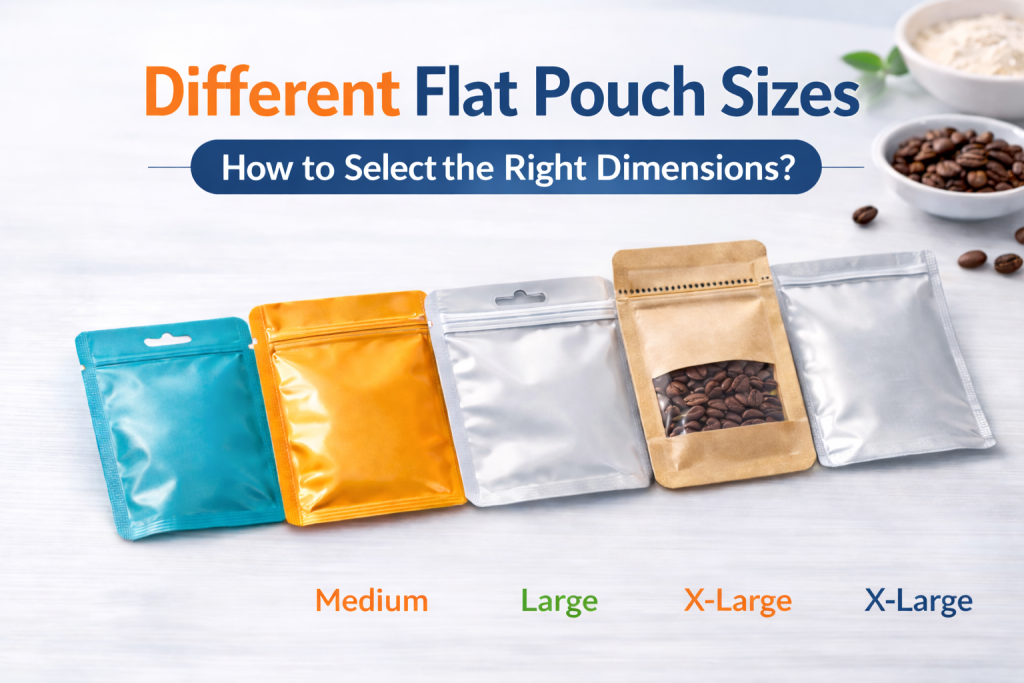
Why Flat Pouch Size Matters More Than It First Seems
In custom packaging, size affects much more than outer dimensions. It influences filling efficiency, usable space, seal performance, and how balanced the final pouch looks once the product is packed. A well-sized pouch usually feels cleaner, more intentional, and easier to handle in both production and sales.
This matters even more for products such as powders, snacks, supplements, coffee samples, and beauty items. Even when two products have the same fill weight, they may still need different pouch sizes because density, shape, and settling behavior are not the same.
Start with Product Volume, Not Only Fill Weight
One of the most common mistakes in pouch planning is choosing size based only on fill weight. Weight is important, but it does not always show how much space the product will actually need inside the pouch. In many cases, product volume is the more useful starting point.
For example, 100 grams of protein powder, 100 grams of dried fruit, and 100 grams of coffee beans may all require different pouch sizes. Even with the same weight, density, shape, and settling behavior can change how the product fills the pouch and how much usable space is really needed.
- How much space does the product occupy in real use?
- Does the product settle, compress, or stay bulky after filling?
- Will the pouch need extra headspace above the fill line?
Questions to Ask Before Choosing a Flat Pouch Size
Before choosing a flat pouch size, it helps to review a few practical questions. These checks can make the final size more accurate and reduce the chance of selecting a pouch that feels too tight, too loose, or visually unbalanced once the product is packed.
- What is the target fill weight and the approximate product volume?
- Is the product dense, fluffy, fragile, irregular, or free-flowing?
- Will the pouch be hand-filled or machine-filled?
- Does the pack need extra headspace above the fill line?
- Will the pouch include a zipper, tear notch, hang hole, or window?
- Is the final pack intended for retail display, cartons, multipacks, or e-commerce shipping?
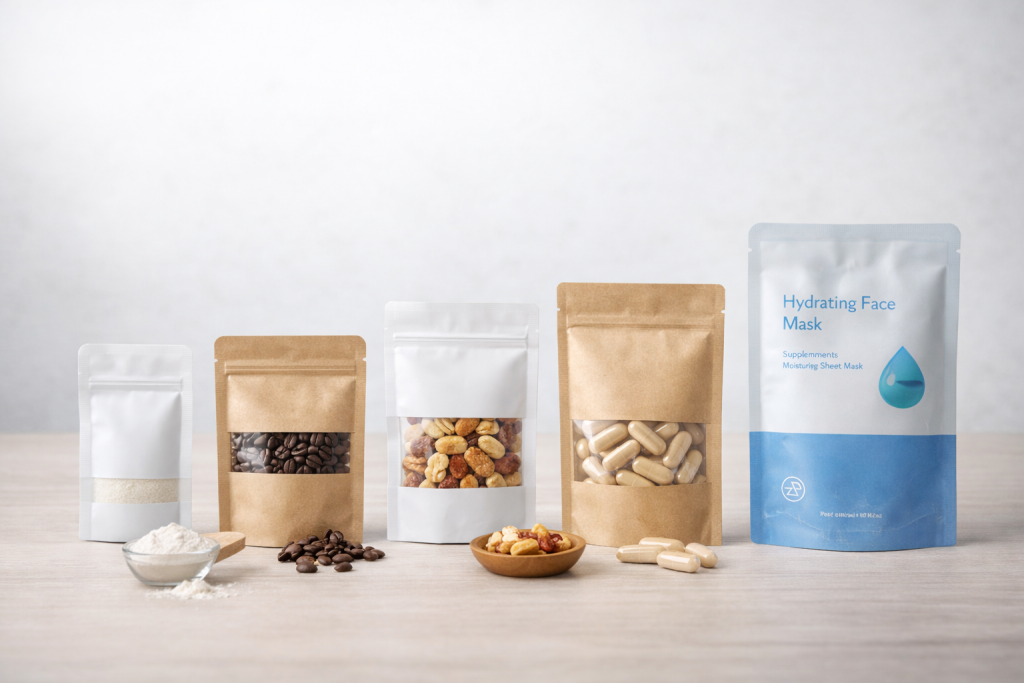
How Product Type Influences the Best Size
Different products behave differently inside the same pouch format. Powders may need enough room for easy filling and clean sealing, while snacks often benefit from extra width to reduce crowding or crushing. Coffee samples, supplements, and dry mixes may also need a better front-panel balance so the pouch looks clean and intentional once packed.
That is why the best pouch size is not simply the one that can hold the product. It should also support the way the product settles, fills, seals, and presents in the final package. If you are still reviewing general format options, you can also explore our flat pouch packaging solutions to see how different product types work with this format.
Understand Width, Height, and Usable Filling Space
When comparing flat pouch sizes, it is important to look beyond the outside dimensions. Width and height matter, but they do not tell the whole story. The usable filling space inside the pouch can be reduced by seal areas, zipper placement, and the room needed above the fill line.
That is why a pouch that looks large enough on paper may still feel too tight in production. Practical size planning should always consider both the product and the construction details of the package itself, especially when features or cleaner presentation are part of the goal.
| Size factor | Why it matters |
|---|---|
| Width | Affects front-panel space, product spread, and filling comfort |
| Height | Influences fill line, headspace, and overall visual proportion |
| Seal area | Reduces usable internal space compared with outer dimensions |
| Zipper or feature area | Can require additional top space and change final proportions |
| Headspace | Supports sealing quality and helps the pouch look more balanced |
Why Headspace Should Not Be Overlooked
Headspace is the empty area left above the product before sealing. It may seem like a small detail, but it plays an important role in both function and appearance. Without enough headspace, sealing can become less consistent, and the pouch may look overfilled or difficult to handle.
Too much headspace, however, can make the pack look oversized and less efficient. The right balance depends on product type, filling method, and whether the pouch includes features such as a zipper or tear notch. In many projects, headspace is one of the details that helps a pouch feel properly planned rather than simply filled.
Added Features Can Change the Right Size
Flat pouch size should not be reviewed separately from feature planning. A zipper may require extra upper space, while a hang hole can reduce the available design area near the top of the pouch. A window may also work better on a slightly wider front panel, depending on the product and the visual balance you want to achieve.
That is why the right size is often the one that supports both function and layout, not just product capacity. If your project includes added options, it is worth reviewing size together with the overall pouch structure so the final pack feels practical, clean, and easy to use.
Final Thoughts on Choosing the Right Flat Pouch Size
Choosing the right flat pouch size is not only about fitting the product inside the package. It involves understanding product volume, filling behavior, usable space, and the structural features of the pouch itself. A well-planned size helps improve filling efficiency, sealing reliability, and overall packaging appearance.
If you are evaluating flat pouch size options for your product, it may help to review the packaging structure and filling requirements together. Our team can help you explore suitable flat pouch solutions based on your product type, filling method, and packaging goals. Feel free to contact us to discuss your project or request guidance on selecting the right pouch size.
Flat Pouch Size FAQs
The best starting point is to review product volume, fill weight, and the usable space needed inside the pouch. Features such as zippers, windows, and required headspace should also be considered before finalizing dimensions.
No. Two products with the same weight can still need different pouch sizes because density, shape, and settling behavior affect how much internal space is actually required.
Headspace helps support cleaner sealing, smoother filling, and a more balanced final appearance. Without enough headspace, the pouch may look overfilled or become harder to seal properly.
Yes. Features such as zippers, tear notches, hang holes, and windows can reduce usable space or change the pouch proportions needed for better function and presentation.