
Manufacturers widely use rollstock film in automated flexible packaging because it lets packaging lines form, fill, and seal finished packs during production. Instead of starting with a pre-made pouch, the process starts with film on a roll. The machine shapes the material, seals it in sequence, fills it with product, and cuts it into finished packs.
In practical packaging work, the film itself is only one part of the system. Machine type, sealing method, pack format, line speed, product behavior, and shelf-life goals all affect line performance. For that reason, teams usually review rollstock selection together with the packaging process, not as a separate material decision.
If you want a broader overview of structures, printing options, and applications, you can also explore our rollstock film page for related production details.
What rollstock film does in automated packaging
On a form fill seal line, rollstock film acts as the starting material for the finished package. The film unwinds from the roll and moves through the machine under controlled tension. The machine then forms it into the required pack shape. Depending on the setup, it may wrap the film vertically around a forming tube or guide it horizontally around the product before sealing and cutting.
This approach supports consistent high-volume production and simplifies the packaging workflow. Because the machine forms the pack during operation, manufacturers often use rollstock film for sachets, stick packs, pillow packs, flow wraps, and many other flexible packaging formats across food, beverage, personal care, and household products.
How form fill seal packaging works
Form fill seal packaging follows a straightforward production logic, but reliable performance depends on how well the film, machine settings, and sealing process work together.
Form fill seal packaging is usually described in three core stages: form, fill, and seal. First, the rollstock film is unwound and guided through the machine under controlled tension. The film is then shaped into the intended pack structure, either around a forming tube in a vertical system or around the product path in a horizontal setup.
Once the pack shape is formed, the product is introduced into the package area. The machine then applies the required seals and cuts the material into finished units. Although the process sounds simple, stable results depend on film tracking, seal performance, forming behavior, and accurate machine control throughout the run.
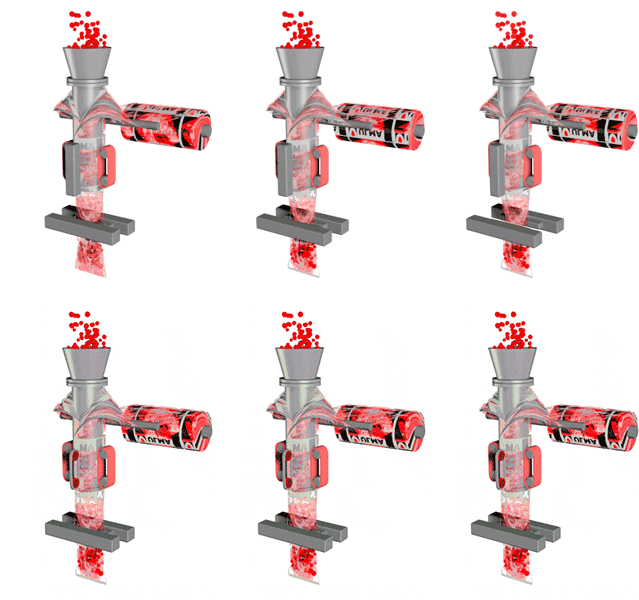
Vertical and horizontal packaging lines
Vertical form fill seal systems
VFFS lines are commonly used for snacks, powders, grains, frozen food, and similar products. In this setup, the film moves downward around a forming tube. The machine seals it into a tube, fills it from above, and cross-seals it into individual packs.
Many manufacturers choose this format for efficient high-volume production because the product can flow or drop naturally into the pack during filling. Strong tracking, stable sealing, and smooth machine handling all help maintain reliable performance throughout the run.
Horizontal form fill seal systems
HFFS lines are often used for bars, bakery products, confectionery, personal care items, and other products that move through the machine in a controlled orientation. In this process, the product usually travels on a conveyor while the film wraps around it before the machine applies longitudinal and end seals.
This format is often preferred when product positioning, presentation, or pack shape needs tighter control. Stable machine setup, careful product handling, and consistent film behavior all support clean seals and reliable packaging output.
Why film structure matters in machine performance
Film structure does more than protect the product. On a packaging line, it also affects how the material feeds, forms, seals, and runs at speed during real production.
Tracking and forming
The film’s stiffness, thickness balance, and surface behavior all affect how smoothly it moves through the machine. If the structure does not match the setup, the film may wrinkle, drift, or form unevenly around the tube or product path.
Sealing performance
Sealant layers need to perform reliably under actual machine temperature, pressure, and dwell time. A structure may look acceptable on paper but still create weak seals, unstable hot tack, or inconsistent pack quality when sealing behavior does not match the equipment.
Print registration and consistency
A stable film structure also helps maintain print alignment and pack-to-pack consistency during production. Dimensional movement, poor tracking, or unstable feeding can reduce registration accuracy, affect seal appearance, and weaken overall pack presentation.
How to match film with your production setup
Choosing film for a form fill seal line means reviewing the full packaging job, not just one material feature. Product sensitivity, line type, target speed, sealing window, pack size, print design, and shipping conditions should all be considered together. In many cases, the best structure is not the most complex one. It is the one that runs reliably while still meeting protection and commercial goals.
For new projects, trial runs and sealing validation are often an important step before final approval. Real production conditions can reveal issues that are not obvious from a specification sheet alone. Reviewing machine setup together with material design usually leads to a more stable packaging result and a more practical long-term solution. For a broader look at material selection before line trials, you can also read our guide on rollstock film materials.
Frequently asked questions about rollstock film on packaging lines
Below are a few common questions brands ask when reviewing rollstock film for form fill seal packaging lines.
Rollstock film is used as the starting packaging material on automated lines that form, fill, and seal packs during production. It is commonly used for sachets, pillow packs, stick packs, flow wraps, and other flexible packaging formats.
Vertical systems usually form the pack around a tube and fill the product from above, while horizontal systems typically wrap film around products moving along a conveyor. The right option depends on the product shape, pack style, and machine setup.
Film structure affects feeding stability, forming behavior, sealing quality, print registration, and overall line consistency. A structure that is not well matched to the packaging machine can create sealing problems, wrinkles, or unstable running during production.