
Choosing between a flat pouch and a stand-up pouch may seem simple at first. In practice, the right format affects shelf presentation, shipping efficiency, filling performance, and overall product experience.
Both formats are common in flexible packaging, but they serve different needs. A flat pouch usually works better for slim, lightweight, or single-use products. A stand-up pouch is often a better fit when a product needs stronger shelf presence, more usable volume, or resealable convenience.
Quick Answer: Which Format Makes More Sense?
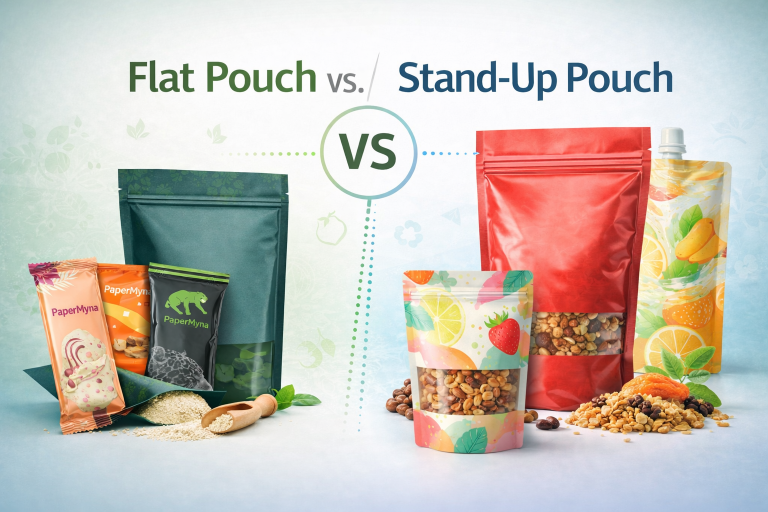
If you are comparing a flat pouch with a stand-up pouch, the better option usually depends on how the product will be filled, displayed, shipped, and used by the customer. In general, a flat pouch works well for slim, lightweight, or single-use products, while a stand-up pouch is often a better fit for items that need stronger shelf presence, more usable volume, or resealable convenience.
A Flat Pouch Is Usually the Better Fit If...
You want a slimmer package, lower material usage, and a practical format for sachets, samples, powders, or products that will be packed in cartons or display boxes.
A Stand-Up Pouch Is Often the Better Choice If...
You want the pack to stand on the shelf, create more visual impact, or offer features such as a zipper closure for a more convenient user experience.
Flat Pouch vs Stand-Up Pouch: Key Differences
If you are deciding between a flat pouch and a stand-up pouch, it helps to look beyond appearance alone. While both formats are widely used in flexible packaging, they serve different product and retail needs. In many cases, a flat pouch is the more efficient option for compact products and secondary packing, while a stand-up pouch is often preferred when shelf visibility and presentation matter more.
| Feature | Flat Pouch | Stand-Up Pouch |
|---|---|---|
| Structure | Slim, flat profile | Bottom gusset allows upright display |
| Shelf Impact | Moderate | Strong |
| Material Use | Usually lower | Usually higher |
| Shipping Efficiency | Very good for compact packing | Good, but bulkier than flat formats |
| Fill Volume | Best for small to medium volumes | Better for medium to larger volumes |
| Display Method | Hooks, trays, cartons, secondary packs | Direct shelf display |
| Resealable Features | Possible, but less common on simple formats | Common and highly practical |
| Best For | Samples, sachets, powders, slim products | Snacks, coffee, pet food, retail-ready products |
In practice, the right choice usually comes down to product size, display method, and the kind of experience you want to create for the end user. If you are still comparing options for a new project, you can talk with our team about the most suitable pouch structure for your packaging needs.
What Is a Flat Pouch?
A flat pouch is a flexible packaging format with a slim, space-efficient profile. Unlike a stand-up pouch, it does not have a bottom gusset that allows it to sit upright on the shelf, which makes it a practical choice for products that are packed in cartons, displayed on hooks, or sold as compact single-use packs.
This format is widely used for sachets, powders, snacks, seasonings, sample packs, and a range of lightweight food and personal care products. Because the structure is relatively simple, a flat pouch is often a smart option when brands want to keep material usage efficient while still achieving reliable sealing, good print presentation, and a clean overall look.
In real packaging projects, flat pouches are often chosen not because they are simpler, but because they fit the product better. For slim items, smaller fill weights, or products that will be grouped in secondary packaging, they can be more practical than bulkier formats while still offering the barrier performance and finish quality needed for retail use.
What Is a Stand-Up Pouch?
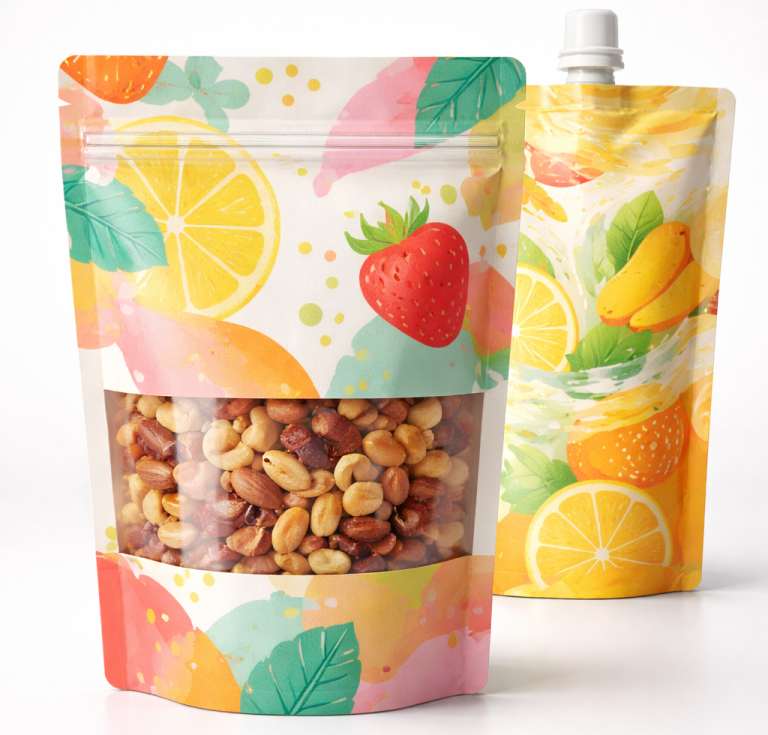
A stand-up pouch is a flexible packaging format with a bottom gusset that allows the pack to stand upright after filling. That structure gives it a stronger shelf presence and makes it a popular choice for products that need a more visible, retail-ready look.
Brands often use stand-up pouches for snacks, coffee, pet food, dried foods, supplements, and other consumer products. The format also gives them more room for branding, convenient opening features, and a presentation that feels more substantial on the shelf.
For many retail products, a stand-up pouch offers a strong balance of appearance, usability, and pack performance. It is especially useful when the product needs better visibility, a little more structure, or a format that feels more premium in front of the customer.
When a Flat Pouch Makes More Sense
In practice, a flat pouch is often the better option when efficiency, compact size, and simple handling matter more than shelf display. It is especially useful for products that do not need to stand upright on their own and are more likely to be packed in cartons, hung on display hooks, or grouped in secondary packaging.
For Slim or Lightweight Products
Flat pouches are a natural fit for products such as sachets, powders, seasoning packs, sheet masks, and other items that do not need a bulky structure. When the product itself is compact, a flatter format often feels more practical and efficient.
When Packaging Efficiency Matters
Because the format uses a simpler profile, it can help reduce material usage and make storage and shipping more efficient. For brands managing high-volume production or space-sensitive logistics, that can be a meaningful advantage.
For Secondary Packing or Hanging Display
If the product will be placed inside a box, arranged in a display tray, or sold on hooks, a flat pouch often makes more sense than a self-standing format. In these cases, the pack does not need extra structure to perform well.
When a Cleaner, Simpler Pack Is Enough
Not every product needs a larger retail-ready pouch. For many compact SKUs, a flat pouch gives the right balance of function, appearance, and cost without adding unnecessary bulk or complexity.
When a Stand-Up Pouch Makes More Sense
A stand-up pouch usually makes more sense when the package needs to do more on the shelf. For products that benefit from stronger visibility, a more premium look, or added convenience features, this format often feels like the more complete retail solution.
It is especially suitable for snacks, coffee, pet food, dried foods, and other products that are sold directly to consumers and need a pack that looks more substantial. In these cases, a stand-up pouch can offer a better balance of presentation, usability, and brand impact.
Still Deciding Which Pouch Format Fits Your Product?
Both formats can work well when they match the product and sales setup. Before you decide, it helps to review fill volume, shelf display, shipping needs, and user experience.
If you want a more practical recommendation, contact our team to discuss the most suitable pouch structure for your application.