
SAUCE & CONDIMENT PACKAGING GUIDE
Sauce and condiment products may look simple from the outside, but their packaging requirements can be very different. A thin soy sauce, a thick chili paste, a creamy dressing, a dry seasoning powder, and a spice blend do not always need the same pouch format, film structure, or sealing method.
The right sauce and condiment packaging should match the product texture, filling method, shelf-life target, barrier needs, and how customers will use the package after opening.
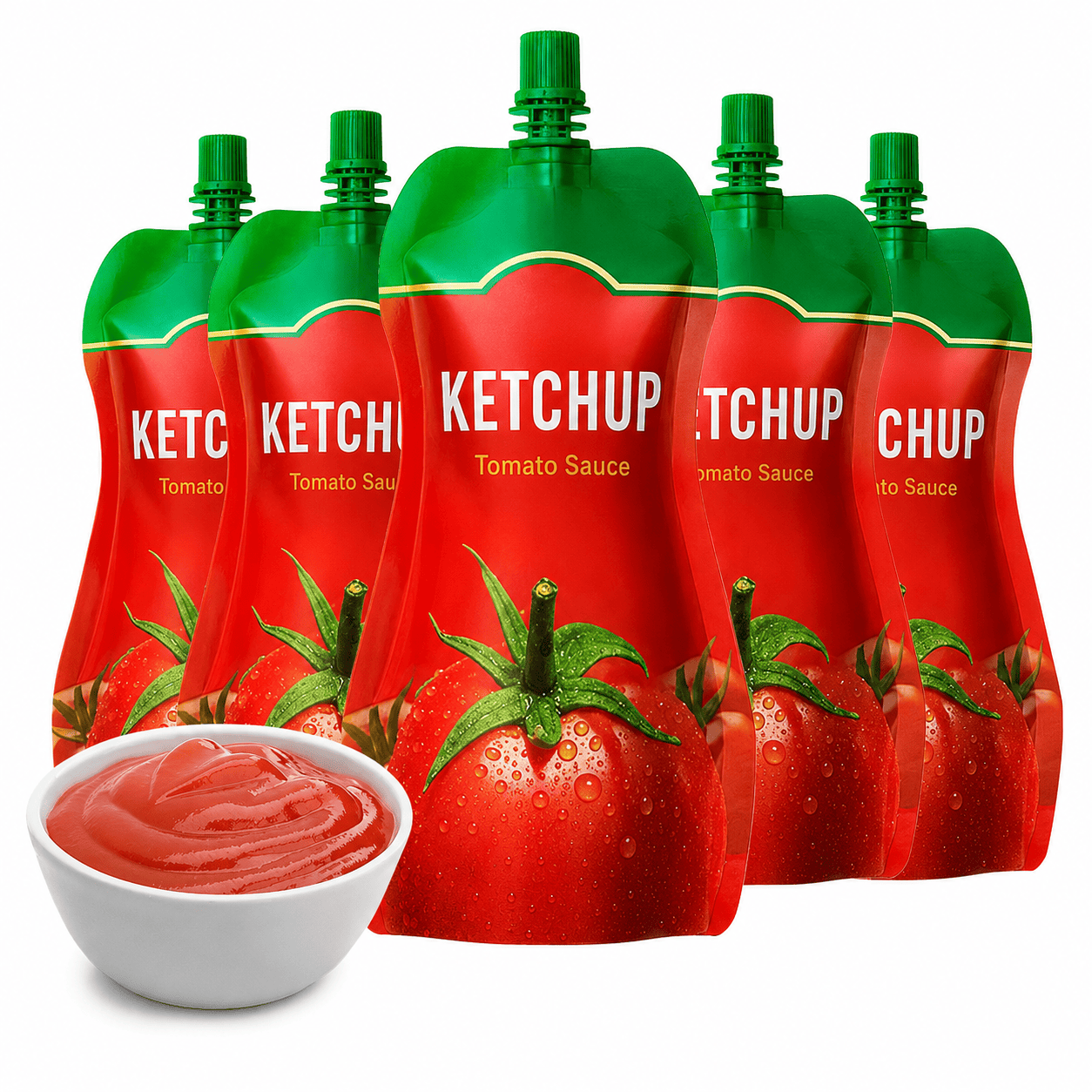
Match Packaging to Product Texture
Texture is one of the first details to check before choosing sauce and condiment packaging. Liquids, pastes, powders, and spice blends each create different filling, sealing, barrier, and shelf-life requirements.
Liquid Sauces
Soy sauce, vinegar sauce, ketchup, dipping sauce, and light chili sauce need reliable sealing, liquid resistance, and packaging that helps reduce leakage during handling and shipping.
Thick Sauces & Pastes
Chili paste, curry paste, marinades, dressings, and seasoning paste often need stronger laminated structures, oil resistance, and packaging that supports pouring, squeezing, or controlled dispensing.
Seasoning Powders
Soup powder, seasoning powder, dry rubs, and sauce mixes usually need moisture barrier protection to help reduce clumping and keep the product stable during storage.
Spice Blends
Pepper mixes, chili powder, spice blends, and dry seasonings may need aroma protection, moisture control, and clean sealing performance for retail or foodservice packs.
Choose the Right Packaging Format
Sauce and condiment packaging can be produced in different formats. The best choice depends on portion size, filling method, shelf display, and how the product will be used after opening.
Sachets and Stick Packs
Sachets and stick packs are suitable for single-serve ketchup, soy sauce, chili sauce, seasoning powder, spice blends, samples, meal kits, and foodservice portions.
Spout Pouches
Spout pouches work well for liquid sauces, dressings, marinades, cooking sauces, refill packs, and squeezable condiment products.
Stand-Up Pouches
Stand-up pouches are useful for retail-ready sauces, seasoning mixes, spice blends, and products that need better shelf presentation.
Flat Pouches
Flat pouches are a practical option for compact packs, sample-size products, dry seasonings, sauce mixes, and flat display packaging.
Rollstock Film
Rollstock film is designed for automated filling, sachet packing, and form-fill-seal lines where roll direction and machine compatibility matter.
For related packaging options, explore our stand-up pouch, flat pouch, and rollstock film products.
Match the Film Structure to the Product
Different sauce and condiment products may need different laminated film structures. The right structure depends on moisture sensitivity, oxygen exposure, oil content, aroma retention, filling temperature, and target shelf life.
Dry seasoning powders and spice blends usually need moisture protection, while liquid sauces, chili oils, marinades, and paste products may require stronger sealing layers, oil resistance, and better compatibility with the filling process.
Moisture Barrier
Seasoning powders, spice blends, soup bases, and dry mixes often need moisture barrier protection to help reduce clumping and keep the product stable during storage.
Oxygen Barrier
Products with sensitive flavors, oils, or strong aromas may need better oxygen barrier performance to help protect taste, color, and shelf life.
Oil Resistance
Chili oil, curry paste, dressings, marinades, and oily sauces may require film structures that resist oil penetration and maintain package strength.
Heat Seal Layer
The inner sealing layer should match the filling method, sealing temperature, product texture, and packaging machine to support clean and reliable sealing.
Check Sealing and Filling Compatibility
Strong sealing is one of the most important requirements for sauce and condiment packaging. Even a good-looking pouch can fail if the seal layer, filling method, and packaging machine are not matched correctly.
Clean Seal Area
For liquid sauces and paste products, the sealing area should stay clean during filling. Sauce residue, oil, or powder near the seal can affect seal strength and increase leakage risk.
Filling Method
Manual filling, semi-automatic filling, and automated filling lines may require different pouch openings, film stiffness, sealing layers, and rollstock specifications.
Machine Compatibility
For high-volume production, film width, roll direction, sealing temperature, packing speed, and machine type should be confirmed before mass production.
FINAL PROJECT CHECKLIST
Ready to Plan Your Packaging Project?
Choosing the right packaging depends on product protection, production requirements, shelf presentation, and customer use. A clear project brief helps suppliers recommend a more suitable structure, size, material, and printing option.
For sauce and condiment products, you can also review our sauce and condiment packaging solutions or explore more flexible packaging products.