
Direct Thermal vs Thermal Transfer Labels: Which One Should You Choose?
Direct thermal and thermal transfer labels are both widely used for barcode printing, shipping labels, warehouse labels, carton labels, and product identification. They may look similar as blank label rolls, but their printing method, durability, and best-use scenarios are different.
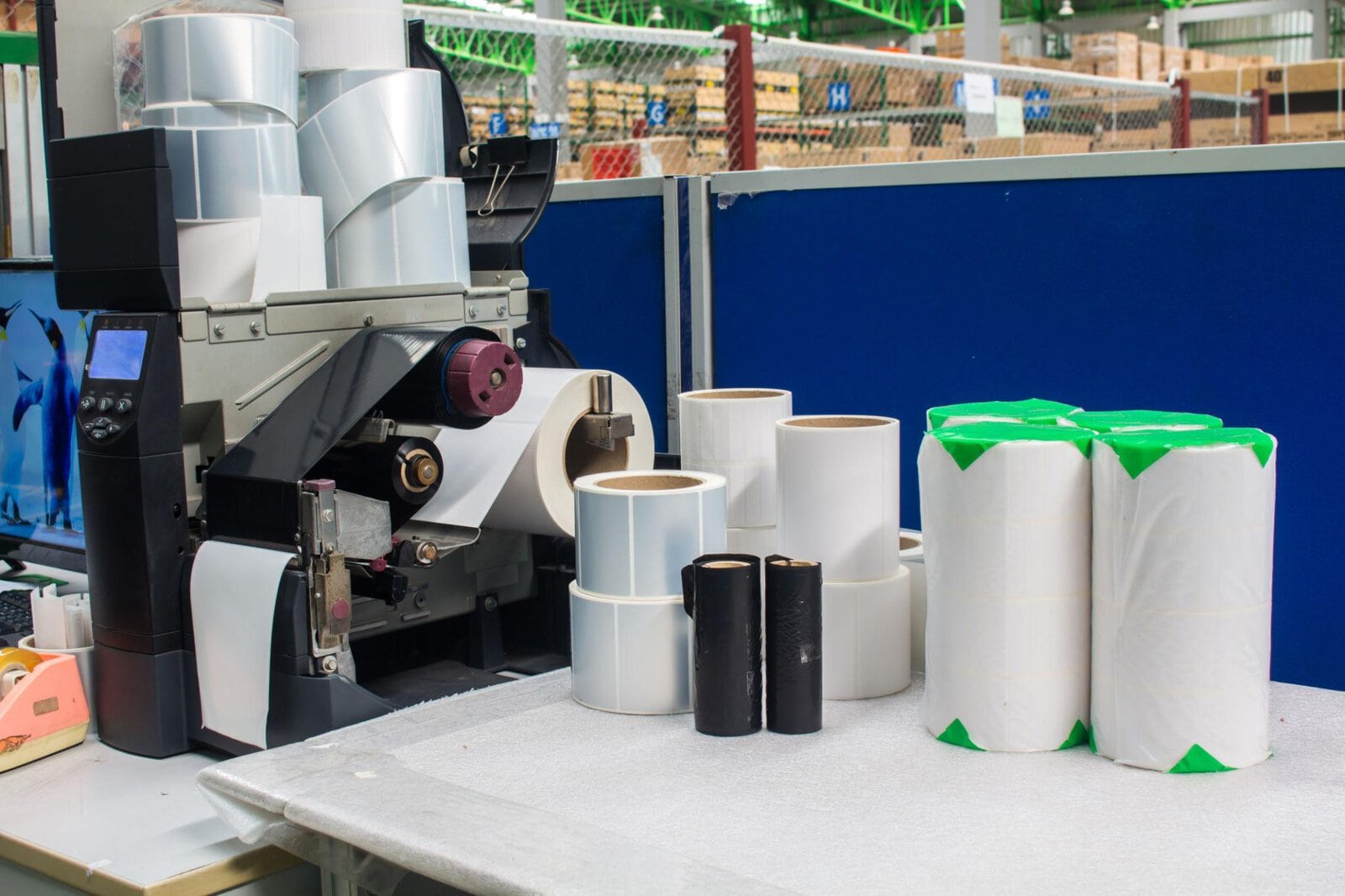
What Is the Difference Between Direct Thermal and Thermal Transfer Labels?
The main difference is how the image is printed on the label. Direct thermal labels use heat-sensitive label material and do not require a ribbon. Thermal transfer labels use a heated ribbon to transfer ink onto the label surface, which usually creates a more durable printed result.
Printing Method
Direct thermal labels create the image through a heat reaction on the label surface. Thermal transfer labels print by transferring ribbon ink onto the label material.
Ribbon Requirement
Direct thermal labels do not need a ribbon, which makes daily printing simpler. Thermal transfer labels require a matching ribbon for stable and readable barcode printing.
Print Durability
Direct thermal labels are better for short-term use. Thermal transfer labels are usually better when barcodes, text, or product information need to stay readable for a longer time.
Common Applications
Direct thermal labels are often used for shipping and logistics labels. Thermal transfer labels are commonly used for warehouse, inventory, carton, and product identification labels.
How Direct Thermal and Thermal Transfer Printing Work
Direct thermal and thermal transfer labels may look similar as blank label rolls, but the printing principle is different. Direct thermal printing works directly on heat-sensitive label stock, while thermal transfer printing uses a ribbon to transfer ink onto the label surface.
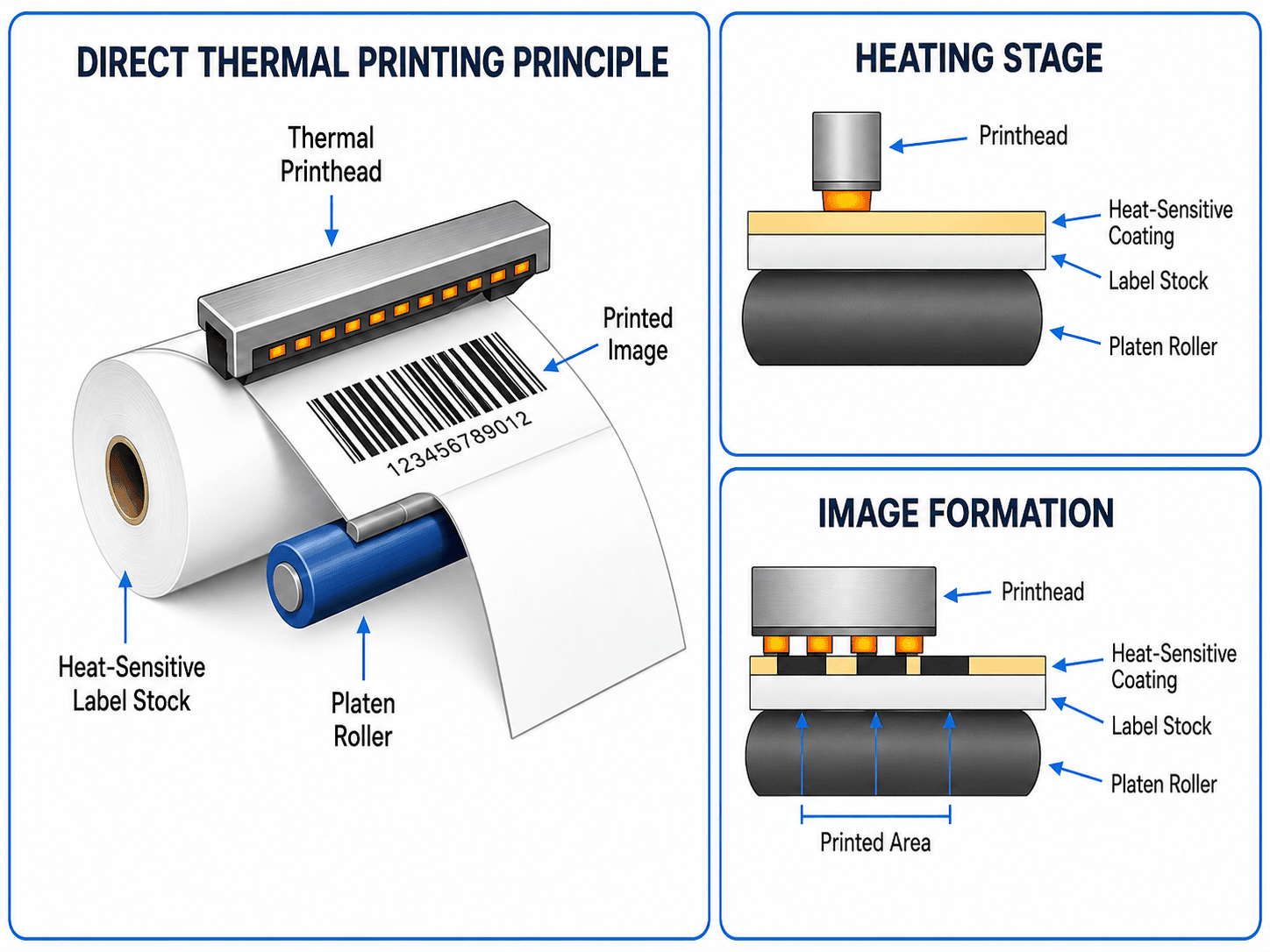
Direct Thermal Printing
Direct thermal printing does not use a ribbon. The thermal printhead applies heat directly to the heat-sensitive coating on the label material, causing the heated areas to darken and form barcodes, text, or simple graphics. This method is commonly used for shipping labels, courier labels, e-commerce order labels, and other short-term barcode identification needs.
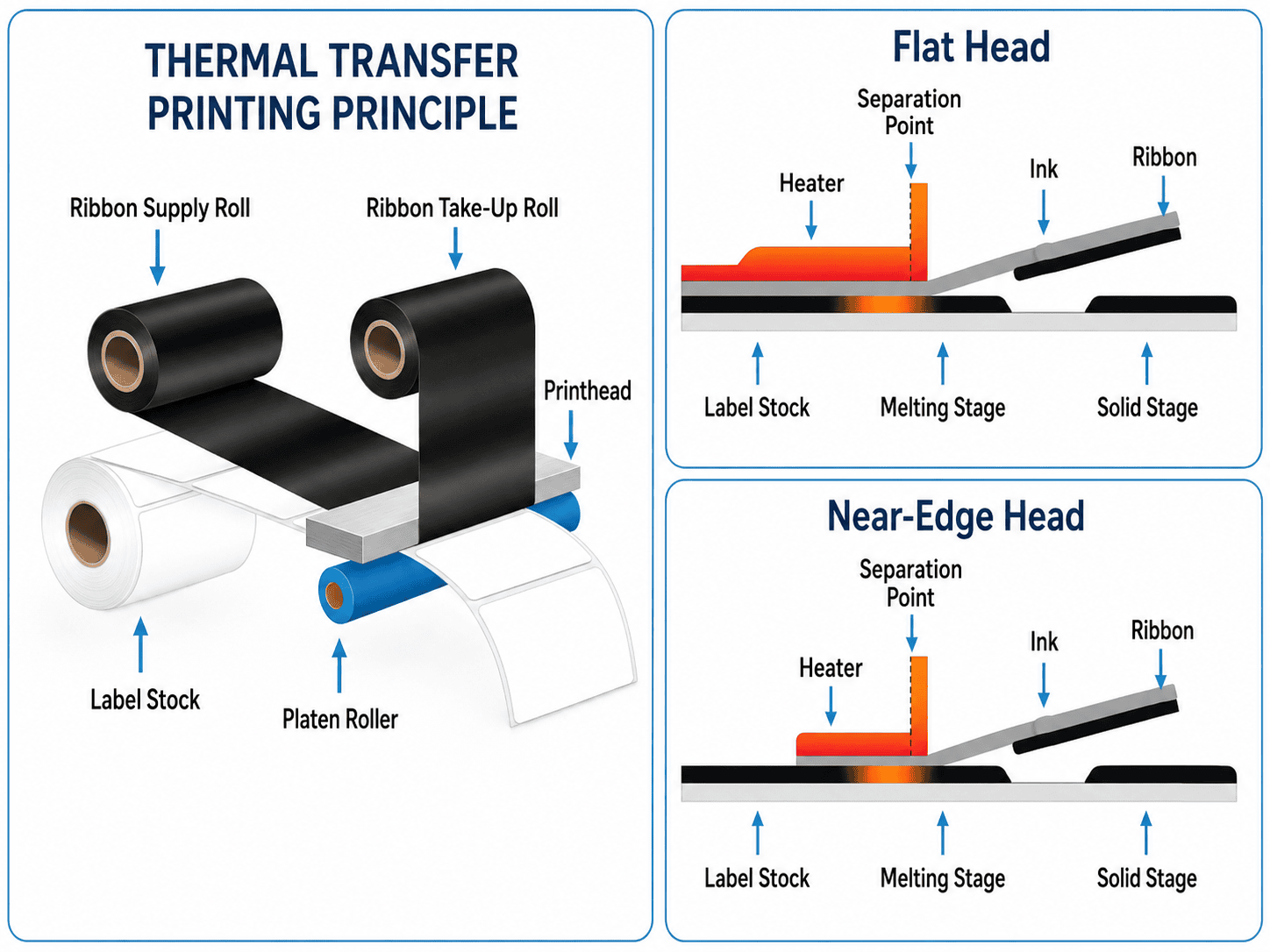
Thermal Transfer Printing
Thermal transfer printing uses a ribbon between the printhead and the label stock. Heat from the printhead transfers ink from the ribbon onto the label surface, creating a more durable printed image. This makes it suitable for warehouse labels, inventory labels, carton labels, product labels, and longer-term barcode tracking applications.
Which Label Type Fits Your Application?
The best label choice depends on how long the printed information needs to remain readable, where the label will be used, and whether the application requires simple short-term printing or more durable long-term identification. Direct thermal labels are practical for fast-moving logistics, while thermal transfer labels are often better for warehouse, inventory, carton, and product labeling applications.
Shipping and Courier Labels
Direct thermal labels are usually a practical choice for shipping labels, courier labels, e-commerce order labels, and parcel tracking labels because they print without ribbon and are mainly used for short-term logistics identification.
Warehouse and Inventory Labels
Thermal transfer labels are better when labels need to stay readable during longer storage, repeated handling, picking, packing, inventory control, and warehouse management workflows.
Product and Carton Identification
For product labels, carton labels, batch labels, and long-term barcode tracking, thermal transfer printing can provide a more durable printed image when matched with the right ribbon and label material.
Retail Barcode Labels
Retail barcode labels can use either direct thermal or thermal transfer materials. The better option depends on shelf life, storage conditions, product handling, and how long the barcode must remain clear and scannable.
Direct Thermal and Thermal Transfer Labels FAQ
Find quick answers about direct thermal labels, thermal transfer labels, ribbon use, shipping labels, warehouse labels, and custom label roll ordering details.
Direct thermal labels print by heat reaction on heat-sensitive label material and do not require a ribbon. Thermal transfer labels use a ribbon to transfer ink onto the label surface, making them more suitable for longer-lasting barcode and product identification.
Yes. Direct thermal labels are commonly used for shipping labels, courier labels, e-commerce order labels, parcel labels, and other short-term logistics applications because they print without a ribbon and are easy to use.
Thermal transfer labels are a better choice when the printed barcode, text, or product information needs to remain readable for a longer time, such as warehouse labels, inventory labels, carton labels, and product labels.
Yes. Thermal transfer printing requires a ribbon. The ribbon type should be matched with the label material and application, such as paper labels, synthetic labels, warehouse labels, or more demanding durability requirements.
You should provide the label size, printer model, roll core, roll direction, material, adhesive, quantity, application surface, storage environment, and how long the label needs to stay readable.
CUSTOM LABEL ROLLS
Need Direct Thermal or Thermal Transfer Label Rolls?
PaperMyna helps businesses source direct thermal labels, thermal transfer labels, blank label rolls, barcode labels, shipping labels, warehouse labels, and product identification labels. Share your printer model, label size, roll core, roll direction, material, adhesive, ribbon requirement, quantity, and application details, and our team can help recommend a practical label solution.