
Dry food products may look simple to pack, but many of them are sensitive to moisture, oxygen, aroma loss, grease, light, or handling damage. Nuts, granola, dried fruit, powders, cookies, cereal blends, coffee, tea, seasonings, and pet treats all need packaging that does more than simply hold the product.
This is why moisture barrier packaging is an important part of dry food packaging selection. A suitable package should match the product type, filling method, shelf life target, display style, and final selling channel. Choosing only by bag shape or lowest material cost can lead to weak seals, poor shelf appearance, product softening, aroma loss, or unstable packing performance.
PaperMyna helps brands compare flexible packaging formats, film structures, and custom printing options for different dry food applications. This guide explains what to check before ordering moisture barrier packaging for dry food products.
Why Moisture Barrier Packaging Matters for Dry Food
Dry food products often lose quality when they absorb moisture from the surrounding environment. A crispy snack may become soft, powder may clump, dried fruit may become sticky, and coffee or tea may lose aroma faster when the package structure is not suitable.
Moisture barrier packaging is designed to slow down moisture transfer through the package. Depending on the product, it may also need oxygen barrier, aroma protection, grease resistance, light blocking, and reliable heat sealing. The right structure is usually selected by balancing product protection, cost, appearance, and packing performance.
For many brands, the best starting point is not asking which material is the cheapest. A better question is what the product needs to stay stable during storage, shipping, and selling. Once the product requirement is clear, the packaging format and material structure become much easier to choose.
Start with the Product, Not the Bag Shape
The same pouch format can perform very differently depending on the product inside. Before choosing a stand-up pouch, flat pouch, flat bottom bag, or rollstock film, brands should first understand the product condition, barrier needs, packing method, and final selling channel.
Product Condition
Check whether the product is crispy, powdery, oily, aromatic, fragile, or easy to clump. The product condition affects material structure, pouch strength, sealing performance, and storage stability.
Barrier Needs
Some dry foods only need basic moisture protection, while others also need oxygen barrier, aroma retention, grease resistance, light blocking, or stronger laminated film structures.
Packing Method
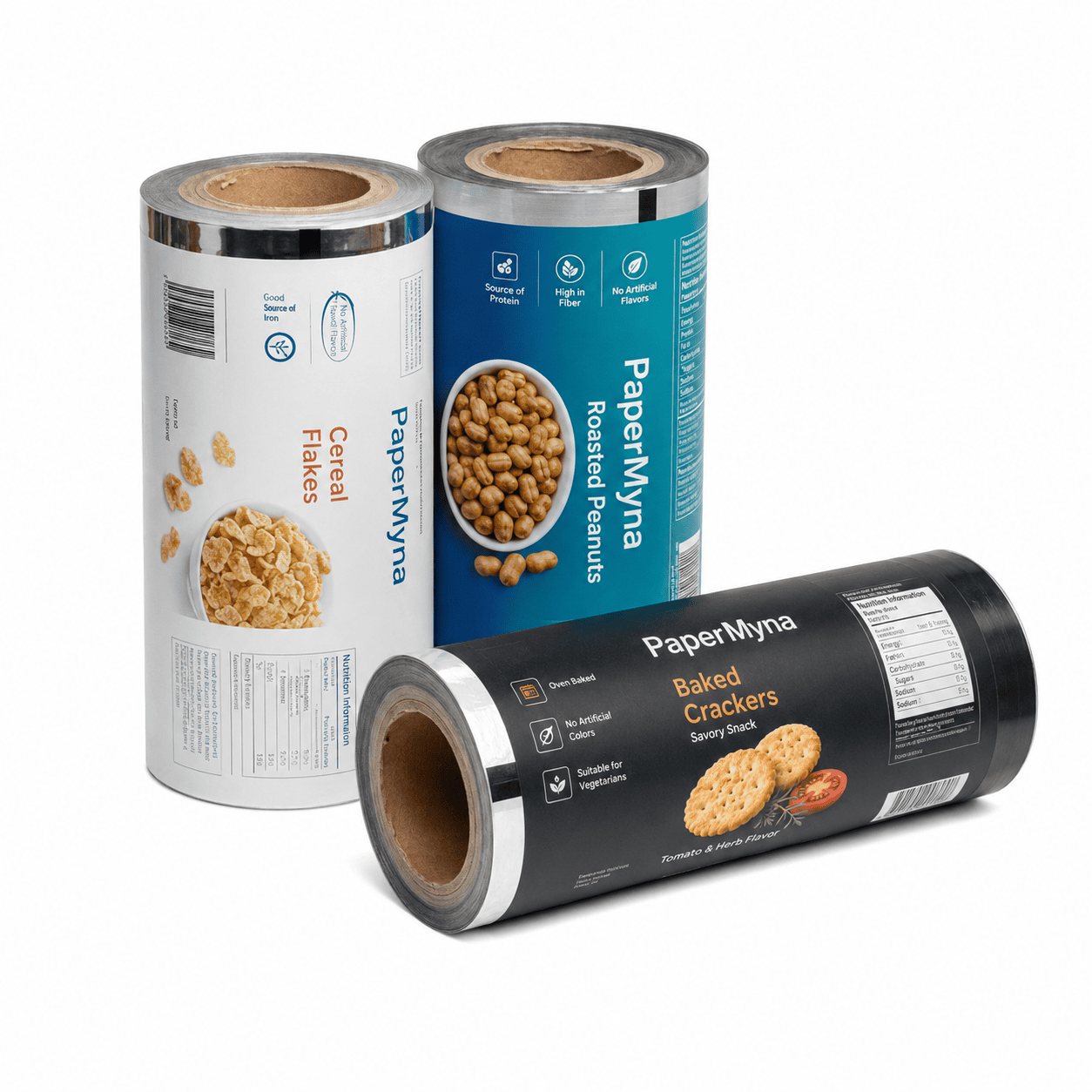
Manual packing and automatic packing require different packaging details. Rollstock film projects should match machine width, core size, roll diameter, sealing style, and winding direction.
Selling Channel & Features
Retail shelves, e-commerce shipping, and food service channels may require different pouch strength, zipper, tear notch, clear window, hang hole, matte finish, or display performance.
Common Packaging Formats for Dry Food Products
Dry food packaging can be produced in several formats. The right choice depends on product weight, shelf display, filling process, storage needs, and how customers will open and use the product.
Typical Film Structure Options
Moisture barrier packaging is often made from laminated film structures. Each layer has a role: the outer layer supports printing and appearance, the middle layer improves barrier performance, and the inner layer provides sealing performance and product contact compatibility.
Common dry food packaging structures may include:
- PET / PE: A practical structure for general dry goods where moderate protection, clean printing, and reliable sealing are needed.
- BOPP / CPP: Often used for snacks, biscuits, candies, and flow wrap applications that need good clarity, smooth packing, or efficient heat sealing.
- PET / VMPET / PE: A stronger barrier option for products that need better moisture, oxygen, aroma, or light protection.
- PET / AL / PE: A high-barrier option for products that are more sensitive to moisture, oxygen, aroma loss, or light exposure.
- Kraft Paper Laminate: A natural-looking option for brands that want a warmer shelf style while still using an inner barrier film structure.
These examples are only starting points. The final material should be confirmed according to the product type, shelf life target, filling process, packaging size, storage conditions, and local market requirements.
Do Not Ignore Sealing Performance
Barrier performance is important, but sealing performance is just as important. Even a high-barrier material can fail if the seal is weak, contaminated, too narrow, or not compatible with the filling process.
Powder Control
For powders, drink mixes, and seasoning products, powder near the sealing area may affect seal strength. The pouch opening, filling method, and seal width should be checked before production.
Grease Resistance
For nuts, chips, crackers, and oily snacks, the material structure should support stable sealing and suitable grease resistance so the package can protect the product during storage and shipping.
Rollstock Compatibility
For automatic packing lines, film width, core size, roll diameter, sealing style, packing speed, and winding direction should be confirmed before mass production.
What to Prepare Before Requesting a Quote
A clear inquiry helps the supplier recommend the right material structure and quote more accurately. Before ordering moisture barrier packaging for dry food products, it is helpful to prepare the key packaging details in advance.
- Product type, such as nuts, granola, cereal, powder, dried fruit, snacks, or seasoning
- Package size, filling weight, pouch format, and expected order quantity
- Barrier needs, shelf life target, storage conditions, and filling method
- Printing artwork, finish preference, zipper, tear notch, window, or other special features
If the material structure is not confirmed yet, PaperMyna can help compare practical pouch and rollstock film options based on your product, packing process, and selling channel.
FAQ About Moisture Barrier Packaging for Dry Food
Moisture barrier packaging can involve different pouch formats, laminated film structures, sealing requirements, and filling methods. The answers below cover common questions brands may have before ordering dry food packaging.
Moisture barrier packaging is designed to reduce moisture transfer through the package and help dry food products stay stable during storage, shipping, and retail display.
Nuts, granola, cereal, dried fruit, powders, snacks, cookies, coffee, tea, seasonings, and pet treats may need moisture barrier packaging depending on shelf life and storage conditions.
Common options include PET / PE, BOPP / CPP, PET / VMPET / PE, PET / AL / PE, and kraft paper laminated film. The final structure should match the product, barrier needs, filling method, and cost target.
Yes. Rollstock film is suitable for automatic packaging lines used for snacks, powders, granola, bars, sachets, pillow packs, and other dry food products.
It is helpful to provide product type, package size, filling weight, bag format, barrier requirement, filling method, printing artwork, special features, and estimated order quantity.
CUSTOM DRY FOOD PACKAGING
Need Moisture Barrier Packaging for Dry Food Products?
PaperMyna helps brands develop custom flexible packaging for nuts, granola, cereal blends, dried fruit, powders, snacks, cookies, coffee, tea, seasonings, and other dry food products. Share your product type, package size, filling weight, pouch format, barrier requirement, printing artwork, special features, order quantity, and packing method, and our team can help recommend a practical pouch or rollstock film solution.