
FLEXIBLE PACKAGING GUIDE
Recyclable flexible packaging is becoming a practical topic for many food brands, especially for snacks, cereals, dry food, bakery items, powders and other retail products. But changing to a recyclable material structure should not only be treated as a sustainability decision.
The package still needs to protect freshness, run smoothly on packing machines, seal reliably, and support the product’s shelf presentation. Before switching from a traditional laminated film to a recyclable flexible packaging structure, brands need to check product sensitivity, barrier requirements, sealing performance, rollstock film specifications, and real production conditions.
A material that looks suitable on paper may still need testing before it can be used for mass production. This guide explains what food brands should review before choosing recyclable flexible packaging for their products.
MATERIAL EVALUATION
Why Recyclable Flexible Packaging Needs Careful Evaluation
Many food brands want packaging that uses simpler material structures and supports recycling goals. However, flexible packaging is still responsible for product protection, shelf life, sealing stability, print quality and production efficiency.
A recyclable structure may work well for snacks, cereals, bakery products, powders and other dry food products, but it may need deeper testing for products that require strong moisture barrier, oxygen protection, aroma retention, freezer resistance or long-distance shipping.
For this reason, recyclable flexible packaging should be reviewed as a complete packaging system, not only as a material change.
Before switching materials, check:
- Product sensitivity to moisture, oxygen, oil or aroma loss
- Required shelf life and storage conditions
- Sealing strength and packing machine compatibility
- Film stiffness, thickness, COF and rollstock specifications
- Food-contact requirements and target market expectations
Recyclable Packaging Structures Food Brands Can Consider
Different food products may need different recyclable packaging structures. The best option depends on barrier requirements, sealing performance, packing speed, storage conditions, shelf-life targets and the final packaging format. Before ordering, food brands should compare material direction with real product and production needs.
Mono-material Packaging
Mono-material flexible packaging is usually based mainly on one polymer family, such as PE or PP. It can help simplify the recycling pathway, but the film still needs to meet the required stiffness, barrier level, print quality and sealing range.
Recyclable Rollstock Film
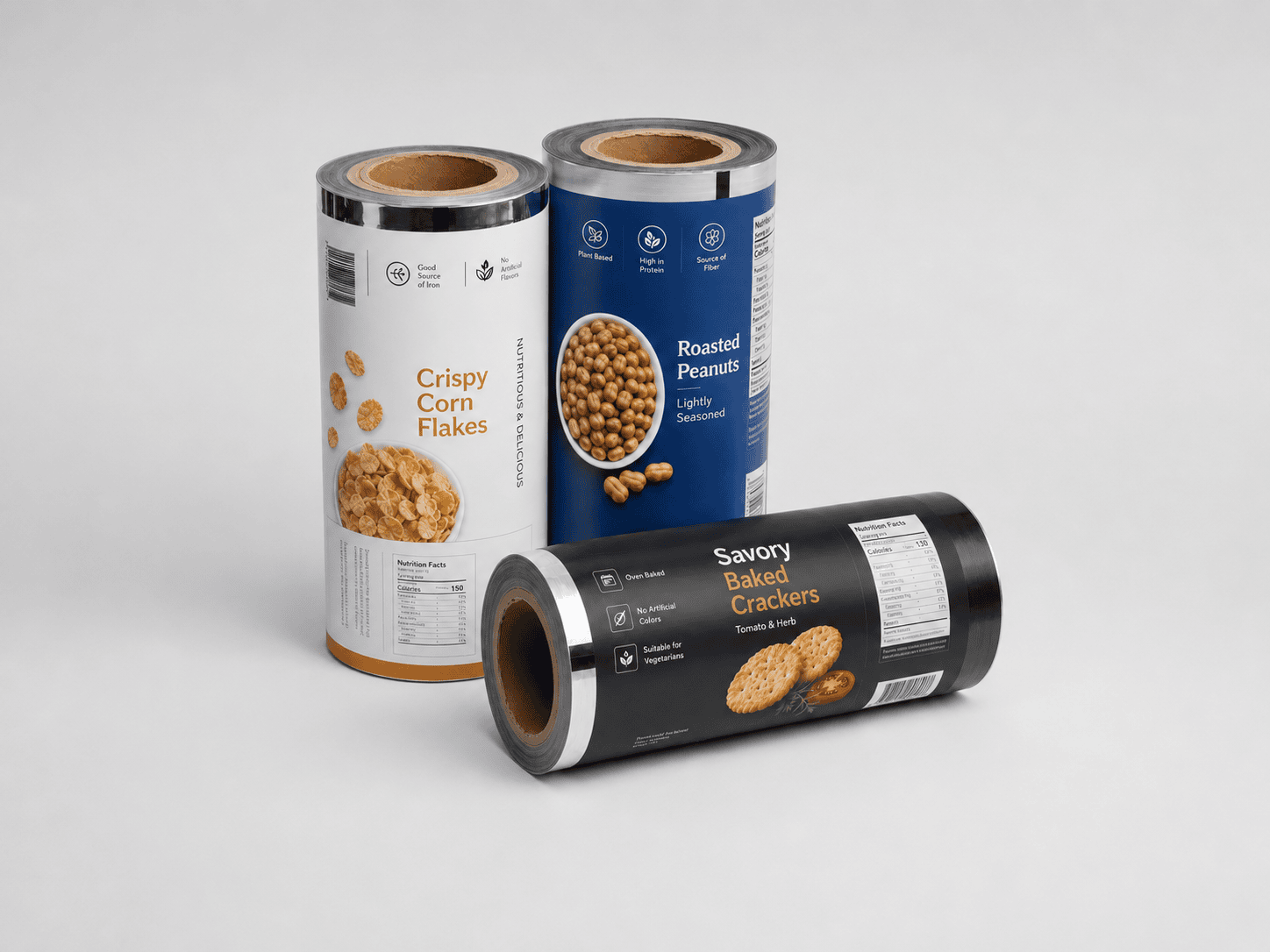
Recyclable rollstock film can be customized for automatic packing lines. Brands should confirm film width, thickness, roll diameter, core size, sealing direction and machine running performance before moving to mass production.
Recyclable Pouch Structures
Recyclable pouches can be developed for snacks, dry food, powders, bakery items and other retail products. Features such as zipper, tear notch, window and stand-up gusset should be reviewed together with the material structure.
Paper-based Packaging
Paper-based flexible packaging can work for selected dry products, but it is not suitable for every food application. Moisture protection, grease resistance and sealing performance should be tested carefully before ordering.
PACKAGING OPTIONS
Common Recyclable Flexible Packaging Directions
Recyclable flexible packaging can be developed in several directions. The right option depends on the product type, shelf-life target, filling method, packaging format and target market. For most food brands, the goal is not simply to choose one “recyclable” material, but to build a structure that can balance recyclability, barrier performance, sealing stability and production efficiency.
For products such as snacks, cereals, bakery items and dry food, some recyclable structures can be tested as alternatives to traditional laminated films. For products that require stronger oxygen barrier, aroma protection or long storage time, the material structure should be reviewed more carefully before mass production.
Brands using custom rollstock film, printed pouches or other flexible packaging formats should confirm material direction, film specification and machine compatibility before final ordering.
Common material directions
- Mono-material PE or PP based flexible packaging
- Recyclable rollstock film for automatic packing lines
- Recyclable pouch structures for retail food products
- Paper-based flexible packaging for selected dry products
- High-barrier recyclable structures for sensitive products
How to Start a Recyclable Flexible Packaging Project
Switching to recyclable flexible packaging is not only a material change. Food brands should start with product details, barrier needs, filling method, packing machine conditions, and shelf-life expectations. A step-by-step review helps reduce packaging risk before mass production.
Define the Product Requirement
Start with the product type, weight, oil content, moisture sensitivity, aroma protection needs, and target shelf life. These details help decide whether a recyclable structure is suitable for the product.
Confirm the Packaging Format
Recyclable materials can be developed for rollstock film, stand-up pouches, flat pouches, or other flexible packaging formats. The format should match the retail display, filling process, and end-use condition.
Review Barrier and Sealing Needs
The material should provide enough moisture, oxygen, aroma, or grease protection for the product. At the same time, the sealing layer must work with the actual sealing temperature and production speed.
Test and Finalize Specifications
Sample testing helps check print quality, sealing strength, film stiffness and finished pack appearance. Before mass production, confirm film width, thickness, roll diameter, core size, unwind direction, artwork and quantity.
FAQ About Recyclable Flexible Packaging
Not always. It depends on the product’s barrier needs, shelf-life target, filling method, storage condition and packing process. Some dry or short shelf-life products are easier to convert, while high-barrier products may need more testing.
Yes, but the material structure must be selected carefully. Some recyclable flexible packaging films can provide improved barrier performance, but they should be tested against the product’s real shelf-life and storage requirements.
Yes. Rollstock film can be developed with recyclable or simplified material structures depending on the product type, machine type, sealing requirement, film width, roll size and target market.
Food brands should test sealing strength, machine running performance, barrier protection, shelf-life stability, print quality and finished pack appearance before moving to mass production.
CUSTOM FLEXIBLE PACKAGING
Need Recyclable Flexible Packaging for Your Food Products?
PaperMyna helps food brands develop custom flexible packaging solutions for snacks, cereals, bakery items, dry food, powders, coffee, frozen food, pet food, and other retail products. Share your product type, packaging format, target size, shelf-life requirement, barrier needs, packing machine details, artwork file, order quantity, and recyclable packaging goals, and our team can help recommend a practical material structure and production solution.