
COFFEE PACKAGING BASICS
Why Whole Beans and Ground Coffee Need Different Packaging
Whole bean and ground coffee are both sensitive to oxygen, moisture, light, and aroma loss, but they do not behave in exactly the same way after roasting. Whole beans may continue releasing carbon dioxide, while grinding increases the exposed surface area and allows aroma and flavor compounds to escape more quickly.
Because of these differences, coffee packaging should not be selected by appearance or bag style alone. Barrier performance, degassing valve requirements, package size, filling method, and sealing conditions all need to match the coffee format and intended shelf life.
This guide compares the practical packaging requirements for whole beans and ground coffee, helping brands choose suitable pouch formats, rollstock films, barrier structures, and closure features.
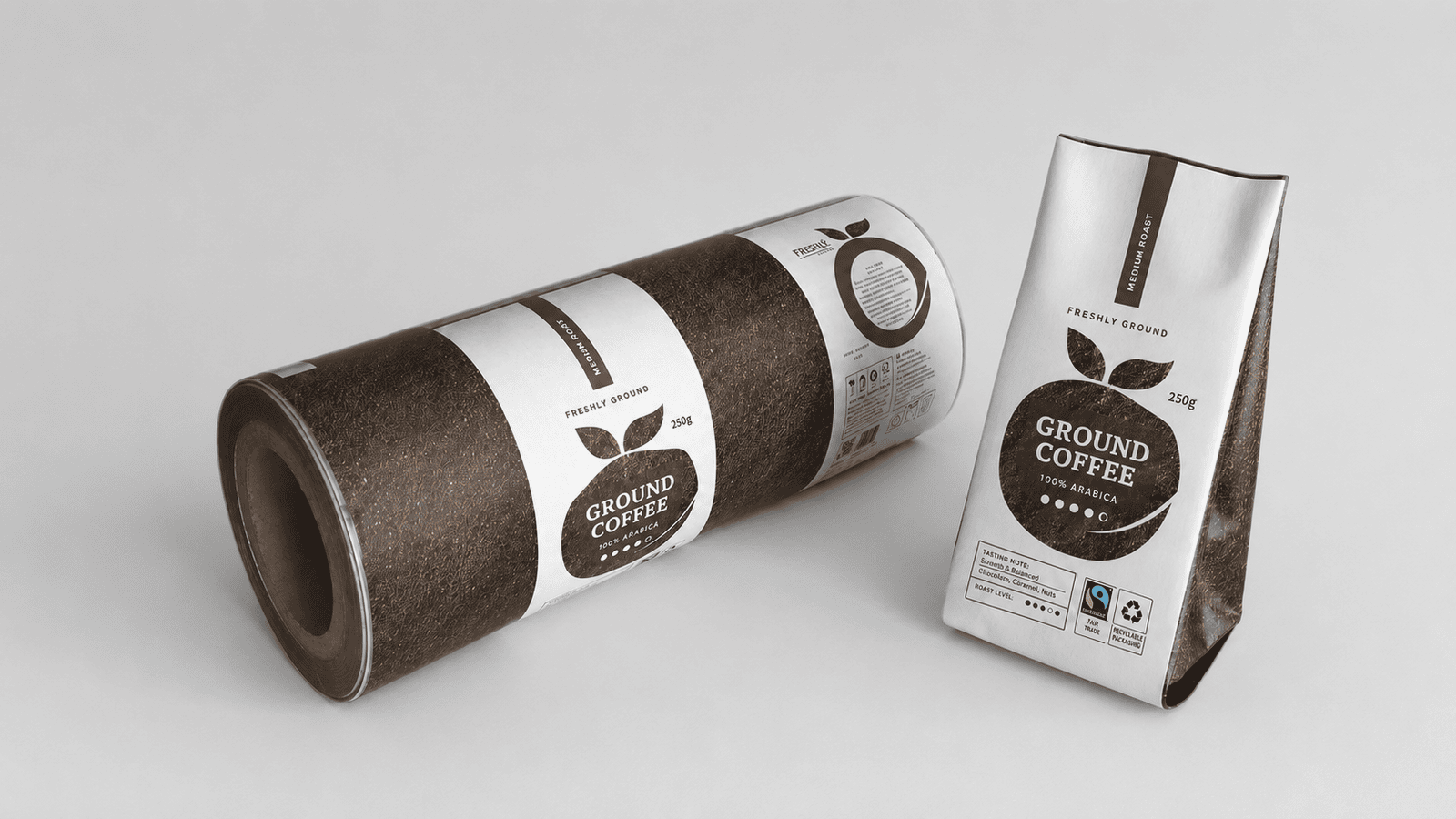
Whole Bean vs Ground Coffee Packaging at a Glance
Whole beans and ground coffee both need protection from oxygen, moisture, light, and aroma loss, but their degassing behavior, exposure rate, pack size, and filling format can lead to different packaging decisions.
Degassing Behavior
Whole beans may continue releasing carbon dioxide after roasting, especially when packed soon after production. Ground coffee usually releases trapped gases more quickly because grinding opens the bean structure.
Oxygen and Aroma Exposure
Whole beans generally expose less surface area to the surrounding atmosphere. Ground coffee has a much larger exposed surface area, so aroma loss and oxidation can progress more quickly after grinding.
Degassing Valve Decision
A one-way degassing valve is commonly considered for freshly roasted whole beans. Ground coffee may also use a valve, but the decision should reflect packing time, roast profile, shelf life, and pack size.
Barrier Requirements
Both formats need protection from oxygen, moisture, light, and aroma transfer. Ground coffee often requires particularly careful oxygen and aroma control because its volatile compounds are exposed more easily.
Pack Size and Reclosure
Whole bean retail bags often include a resealable zipper for repeated opening and closing. Ground coffee may use smaller retail packs, portion packs, or single-use formats to reduce exposure after opening.
Filling and Packaging Format
Whole beans are commonly packed in premade coffee pouches, while ground coffee can use both premade bags and printed rollstock film for automated filling, sachets, and smaller portion formats.
When Does Coffee Packaging Need a One-Way Degassing Valve?
A one-way degassing valve allows carbon dioxide released by roasted coffee to leave the package while helping limit outside air from entering. Whether a valve is needed depends on the coffee format, roast date, packing time, package size, and intended shelf life.
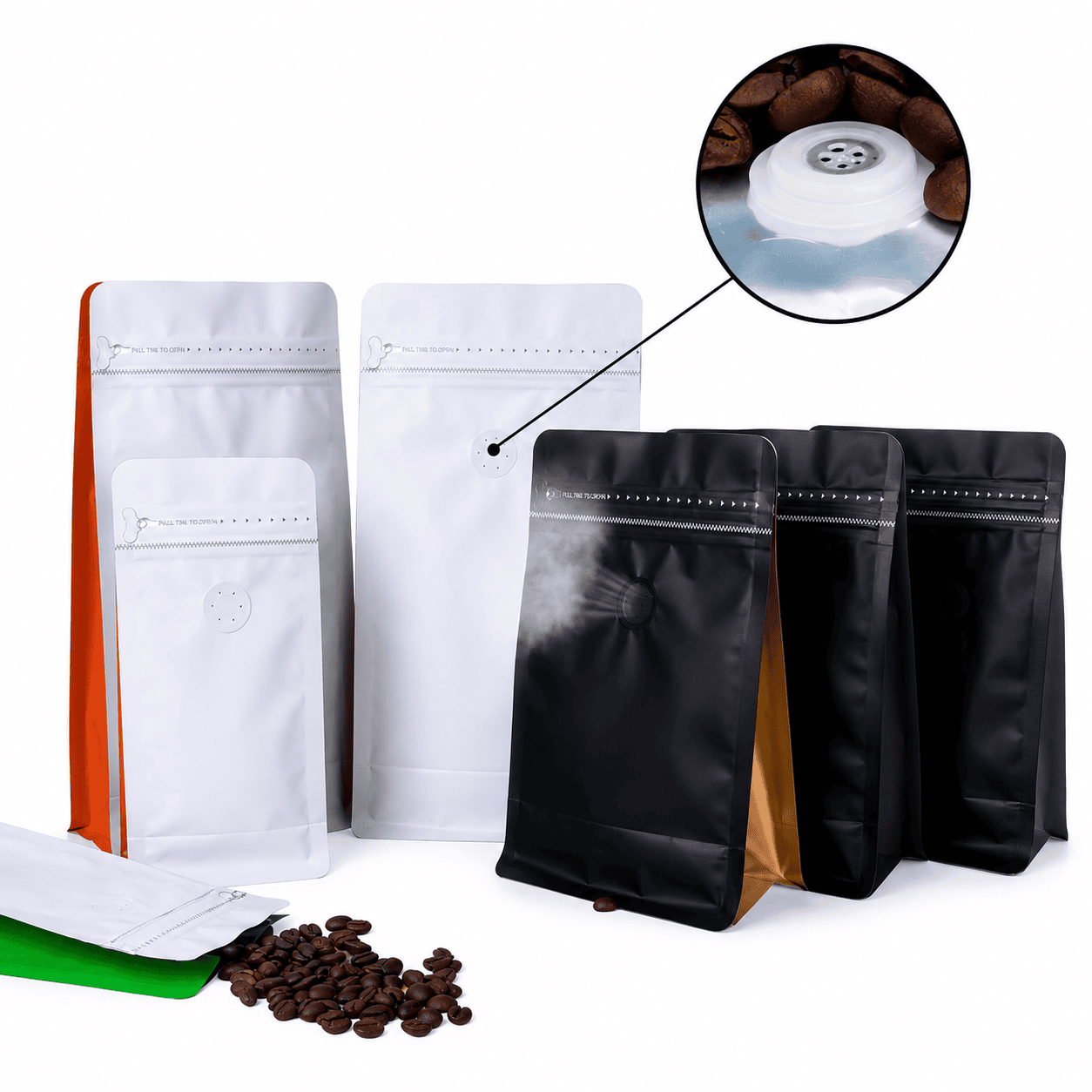
Barrier Requirements for Whole Beans and Ground Coffee
Coffee packaging must help control oxygen, moisture, light, and aroma transfer throughout storage and distribution. Whole beans and ground coffee face many of the same external risks, but grinding increases the exposed surface area and can make aroma and flavor protection more demanding.
Whole Bean Coffee
Whole beans retain their internal structure after roasting, which can slow aroma loss compared with ground coffee. However, they may continue releasing carbon dioxide and still require protection from oxygen, moisture, light, and outside odors.
A suitable whole bean package should combine dependable barrier performance with secure heat seals. When needed, a one-way degassing valve should work together with the film structure rather than weakening the package.
Resealable zippers are also commonly considered for retail packs, helping consumers close the pouch between grinding and brewing.
Ground Coffee
Grinding creates a much larger exposed surface area, allowing volatile aroma compounds to escape more easily. Ground coffee can therefore be especially sensitive to oxygen exposure and aroma transfer during filling, transportation, and storage.
Barrier performance should be evaluated together with package size, filling speed, headspace, nitrogen flushing where applicable, and the expected period between opening and consumption.
Smaller retail packs, portion packs, and single-use formats may help reduce repeated exposure, provided the film remains compatible with the selected filling and heat-sealing process.
Premade Coffee Bags vs Rollstock Film
Premade coffee bags and printed rollstock film can both protect whole beans and ground coffee, but they support different filling methods, production volumes, functional features, and packaging equipment.
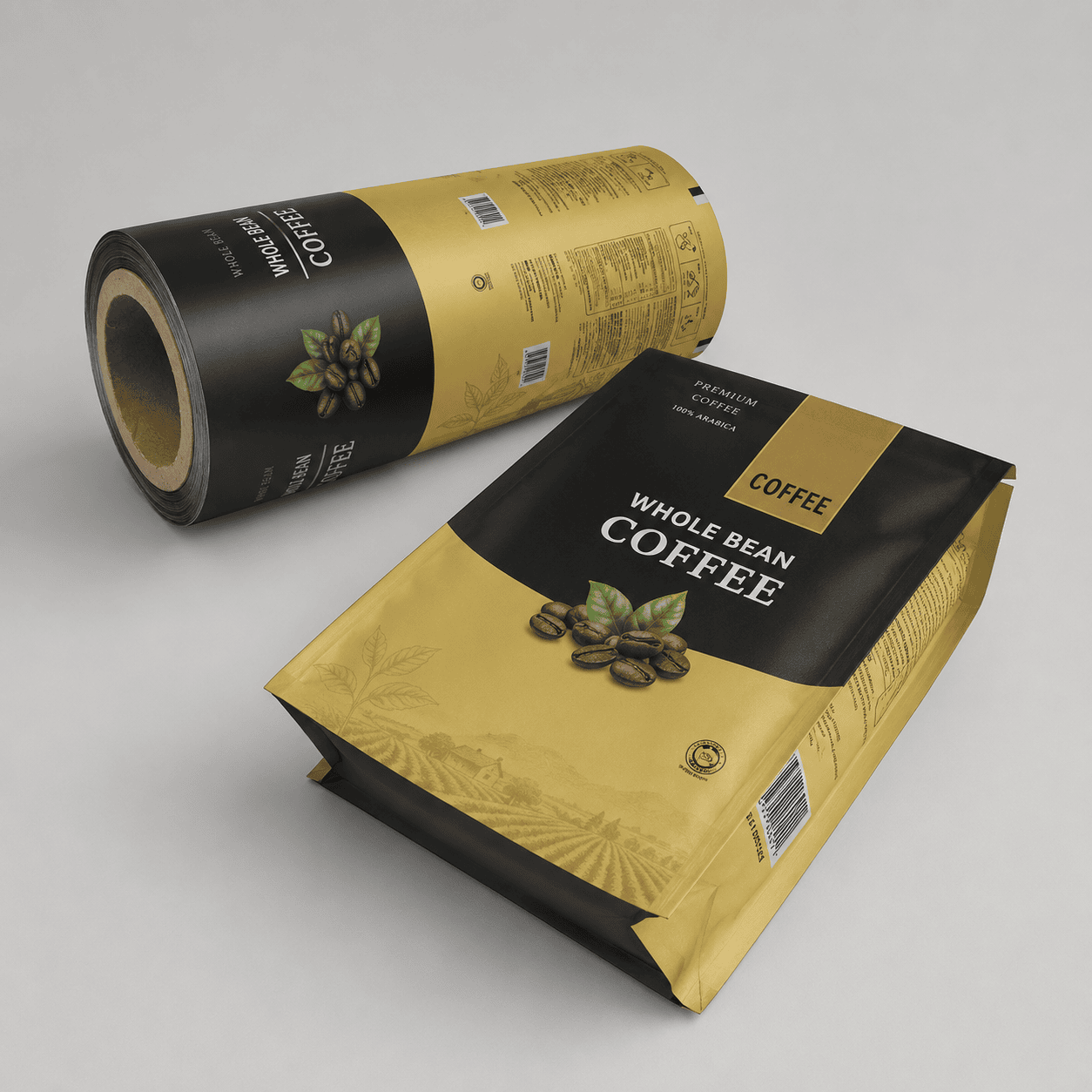
What to Confirm Before Ordering Coffee Packaging
A practical coffee packaging specification should reflect the coffee format, filling process, target shelf life, functional features, and production volume. Confirming these details early helps the packaging structure, size, and format match the actual product and packing process.
Coffee Product Details
Confirm whether the product is whole bean or ground coffee, the roast profile, the time between roasting and packing, and whether the coffee may continue releasing carbon dioxide after filling.
Pack Size and Format
Provide the target net weight, approximate product volume, preferred pouch dimensions, number of printed designs, and whether you need premade coffee bags, portion packs, or printed rollstock film.
Barrier and Functional Features
Confirm the expected shelf life and whether the package requires oxygen, moisture, light, and aroma protection, together with a degassing valve, resealable zipper, tear notch, or nitrogen flushing.
Filling Method and Order Quantity
Share the filling method, available packaging equipment, sealing conditions, estimated quantity per size or design, and any machine information required to confirm roll direction, film width, and repeat length.
Frequently Asked Questions About Whole Bean and Ground Coffee Packaging
These common questions cover degassing valves, barrier requirements, pouch formats, rollstock film, and the information needed when ordering custom coffee packaging.
No. A one-way degassing valve is commonly used for freshly roasted whole beans that continue releasing carbon dioxide after packing. Pre-degassed coffee, small portion packs, and some ground coffee products may use other freshness-control methods instead.
Ground coffee is generally more sensitive because grinding creates a much larger exposed surface area. This allows aroma compounds to escape and oxidation to progress more quickly, although both whole beans and ground coffee still need suitable barrier protection.
Premade flat bottom bags, stand-up pouches, and side gusset bags are commonly used for whole bean coffee. The final choice depends on fill weight, shelf presentation, filling method, zipper requirements, and whether a degassing valve is needed.
Yes. Printed rollstock film is widely used for ground coffee, portion packs, sachets, pillow packs, and automated packaging lines. Film width, repeat length, print direction, material structure, and sealing layer should match the packing equipment.
Provide the coffee format, fill weight, preferred package size, target shelf life, barrier requirements, valve or zipper needs, filling method, artwork details, number of designs, and estimated order quantity. Machine specifications are also important when ordering rollstock film.
CUSTOM COFFEE PACKAGING
Need Packaging for Whole Beans or Ground Coffee?
PaperMyna provides custom coffee packaging for whole beans, ground coffee, specialty roasters, retail packs, and automated packing lines. Share your coffee format, fill weight, package size, barrier needs, valve or zipper requirements, filling method, and order quantity, and our team can help recommend a practical premade pouch or rollstock film solution.