
How to Choose Blank Labels for Barcode and Shipping Applications

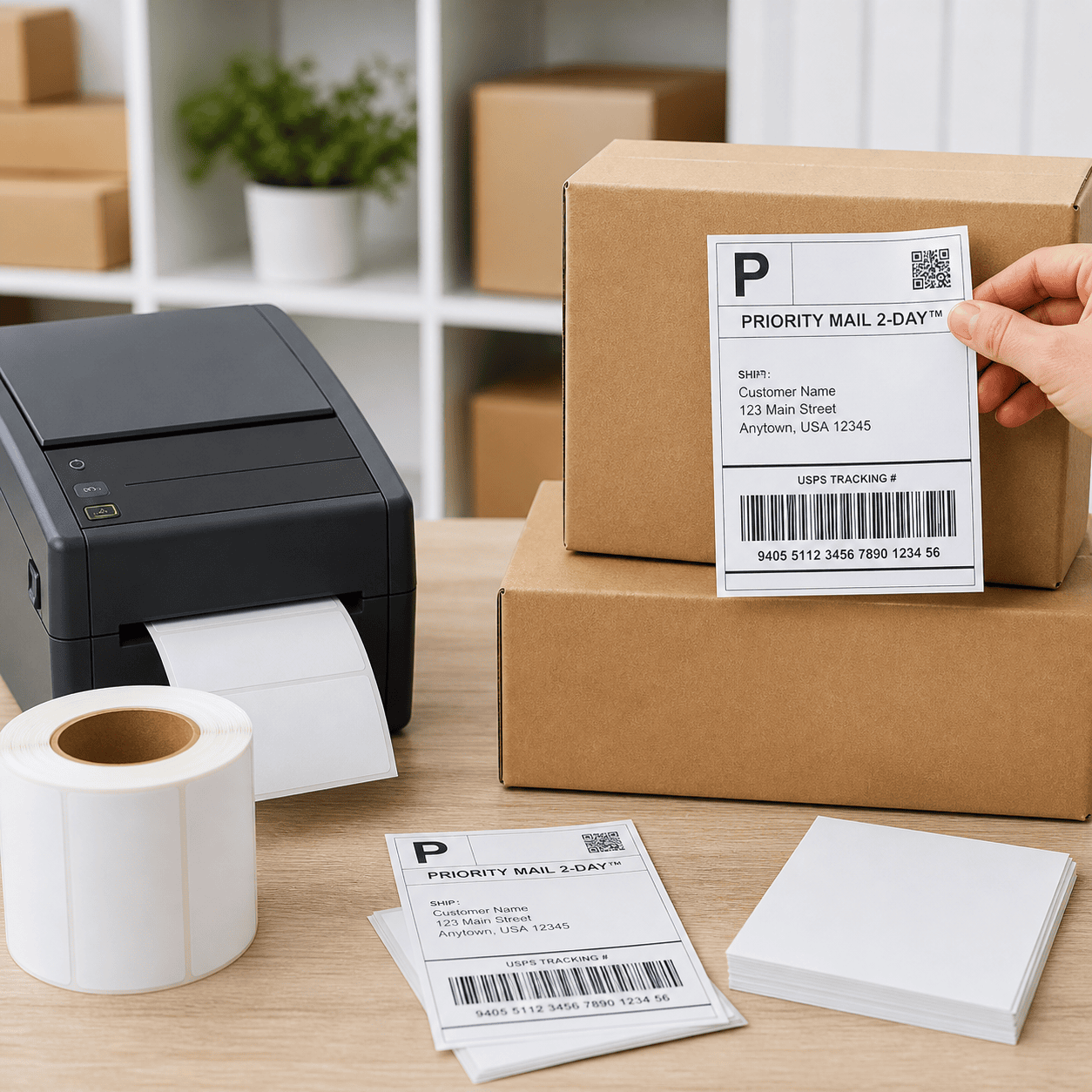
Blank labels used for barcode printing, shipping boxes, and warehouse label applications
Self-Adhesive Labels Guide

Start with Your Printing and Labeling Workflow

Choosing blank labels for barcode and shipping applications is not only about label size. The right option should match your printer type, material needs, adhesive strength, label format, and the surface where the label will be applied.

For shipping, warehouse, and barcode workflows, labels should print clearly, scan reliably, and stay attached during packing, handling, storage, and delivery.

Printer Type Label Size Material Adhesive Application Surface

Key Factors to Consider When Choosing Blank Labels

The best blank label depends on how it will be printed, where it will be applied, how long it needs to last, and what information needs to remain readable after handling.

01

Printer Type

Match the label material to your printer, such as direct thermal, thermal transfer, inkjet, laser, or barcode label printers.

02

Label Size

Choose the right width and height based on barcode size, shipping information, product details, and the available space on the package.

03

Material Choice

Paper labels work well for general use, while synthetic PP or PET labels are better for moisture, tearing, or more demanding environments.

04

Adhesive Strength

Permanent, removable, freezer, or strong adhesive options should be selected based on the surface, temperature, and label life.

05

Application Surface

Cardboard, glass, plastic, metal, and flexible packaging surfaces may require different materials and adhesives for stable performance.

06

Label Format

Roll labels, sheet labels, and fanfold labels should be selected based on printer setup, daily usage volume, storage method, and labeling workflow.

Material Selection

Blank Label Materials for Barcode and Shipping Use

Material choice affects print clarity, barcode readability, label durability, and how well the label performs during handling, storage, and transportation. For barcode and shipping applications, the material should match both the printer and the real working environment.
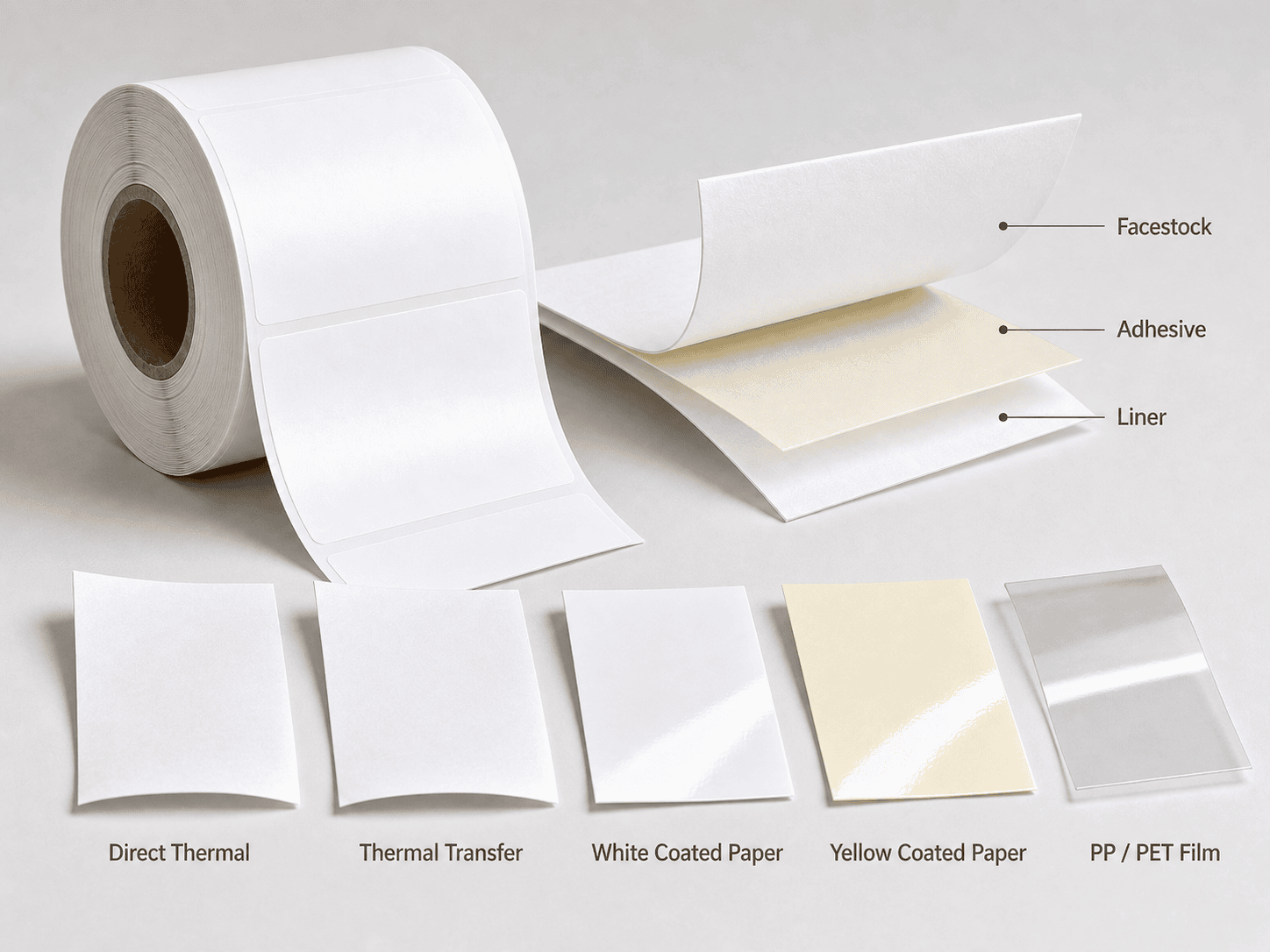
Blank label materials for barcode and shipping labels including direct thermal, thermal transfer, white coated paper, yellow coated paper, and PP PET film

Direct Thermal Paper

A common option for shipping labels, logistics labels, warehouse labels, and short-term barcode identification. It prints without ribbon and works well for fast daily operations.

Best for: shipping and warehouse labels

Thermal Transfer Paper

Used when labels need longer-lasting print quality. It works with ribbon printing and is suitable for inventory labels, carton labels, and product identification.

Best for: longer-lasting barcode labels

White / Yellow Coated Paper

Coated paper labels are available in different surface options, including white coated paper and yellow coated paper, for clean printing, product labeling, and packaging identification.

Best for: general product and packaging labels

Synthetic PP / PET Film

Synthetic PP and PET film labels are better for moisture resistance, tear resistance, abrasion resistance, and more demanding handling conditions.

Best for: durable and moisture-resistant labels

Label Formats for Barcode and Shipping Workflows

After choosing the material, the next step is selecting the right label format. Roll labels, sheet labels, and fanfold labels each work better for different printer setups, order volumes, and daily labeling workflows.

Roll Labels

Roll labels are commonly used with thermal printers, barcode printers, label dispensers, and warehouse systems. They are suitable for frequent printing and higher daily label volume.

Sheet Labels

Sheet labels are a practical option for inkjet or laser printers, office labeling, product stickers, and small-batch printing where flexibility is more important than speed.

Fanfold Labels

Fanfold labels are stacked instead of wound on rolls. They are often used for shipping, e-commerce orders, batch barcode printing, and logistics labeling.

For mixed label requirements, PaperMyna’s Blank Labels options can include rolls, sheets, fanfold labels, custom sizes, materials, and adhesive choices.

Final Tips Before Choosing Blank Labels

For barcode and shipping applications, the right blank label should match your printer, label size, material, adhesive, label format, and application surface. A suitable label helps support clear printing, reliable scanning, and stable adhesion during packing, handling, storage, and delivery.

If your workflow mainly uses thermal printers for shipping, warehouse, or barcode printing, you can also review PaperMyna’s Thermal Labels for more printer-ready label options.