
How to Choose Blank Label Sizes for Products and Shipping

Choosing the right blank label size is one of the first steps in building a reliable labeling workflow. A label that is too small may not leave enough room for barcodes, product details, or shipping information, while a label that is too large can look awkward on the package and increase material waste.

The best size depends on where the label will be used, what information needs to be printed, and how the label should fit the final product or package. For product packaging, shipping cartons, barcode printing, and warehouse tracking, the label size should match both the content and the application surface.
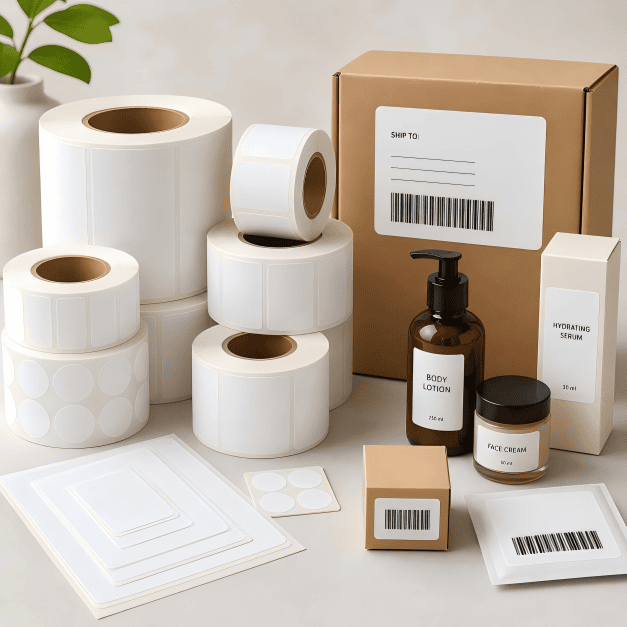
Blank label sizes for product packaging shipping boxes and barcode labels
Blank label sizes should match the printed content, package shape, and real application surface.

Start with the Label’s Main Use

A good label size should start with the way the label will be used. Product labels usually need enough space for a name, barcode, batch code, or short description, while shipping labels need a larger area for address details, tracking information, and scanning codes.

For small jars, bottles, sample packs, and retail boxes, a compact label often looks cleaner and more balanced. For cartons, mailers, warehouse bins, and outer packaging, a larger label is easier to read and scan during packing, storage, and delivery.

If you are still comparing formats, PaperMyna’s blank labels can be selected in different roll, sheet, and custom size options for product packaging, shipping, and barcode printing needs.

Match the Size to the Printed Content

After the main use is clear, check what needs to be printed on the label. A simple product code may only need a small label, but a shipping label, nutrition panel, product description, or barcode label usually needs more printable space.

Barcodes also need a clear area around the code so scanners can read them smoothly. If the barcode is squeezed too tightly, or if the text becomes too small, the label may look crowded and become harder to use in daily work.

A practical way to test the size is to print one sample at actual scale before ordering. This helps confirm whether the barcode, text, and layout are still easy to read on the final package.

Common Size Choices by Application

Blank label sizes do not need to be complicated. In most cases, the best choice comes from the package size, the amount of printed information, and how quickly the label needs to be read or scanned.

Small Product Labels

Compact labels work well for jars, bottles, sample packs, and small boxes when only a product name, short code, price, or simple barcode needs to be printed.

Shipping & Carton Labels

Larger labels are better for cartons, mailers, and shipping boxes because they leave enough space for addresses, tracking numbers, barcodes, and handling details.

Barcode & Inventory Labels

Barcode labels should leave enough room around the code for smooth scanning. For warehouse and inventory use, readability is usually more important than making the label as small as possible.

Check the Package Surface Before Ordering

Label size should also match the surface where it will be applied. A flat carton or mailer can usually hold a larger label without problems, while a curved bottle, small jar, pouch, or narrow product box may need a smaller label that follows the shape more naturally.

If the label is too wide for the surface, the edges may lift or wrinkle after application. If it is too small, important details such as barcodes, product codes, or handling information may become difficult to read. Testing the label on the real package is the safest way to confirm the size before ordering in bulk.

For product packaging and shipping workflows, choosing the right size together with the right adhesive can help the label stay clean, readable, and properly attached from packing to delivery.

Test the Size Before Bulk Ordering

Before placing a larger order, it is worth printing a few labels at the actual size and applying them to the real package. This simple test can show whether the barcode scans clearly, the text is easy to read, and the label fits the surface without looking crowded or oversized.

If one standard size cannot cover every application, using several practical sizes may be better than forcing one label to fit all products. For businesses that need different roll, sheet, or custom size options, PaperMyna’s blank labels can be selected based on packaging shape, printed content, adhesive needs, and daily labeling workflow.