
Blank Labels for Barcode Printing: Sizes & Materials

Barcode labels may look simple, but the right blank label can make a clear difference in scanning accuracy, print quality, and daily workflow efficiency. Whether the labels are used for shipping, warehouse tracking, inventory management, product identification, or retail packaging, the label size, material, adhesive, and printer compatibility should all be considered before ordering.

For businesses that print labels on demand, blank labels provide a flexible way to handle changing product codes, order details, batch information, and barcode formats without keeping many different pre-printed label designs in stock.
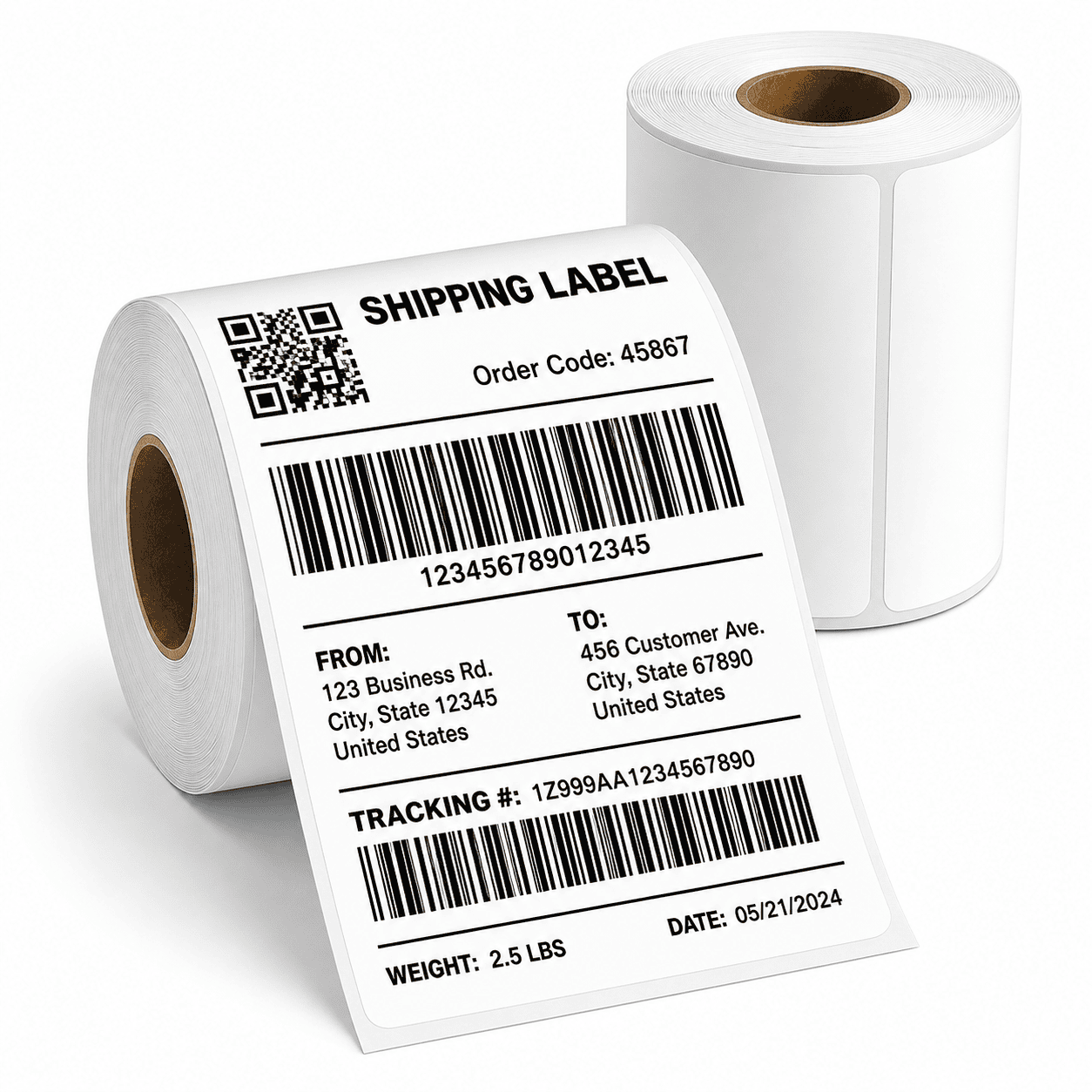
Blank labels for barcode printing with thermal shipping label rolls
Blank label rolls can be printed with barcodes, shipping details, product codes, and tracking information.

Why Blank Labels Matter for Barcode Printing

A barcode label is only useful when it can be printed clearly and scanned without trouble. Even if the barcode data is correct, the final result can still be affected by the label surface, adhesive performance, label size, and how well the material works with the printer.

For example, a rough or unsuitable surface may cause weak barcode edges, while a label that is too small can leave limited space around the barcode. If the adhesive does not hold well on cartons, plastic packaging, storage bins, or product surfaces, the label may curl or lift during handling.

That is why choosing the right blank labels before printing is important. A suitable label stock helps keep barcode lines sharp, printed text readable, and each label properly attached throughout packing, storage, shipping, or daily inventory work.

Choose the Right Label Size First

Label size should be decided before material, adhesive, or roll format. A barcode needs enough space to print clearly, and the label should also leave room for product codes, item names, batch details, shipping information, or any text that needs to stay readable during daily use.

A small label may work well for a simple SKU or inventory code, while shipping labels and warehouse labels usually need a larger printable area. When the barcode is squeezed into a label that is too small, the lines may become too dense, and scanners may have difficulty reading the code quickly.

It is also important to check the actual surface where the label will be applied. Cartons, bags, plastic containers, shelves, and product packages may all need different label sizes. A good label size should fit the surface naturally without covering important packaging information or lifting at the edges.

Match the Label Material to the Application

Once the label size is clear, the next step is choosing a material that fits the actual application. For standard barcode printing, paper labels are often enough for dry indoor use, such as carton labeling, retail pricing, warehouse shelves, product identification, and general inventory tracking.

If the label will be exposed to moisture, frequent handling, friction, cold storage, or longer-term use, a synthetic material such as PP or PET may be a better option. These materials usually provide a smoother surface and stronger durability, helping the printed barcode remain readable for a longer time.

The printing method also matters. If your workflow depends on fast barcode or shipping label printing, it is worth checking whether thermal labels are more suitable for your printer and daily packing process. For broader product labeling, blank label stock can be selected by material, adhesive, finish, and application surface.
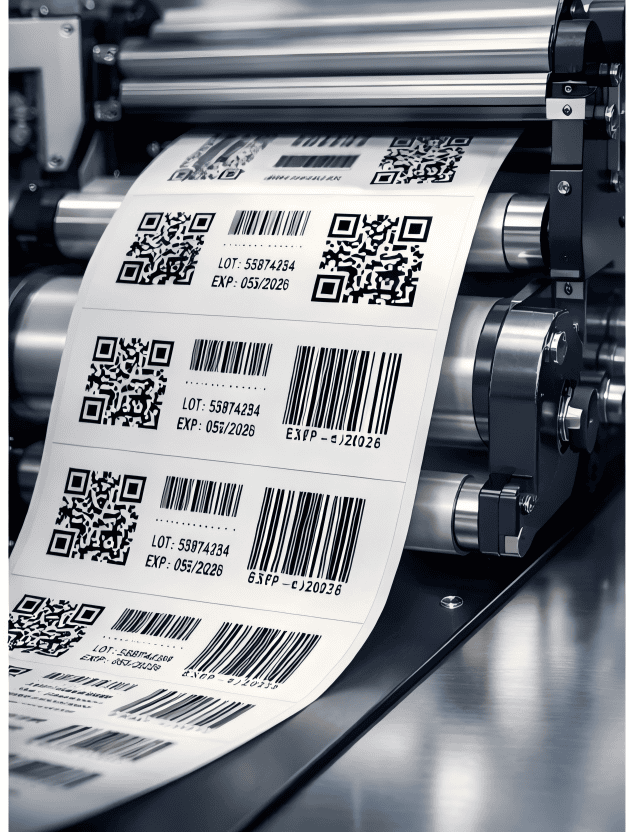
Barcode label printing on roll material for label application selection
Label material should match the printing method, barcode clarity requirements, and real application environment.

Select an Adhesive That Fits the Surface

A barcode label needs more than clear printing. It also needs to stay attached during packing, storage, transport, and daily handling. The right adhesive depends on the surface and the environment.

For Standard Packaging

For cartons, envelopes, paper bags, and smooth product boxes, a standard permanent adhesive is usually enough. It gives stable bonding for everyday shipping, inventory, and product identification.

For Special Surfaces

For plastic containers, curved bottles, cold storage, rough cartons, or removable label use, the adhesive should be selected more carefully to reduce lifting, curling, or residue problems.

Check Printer Compatibility Before Ordering

Before ordering blank labels for barcode printing, make sure the label size, roll core, outside diameter, gap type, and winding direction match your printer. These small details can affect how smoothly the label feeds through the printer and how accurately each barcode is positioned.

If your labels are mainly used for shipping, warehouse tracking, or daily barcode printing, the printer type should be checked together with the label material. For some fast-moving workflows, thermal labels may be a practical option, while broader product labeling may need different blank label materials and adhesive choices.

A simple test before bulk ordering can help confirm print clarity, scanning performance, and adhesive strength. For flexible barcode, shipping, and product identification needs, PaperMyna’s blank labels can be selected by size, material, adhesive, and printing application.