
How to Choose Label Adhesive for Different Packaging Surfaces

Label Adhesive Guide

How to Choose Label Adhesive for Different Packaging Surfaces

Choosing the right label adhesive is not only about how strongly a label sticks. It also depends on the packaging surface, storage conditions, handling process, and how long the label needs to stay readable.

For shipping labels, barcode labels, product labels, and blank labels used across different packaging lines, adhesive selection can directly affect scanning reliability, product presentation, and daily labeling efficiency.
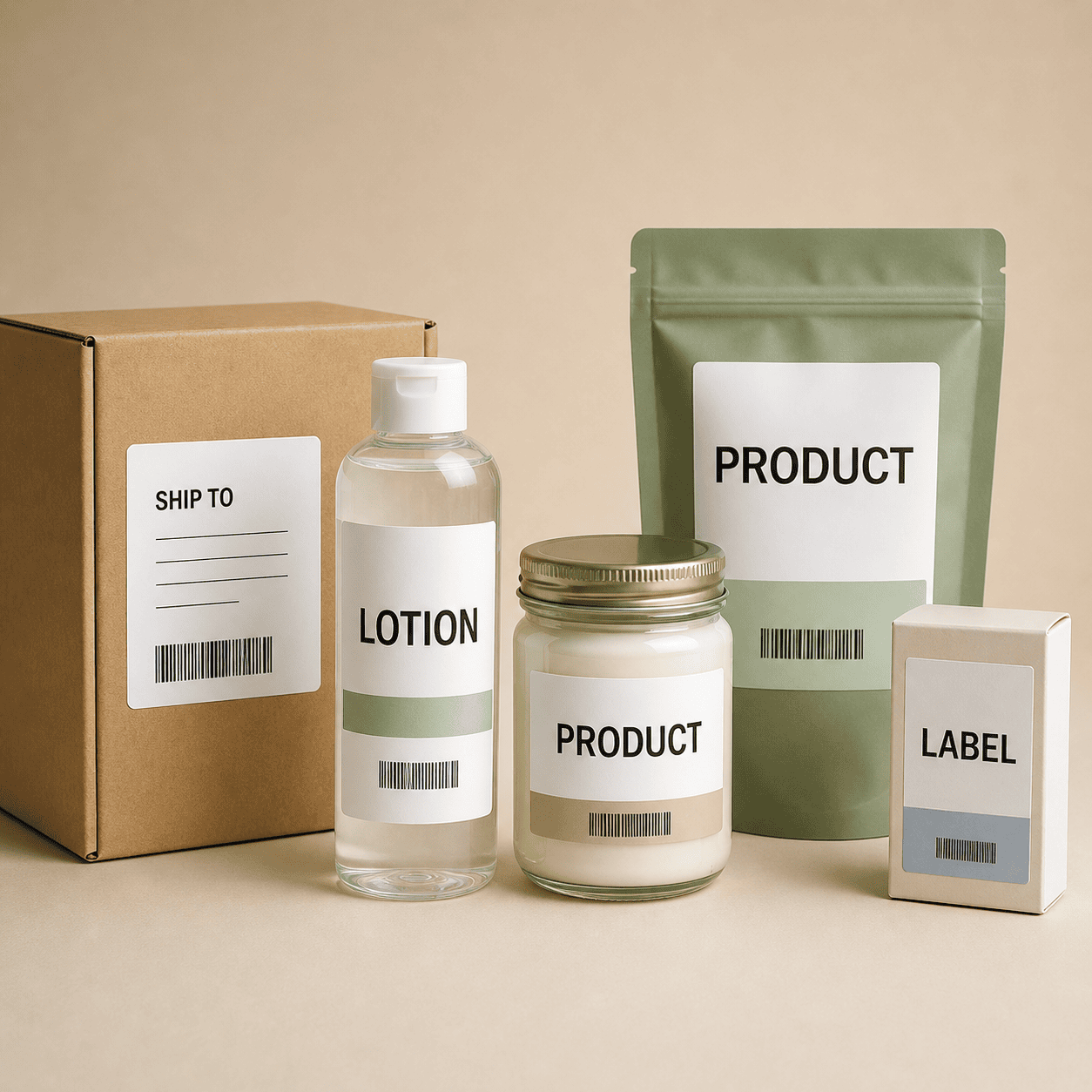
Cardboard Plastic Glass Flexible Packaging
Label adhesive selection for different packaging surfaces
Matching label adhesive with the actual packaging surface helps improve label stability and readability.

Why Label Adhesive Matters

A label may look simple, but the adhesive behind it has to work with the surface it is applied to. A label that performs well on a cardboard carton may not work the same way on a smooth plastic bottle, a cold glass jar, or a flexible pouch.

If the adhesive is not matched correctly, the label may lift at the edges, wrinkle, slide, or lose readability during storage and transportation. For businesses using blank labels across packaging, warehousing, and product identification, choosing the right adhesive from the beginning helps reduce re-labeling, scanning issues, and packaging waste.

Surface Compatibility

Cardboard, plastic, glass, metal, and flexible packaging all have different surface conditions. The adhesive needs to match the real packaging material, not just the label size.

Application Stability

Labels used for shipping, barcode scanning, and product identification should stay flat and readable during handling, storage, and transportation.

Long-Term Readability

When labels curl, lift, or move out of position, barcodes and product information may become harder to scan or read, especially in logistics and warehouse workflows.

Start with the Packaging Surface

Different packaging materials have different surface energy, texture, and flexibility. These factors affect how well the adhesive can bond to the surface. Before choosing a label adhesive, it is important to look at the actual material your label will touch.

Cardboard and Corrugated Boxes

Cardboard usually works well with general-purpose permanent adhesive. For rough corrugated boxes, the adhesive should have enough initial tack to grip uneven fibers and stay in place during handling.

Plastic Bottles and Containers

Plastic surfaces can be smooth, curved, or slightly difficult to bond. For HDPE, PP, and PET containers, a stronger adhesive may help improve label stability, especially when the package is exposed to moisture or frequent handling.

Glass Jars and Bottles

Glass is smooth and non-porous, so labels need clean application and good surface contact. If the product is stored in cold or damp conditions, the adhesive should resist condensation and edge lifting.

Metal Tins and Cans

Metal packaging often has a smooth surface and may face temperature changes. A stable permanent adhesive is usually preferred for product labels, inventory labels, and industrial identification labels.

Flexible Packaging and Pouches

Flexible packaging can bend, move, or slightly expand after filling. Labels used on pouches or films should stay flat without curling, cracking, or lifting at the edges.

Permanent, Removable, or Freezer Adhesive?

Label adhesive is usually selected by how the label will be used. Some packaging needs a strong long-term bond, while other applications require clean removal or reliable performance in cold storage. Matching the adhesive type with the real packaging condition helps keep labels flat, readable, and secure.
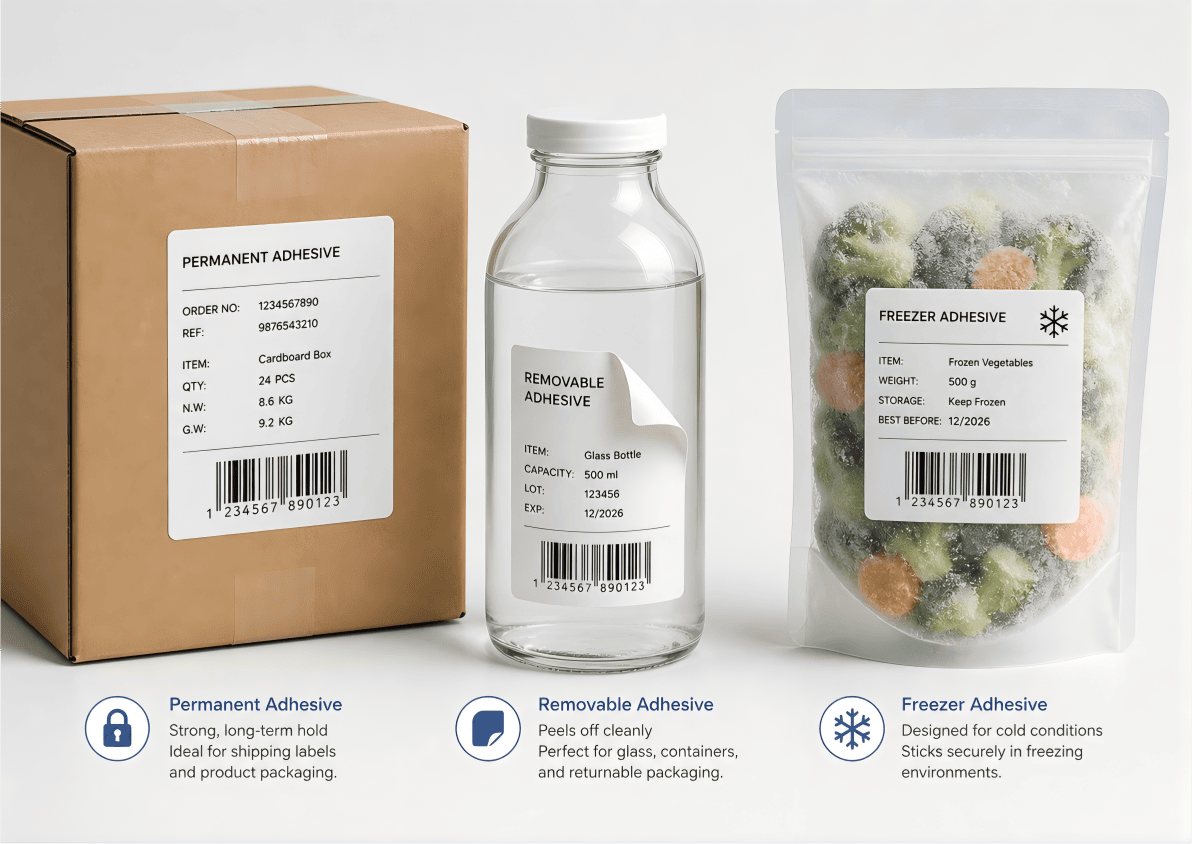
Permanent removable and freezer label adhesive types for packaging
Permanent, removable, and freezer adhesives are used for different packaging surfaces and storage conditions.
Strong Hold

Permanent Adhesive

Best for shipping labels, barcode labels, carton labels, product labels, and packaging that needs long-lasting identification during storage and transportation.

Clean Removal

Removable Adhesive

Useful for temporary labels, promotional labels, reusable containers, sample packaging, and surfaces where clean removal is important.

Cold Storage

Freezer Adhesive

Suitable for frozen food packaging, refrigerated logistics, cold storage labels, and products exposed to low-temperature environments.

Consider Temperature, Moisture, and Handling

The same label adhesive may perform differently in a dry warehouse, a refrigerated room, or a humid delivery environment. Temperature, moisture, and daily handling can all affect adhesive strength, label edge stability, and long-term readability.

For packaging that moves through cold storage, outdoor transport, conveyor systems, or repeated scanning, it is safer to test the label under real working conditions before large-scale use.

Temperature Changes

Cold rooms, freezer storage, and warm filling environments can change how the adhesive bonds to the packaging surface. Labels should be tested at the temperature where they will actually be applied and stored.

Moisture and Condensation

Moisture can weaken the bond between the label and the package, especially on glass, plastic, and frozen food packaging. A suitable adhesive helps reduce edge lifting and label movement.

Handling and Scanning

Packages that are stacked, rubbed, scanned, or moved through logistics systems need labels that stay flat and readable. This is especially important for barcode labels and shipping labels.

Final Checks Before Choosing Label Adhesive

Before choosing a label adhesive, it is worth checking how the label will be printed, applied, stored, and handled. A label that looks fine at first may still lift, curl, or become harder to scan if the adhesive is not matched with the real packaging condition.

Match the Printing Method

Direct thermal labels are often used for shipping and logistics, while thermal transfer labels are better for longer-lasting product identification. The adhesive, label material, and print method should work together.

Test on Real Packaging

Apply sample labels to the actual carton, bottle, jar, pouch, or container. Then check whether the label edges lift after storage, handling, or temperature changes.

Check Barcode Readability

For barcode labels and shipping labels, the label must stay flat and readable. Poor adhesion can affect scanning performance during warehousing, sorting, and delivery.

For packaging, warehouse, and product identification applications, PaperMyna’s Blank Labels can support a wide range of labeling workflows. The best choice is not always the strongest adhesive, but the adhesive that fits the surface, storage condition, and end use.