
For many food brands, packaging is not only about how the product looks on the shelf. It also needs to run smoothly on the packing line, seal consistently, protect the product during storage, and keep the final pack looking clean after production.
This is where rollstock film packaging is often used. Instead of filling pre-made bags by hand, rollstock film is supplied in rolls and formed into finished packages during the packing process. It is commonly used for snacks, bakery products, frozen foods, candy, coffee, and other flexible packaging applications that require stable production and custom printed presentation.
In this guide, we explain when rollstock film is a good choice, what details should be confirmed before ordering, and how food brands can avoid common problems with materials, sealing, roll direction, and artwork layout. You can also view our Rollstock Film product page for more packaging options.
ROLLSTOCK FILM BASICS
What Is Rollstock Film Packaging?
Rollstock film packaging is flexible packaging material supplied in roll form. During production, the film is unwound by the packaging machine, formed around the product, sealed, and cut into individual packs. This format is commonly used when food brands need efficient, repeatable, and machine-friendly packaging.
Unlike pre-made bags, rollstock film is designed to work directly with automated packing equipment. It can be used for pillow packs, flow wrap packs, sachets, stick packs, frozen food bags, snack packs, and other flexible packaging formats depending on the product and machine setup.
Why Food Brands Use It
For brands moving from manual packing to automated production, rollstock film can help improve packing speed, reduce handling, and keep each finished package more consistent.
It is one of the most practical formats within Flexible Packaging for food products that need stable production, custom printed presentation, and reliable sealing performance.
- Supplied as printed film rolls
- Formed and sealed by packing machines
- Suitable for many food packaging formats
FOOD PACKAGING APPLICATIONS
Common Food Products Packed with Rollstock Film
Rollstock film is widely used for food products that need fast packing, consistent sealing, and custom printed presentation. The right structure depends on the product’s texture, storage condition, shelf life target, and packing machine setup.
Snack Foods
Chips, crackers, popcorn, nuts, and other snack products often use printed rollstock film for pillow packs, portion packs, and retail packaging that needs clean sealing and good shelf visibility.
Bakery Products
Cookies, biscuits, pastries, bread portions, and bakery snacks can use rollstock film when brands need efficient flow wrapping, clear product presentation, or consistent printed packaging for repeat production.
Frozen Foods
Frozen vegetables, prepared foods, frozen snacks, and frozen bakery items need film structures that can handle low-temperature storage, sealing strength, and transportation without making the package difficult to run.
Candy, Coffee, and Dry Foods
Candy, gummies, coffee sample packs, powder products, and dry food portions can also be packed with rollstock film, especially when brands need smaller packs, multiple SKUs, or automated packing efficiency.
For application-specific packaging ideas, you can also view PaperMyna’s Snack Packaging, Bakery Packaging, and Frozen Food Packaging solutions.
MATERIAL STRUCTURE
Material Structure Should Match the Product
Rollstock film is not a single fixed material. It is usually designed as a flexible structure based on the product’s shelf life, storage condition, sealing method, and packing machine. Some food products only need a clean printed film with basic protection, while others need stronger barrier performance for moisture, oxygen, oil, or freezer storage.
Print Layer
The print layer carries the brand design, product name, flavor information, barcode, nutrition panel, and other retail details. For custom printed rollstock film, the artwork direction and repeat length should match the final packing format.
Barrier Layer
The barrier layer helps protect the product from moisture, oxygen, aroma loss, oil migration, or low-temperature storage conditions. The required barrier level should be based on the real product and shelf life target, not added blindly.
Sealant Layer
The sealant layer affects how the film runs on the packing machine. It should support stable sealing, clean cutting, and reliable package strength without causing film drag, poor sealing, or wrinkled finished packs.
MACHINE COMPATIBILITY
Rollstock Film Must Match the Packing Line
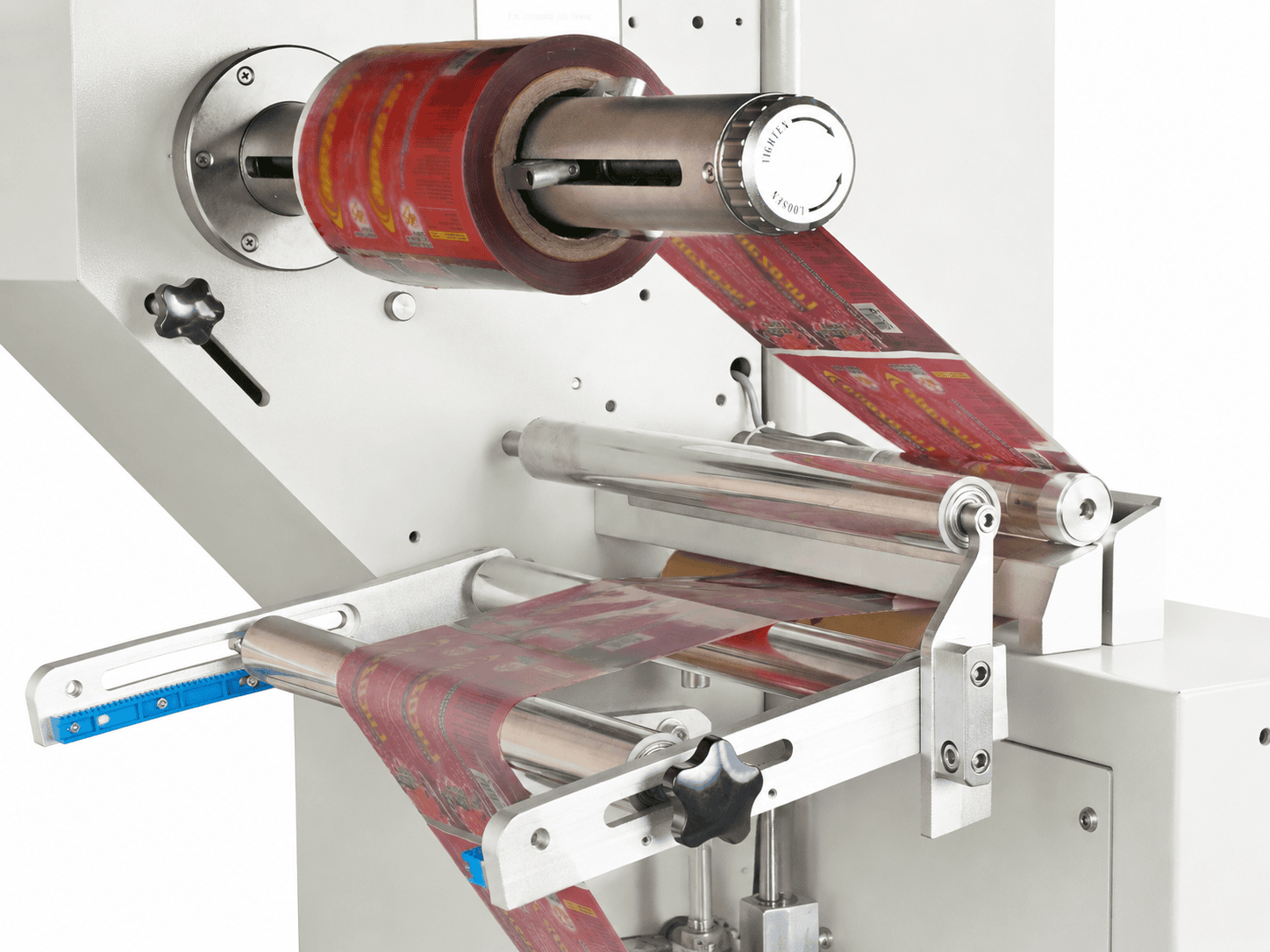
Rollstock film does not work alone. It needs to match the actual packing machine, sealing method, roll direction, and package size. Even when the material structure looks correct, production problems can still happen if the film does not run smoothly on the equipment.
Before ordering custom rollstock film, brands should confirm whether the film will be used on a vertical form fill seal machine, horizontal flow wrap machine, sachet packing line, or another automated packaging system. Each machine may require different film width, tension, sealing temperature, eye mark position, and winding direction.
For this reason, rollstock film projects should be reviewed together with product details and machine parameters. This helps avoid common issues such as poor sealing, film drag, inaccurate cutting, misaligned printing, or finished packs that wrinkle after forming.
ORDERING CHECKLIST
What to Confirm Before Ordering Rollstock Film
A rollstock film project is easier to manage when the key details are confirmed before production. These details help the supplier recommend the right material structure, print direction, roll size, and sealing layer for the actual product and packing line.
Product Details
Confirm the product type, weight, size, storage condition, and expected shelf life. Dry snacks, frozen foods, bakery items, and powder products may need different film structures.
Machine Information
Share the packing machine type, sealing method, roll width, core size, maximum roll diameter, and winding direction so the film can run smoothly during production.
Package Size
Confirm the final pack width, length, sealing area, repeat length, and eye mark position. These details affect cutting accuracy and the final printed package appearance.
Artwork and SKUs
Prepare the artwork file, barcode position, nutrition panel, flavor versions, and SKU count. For custom printed rollstock film, artwork direction should match the packing line.
If some details are not clear yet, PaperMyna can help review the project based on your product, packing method, and target package style before confirming production.
CUSTOM ROLLSTOCK FILM
Need Custom Rollstock Film for Your Food Packaging Line?
PaperMyna helps food brands develop custom printed rollstock film for snacks, bakery products, frozen foods, candy, coffee, dry foods and other flexible packaging applications. Share your product type, package size, artwork needs and packing machine details, and our team can help recommend a practical film structure and roll specification.