
PILLOW POUCH PACKAGING
Pillow Pouch Packaging Is Simple in Shape but Technical in Production
A pillow pouch is one of the most widely used flexible packaging formats for products packed on automated lines. The package is typically formed from a continuous web of film, closed with a longitudinal seal, and finished with cross seals at both ends.
The finished shape may look straightforward, but consistent production depends on the film structure, pouch dimensions, sealing behavior, artwork repeat, registration marks, roll construction, and the packaging machine working together.
For buyers sourcing custom printed rollstock film, these production details should be confirmed before artwork and film specifications are finalized.
POUCH CONSTRUCTION
How a Pillow Pouch Is Formed and Sealed
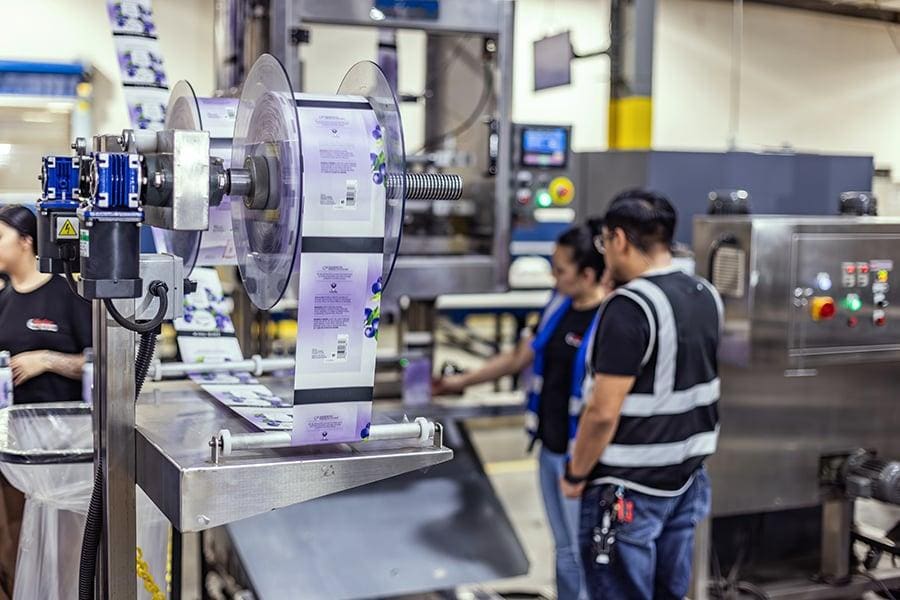
Pillow pouches are generally produced from flexible rollstock rather than supplied as already finished empty bags. During packing, the film is formed around the product path and its longitudinal edges are joined to create the back seal.
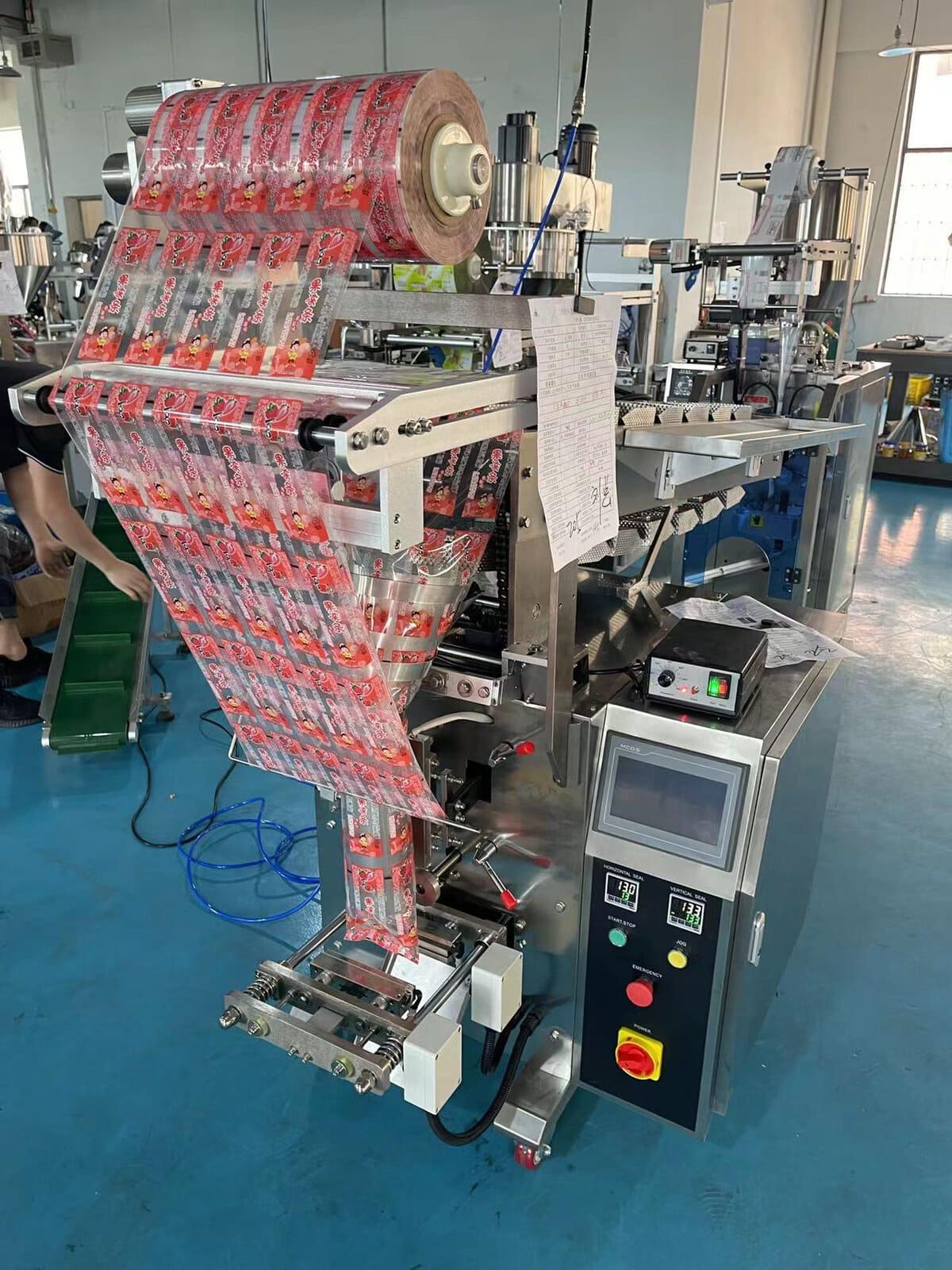
On a typical vertical form-fill-seal line, the film passes around a forming collar and becomes a tube. Product is dosed into that tube, while sealing jaws create the cross seals that close the package and separate one pouch from the next.
Individually fed products such as bars, confectionery, and some bakery products can also be packed in pillow-style formats on horizontal flow-wrapping equipment. The machine orientation is different, but film dimensions, seal position, print repeat, and product dimensions still need to work together.
The longitudinal seal may be described as a back seal, center seal, fin seal, or lap-style seal depending on the film and machine configuration. Not every pillow pouch uses exactly the same seal geometry.
PRODUCT APPLICATIONS
Which Products Work Well in Pillow Pouches?
Pillow pouch packaging can be used across a broad range of products, but the product itself determines how the pouch should be filled, protected, and sealed. Free-flowing products and individually fed products often use different packing systems even when the finished packages have a similar pillow shape.
Free-Flowing and Dosed Products
Vertical form-fill-seal systems are commonly used for products that can be weighed, counted, or dosed into the formed film tube.
- Snacks, nuts, and confectionery
- Grains and dry ingredients
- Granules and small particulate products
- Powders with a suitable dosing and sealing system
Product dust, oil, sharp edges, or small particles can affect the sealing area, so filling behavior should be considered together with the laminate and sealant layer.
Individually Fed Solid Products
Horizontal flow-wrap systems are often used when individual products are fed continuously into the packaging line.
- Snack and nutrition bars
- Bakery products
- Confectionery pieces
- Other regularly shaped individual products
Product length, feeding pitch, required headspace, and seal location can strongly influence the final package dimensions and print repeat.
FILM STRUCTURE
Build the Film Structure Around Product Protection and Sealing
There is no single laminate that is correct for every pillow pouch. Material selection should start with the product, shelf-life target, barrier requirement, sealing conditions, distribution environment, and performance required on the packing line.
Print & Structural Layer
The outer layer supports printing, handling, stiffness, and surface durability. Materials such as BOPP or PET may be used depending on the required appearance, mechanical performance, and overall laminate design.
Barrier or Functional Layer
Products sensitive to moisture, oxygen, aroma loss, light, or grease may require additional functional performance. The appropriate barrier level should be selected around the actual product and its intended shelf life.
Inner Sealant Layer
The inner layer must seal reliably within the operating range of the packaging machine. Hot tack, seal initiation, product contamination in the seal area, filling speed, and required seal strength can all influence the final structure.
For moisture-sensitive snacks and dry products, barrier requirements should be evaluated around the actual product rather than selected from package appearance alone. See our moisture barrier packaging guide for additional considerations.
ARTWORK & PRINT REPEAT
Artwork, Repeat Length, and Back-Seal Allowance Need to Be Planned Together
Printed pillow pouch film is part of a converting and packing process. Artwork cannot be finalized accurately from the visible front panel alone because the machine also needs material for forming, sealing, tracking, and cutting.
The Printed Web Has to Match the Finished Package
Print repeat determines the distance from one package design to the next along the film web. It needs to correspond with the machine cut-off length so graphics remain in the intended position after each pouch is sealed and separated.
The longitudinal seal allowance also needs to be included in the artwork layout. Logos, barcodes, instructions, ingredients, and regulatory information should not unintentionally fall into a seal, fold, or high-distortion forming area.
Registration marks allow compatible machines to detect the printed repeat and control package position. Their location, contrast, and relationship to the artwork should therefore be confirmed before the printing file is released.
Web width must also match the forming requirement of the equipment. Finished pouch width alone is not enough to determine the correct film width because forming geometry and longitudinal seal allowance also need to be considered.
For a new project, matching the artwork to the actual form-fill-seal packaging line is more reliable than estimating the rollstock specification from a finished pouch sample alone.
MACHINE COMPATIBILITY
Machine Compatibility Is Part of the Film Specification
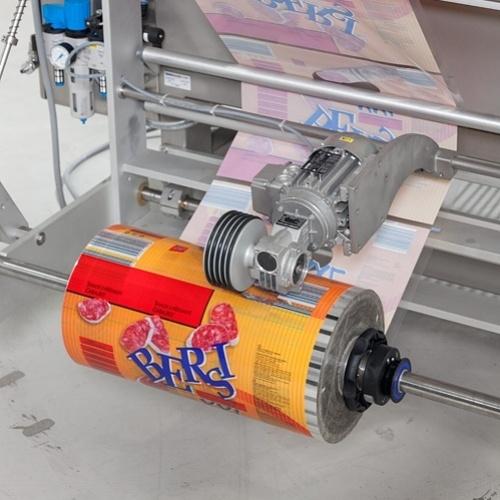
Two rolls printed with similar artwork are not necessarily interchangeable between packaging lines. Web dimensions, winding setup, print registration, film handling, and sealing performance all need to fit the equipment that will actually run the material.
Confirm the Line Data Before Film Production
Machine drawings, an existing film specification, or a sample roll usually provide better production information than finished pouch dimensions alone.
Supplying the actual machine and roll specifications before printing reduces guesswork and gives the film converter a clearer basis for confirming dimensions, winding, registration, and sealing requirements.
FORMAT SELECTION
Pillow Pouch or Stand-Up Pouch: Which Format Fits the Project?
Both formats can use printed flexible packaging materials, but they solve different packaging needs. The choice should be based on the filling process, shelf presentation, required features, product behavior, and distribution requirements.
Pillow Pouch
Pillow pouches are particularly suitable when products will be packed directly from rollstock on compatible automated equipment. Their relatively simple construction works well for many snacks, dry foods, powders, granules, bars, and individually wrapped products.
They are a practical option when an upright base or built-in reclosure is not essential and the packing line is designed around continuous film.
The main purchasing considerations are usually film structure, machine compatibility, print repeat, sealing performance, roll dimensions, and production consistency.
Stand-Up Pouch
A stand-up pouch uses a bottom gusset or related structure to create an upright retail package. It can also incorporate features such as zippers, tear notches, valves, or other options when required.
Stand-up pouches are often selected when shelf presentation, reclosure, larger display panels, or multi-use convenience are more important than the simplicity of a conventional pillow pack.
Many projects use premade stand-up pouches, so the filling process and machinery can differ substantially from a rollstock-formed pillow pouch line.
BEFORE ORDERING
What to Confirm Before Ordering Printed Pillow Pouch Film
A useful rollstock specification combines product information with the actual packing-line requirements. Providing these details early helps material selection, artwork setup, printing, slitting, and final roll preparation stay aligned.
Product & Fill
Confirm the product type, physical form, fill weight or volume, oil or moisture characteristics, and any special storage or distribution conditions.
Finished Pouch Size
Provide the target pouch width and length, required headspace, seal areas, opening features, and any dimensional restrictions created by the product or secondary packaging.
Film & Barrier
Define the required moisture, oxygen, aroma, light, puncture, grease, and sealing performance according to the product and intended shelf life.
Machine & Roll Data
Confirm film width, print repeat, registration-mark requirements, core size, maximum roll diameter, unwind direction, and other machine-specific restrictions.
If an existing film already runs successfully on the machine, sharing its specification or a sample roll can provide a useful production reference for the new printed film.
A Good Pillow Pouch Starts With the Packing Line, Not Just the Artwork
Pillow pouch packaging may have a simple finished shape, but successful production depends on the complete system behind it. The product, film structure, barrier performance, seal design, artwork repeat, roll specification, and machine settings all influence the finished package.
Before ordering printed rollstock film, confirm the product requirements and obtain the actual packing-line data whenever possible. This gives the packaging supplier a stronger technical basis for selecting the laminate, preparing the print layout, and producing rollstock that is better matched to real production conditions.