
LIQUID & REFILL PACKAGING
Spout Pouch vs Bottle: The Better Choice Depends on Use
Spout pouches and bottles can both package liquid products successfully, but their practical roles are often different. A bottle provides a rigid format, familiar handling, and compatibility with pumps, triggers, or repeated dispensing. A spout pouch can provide a lighter flexible format for direct use or for replenishing a reusable bottle.
Neither option should be chosen only for appearance or initial pack cost. Product viscosity, fill volume, closure requirements, filling equipment, consumer handling, transport conditions, and refill plans all affect the better choice. This guide compares the two formats so brands can build a liquid packaging specification around real use, rather than assumptions.
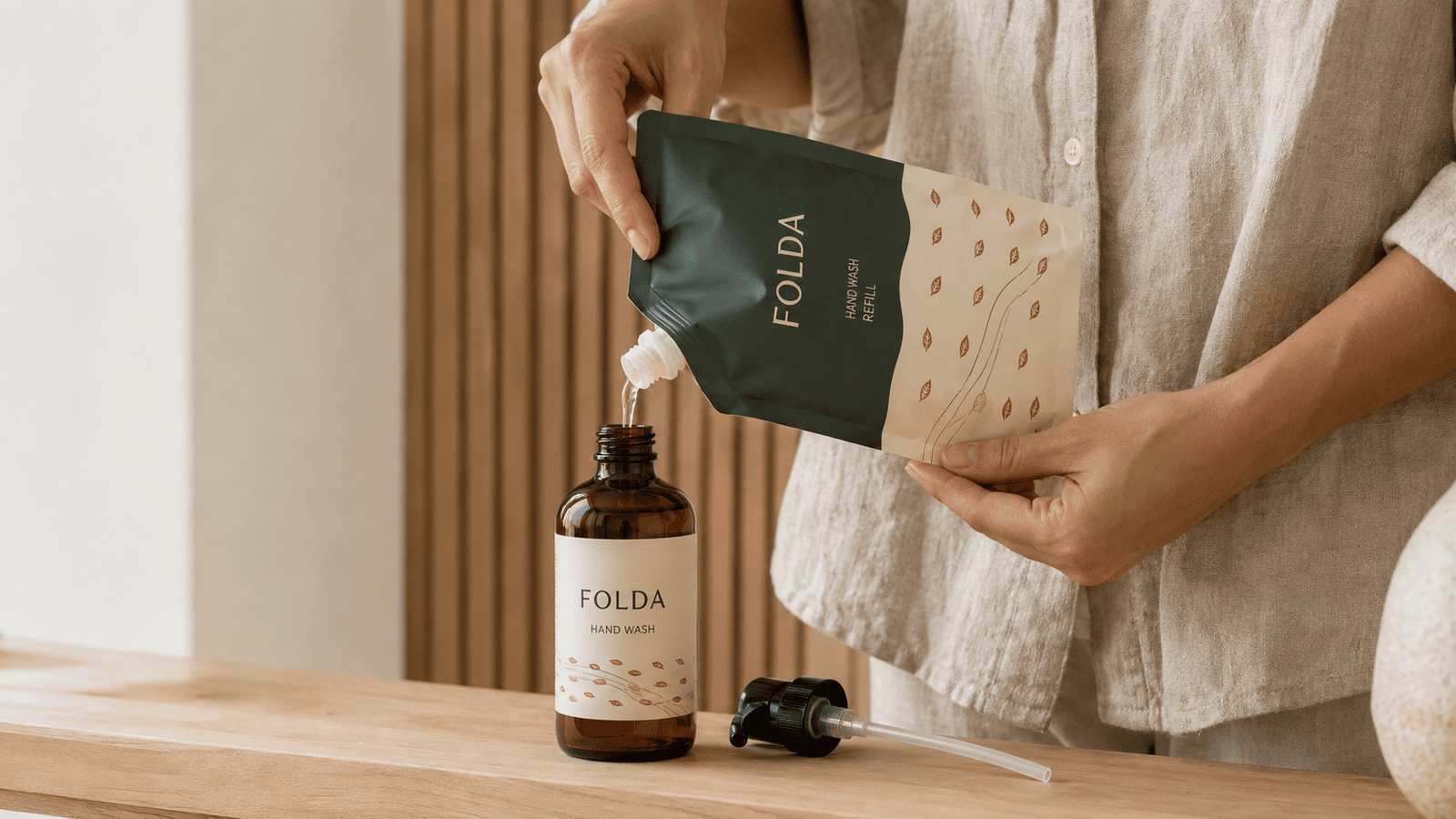
A Practical Spout Pouch vs Bottle Comparison
Both formats can work for liquid products, but they solve different packaging needs. Use this comparison to identify which format better supports the product, filling process, customer experience, and refill strategy.
In many refill programmes, the strongest solution is not an either-or choice: a durable bottle can be paired with a correctly specified spout pouch refill.
FORMAT SELECTION
When Each Format Is the Better Fit
The spout pouch vs bottle decision becomes clearer when the pack’s role is defined first. One format may be better for the primary product experience, while the other may be more suitable for transport, refills, or a lower-material packaging system.
SPOUT POUCH
Choose a Spout Pouch When Flexibility Matters
A spout pouch is often a strong fit when a liquid product needs a lightweight flexible pack, controlled pouring, or a practical refill format. It can help brands create a more space-efficient pack while still giving consumers a clean, resealable dispensing experience.
- You are developing a refill alongside a durable reusable bottle.
- Freight weight and storage volume are important considerations.
- The product can be poured or squeezed through a correctly sized spout.
- The pouch material can meet the required barrier and compatibility needs.
BOTTLE
Choose a Bottle When the Container Is Part of the Experience
A bottle is often the better choice when customers will use the same container repeatedly and the pack itself needs to provide a stable, familiar, or more permanent dispensing experience. It can also support a broader choice of closures and accessories.
- The product requires a pump, trigger, dropper, or specialist closure.
- A rigid upright format is important for shelf display or storage.
- Customers are expected to keep the container for repeated use.
- The application benefits from a more structured primary pack.
BEFORE YOU SPECIFY
Product and Filling Factors to Check Before Choosing
The final packaging choice should be confirmed against the product and production process, not only through a visual comparison. These checks help identify whether a spout pouch, a bottle, or a refill combination is the more practical route.
FITMENT AND CLOSURE DESIGN
Why Fitment, Seal, and Flow Matter
A liquid pouch is not specified by film structure alone. The spout, cap, seal area, and product flow all need to work together so the pack can be filled reliably, transported safely, and used without unnecessary leakage or mess.
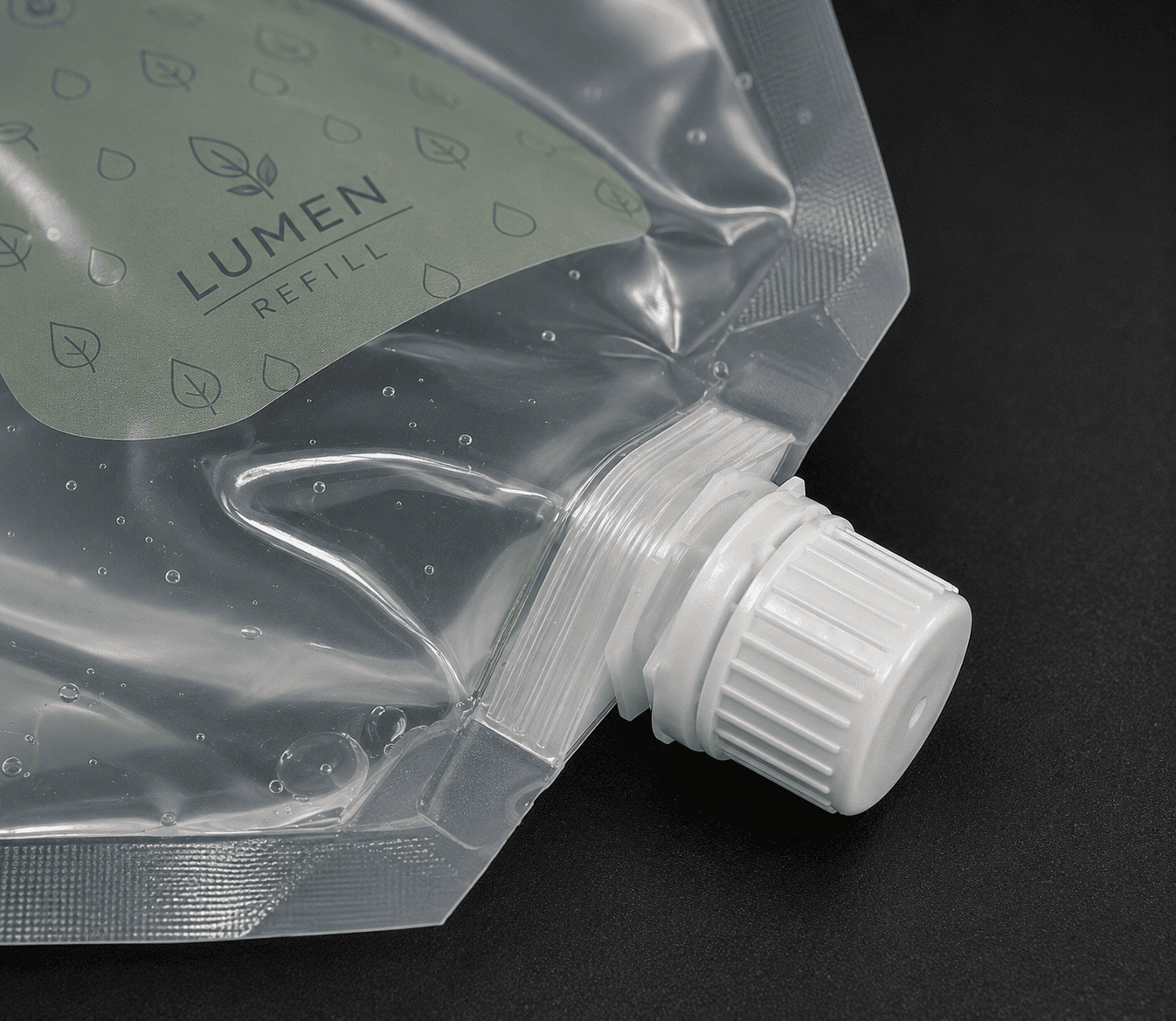
The Pouch Is Only One Part of the Dispensing System
A well-designed spout pouch needs more than an attractive printed surface. The fitment should suit the liquid, the expected pouring speed, the filling process, and the way customers open, close, and refill the pack.
FREQUENTLY ASKED QUESTIONS
Spout Pouch vs Bottle FAQs
These answers address the practical questions brands most often ask when comparing spout pouches and bottles for liquid products and refill systems.
Not automatically. The pouch material, fitment, and closure need to suit the
liquid’s viscosity, filling temperature, barrier needs, and expected
dispensing method. Products with unusual chemical properties, high
temperatures, or specialist dosing requirements should be tested against the
proposed packaging specification.
Not necessarily. The final cost depends on pack size, film structure, fitment, printing, closure components, filling requirements, order quantity, and logistics. A spout pouch may reduce material weight and shipping volume, but the best option should be evaluated against the complete packaging and supply process.
Yes. A durable bottle can be paired with a spout pouch refill when the pouch opening, bottle mouth, liquid flow, and customer handling are designed to work together. The refill should allow a controlled pour and help customers reuse the primary bottle conveniently.
A bottle is often more suitable when the product needs a pump, trigger, dropper, or another specialist dispensing component. It can also be the stronger option when a rigid upright format, repeated daily use, or a more permanent shelf presentation is important.
Prepare the product type, viscosity, fill volume, filling temperature, barrier requirements, preferred dispensing method, pack size, target market, expected order quantity, and any refill or reuse plans. This information helps confirm whether a spout pouch, bottle, or combined refill system is the more practical solution.
DISCUSS YOUR PACKAGING PROJECT
Need Help Choosing a Spout Pouch or Bottle?
Share your liquid product, fill volume, viscosity, preferred dispensing method, packaging format, filling process, and refill plans. PaperMyna can help compare practical pouch and bottle options before you finalise the packaging specification.