
Supermarket Price Labels: Materials, Barcodes & Printing Guide

SUPERMARKET PRICE LABELS

What Makes a Supermarket Price Label Work Reliably?

Supermarket price labels do more than display a product name and selling price. In produce, meat and other fresh-food departments, each label may need to combine a suitable face material, reliable adhesion, clear printing, barcode information and variable data such as weight, unit price and total value.

The right label construction helps retailers keep product information readable from weighing and printing to shelf display and checkout. This guide explains the main material, barcode and printing considerations for supermarket price labels, with a focus on clear retail information and dependable daily use.
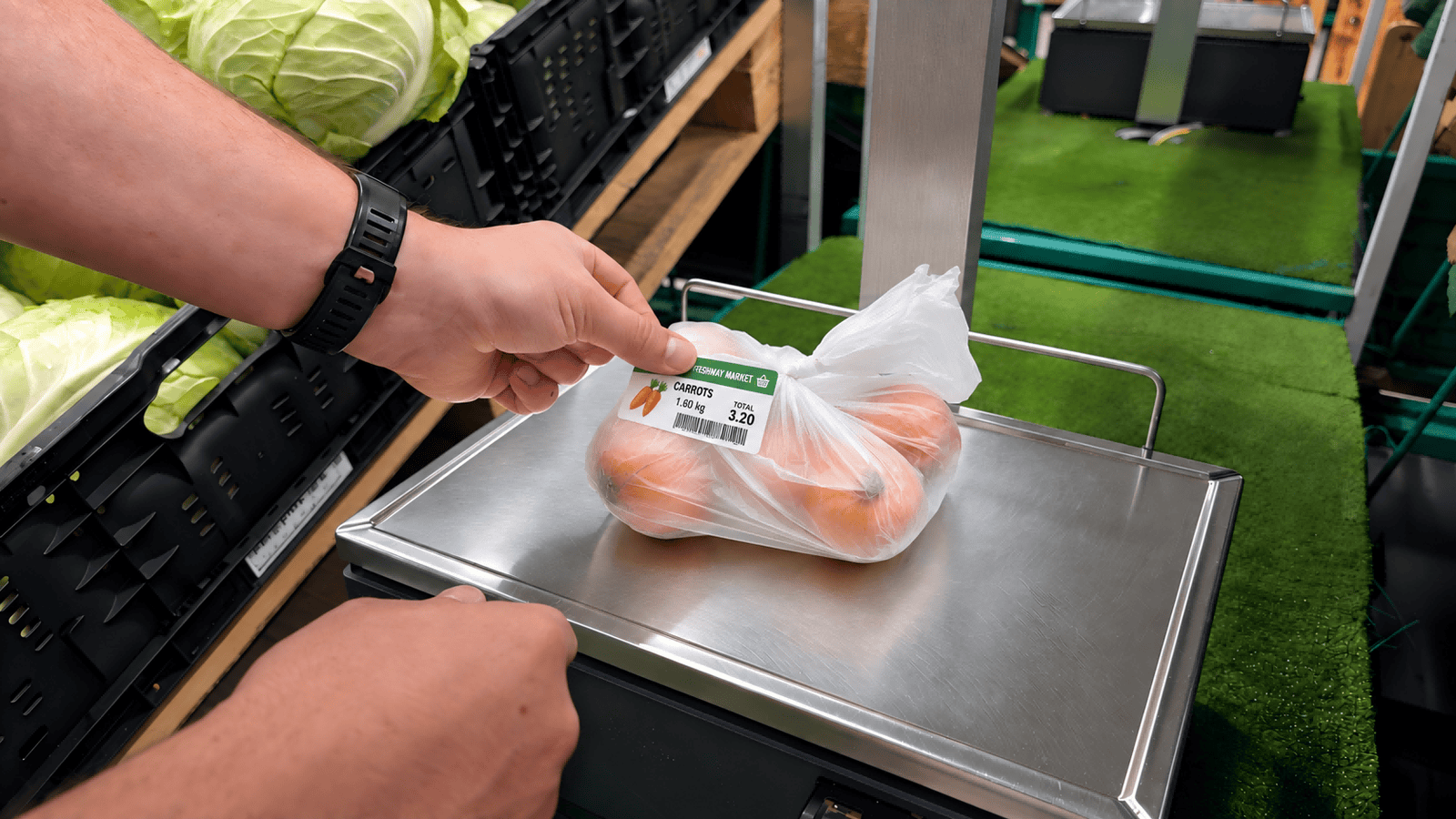
Supermarket price label with barcode attached to a weighed carrot bag
LABEL CONSTRUCTION

Match the Label Construction to the Supermarket Application

Supermarket price labels are used across different products and retail workflows. A produce bag, film-wrapped meat tray and weighed fresh-food package may require different levels of adhesion, moisture resistance and print durability. Matching the label construction to the application helps keep product information clear from weighing to checkout.
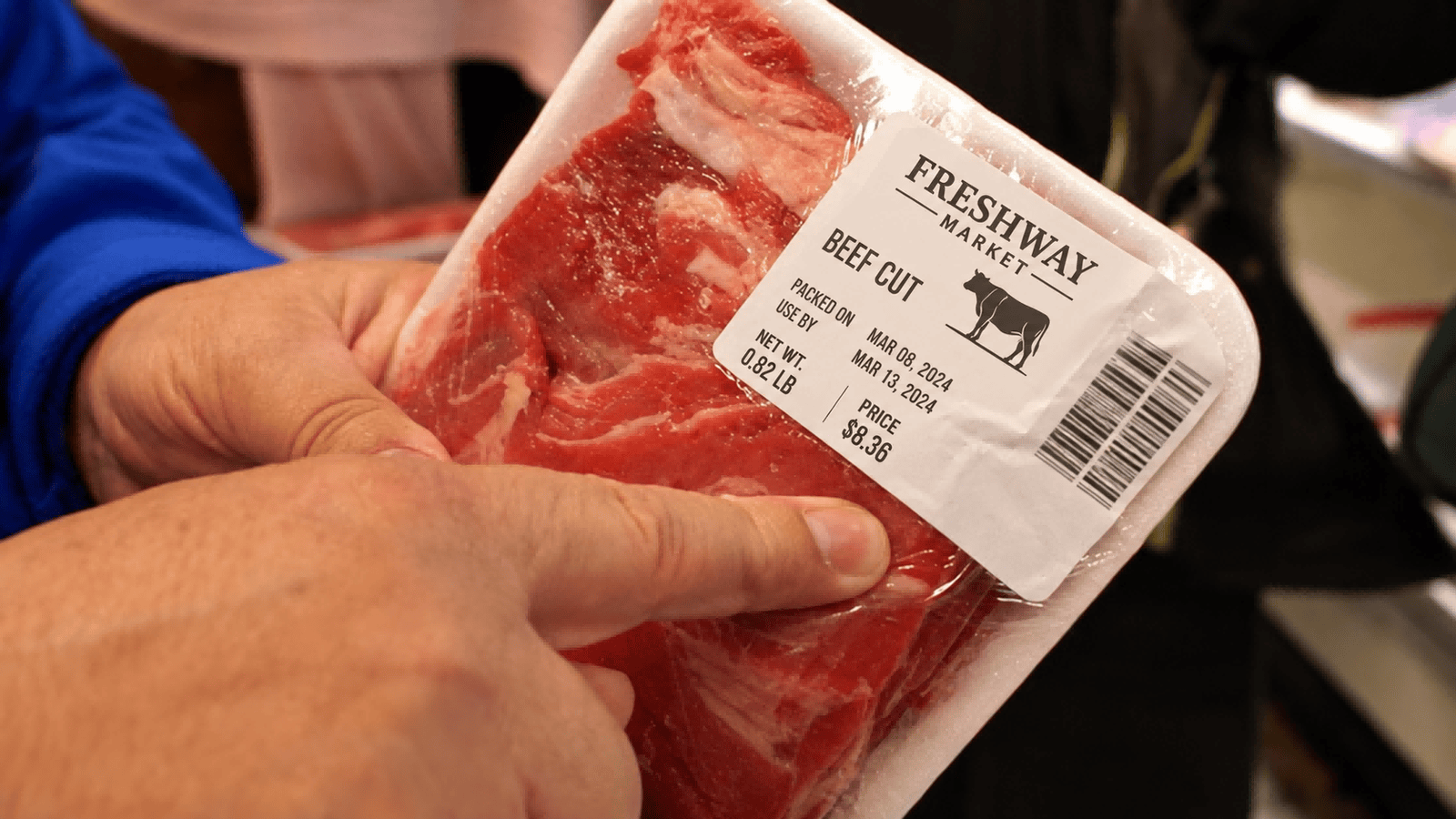
Printed supermarket price label attached to a fresh meat tray
Fresh Produce and Weighed Bags Many produce weighing systems use direct thermal label stock for clear variable printing. The label can show the product name, weight, unit price, total price and barcode information in a compact format.
Meat Trays and Wrapped Foods Labels applied to film-wrapped trays need stable adhesion and a clean print surface. The material should remain readable during handling, chilled storage and light condensation without lifting easily from the packaging.
Fixed Layout with Variable Data The brand area, field names and label structure can remain fixed while the weighing system prints changing product, weight, price and barcode data for each item. This keeps the label organized and helps reduce information errors at the retail counter.

VARIABLE DATA AND BARCODES

How Supermarket Price Labels Use Variable Data and Barcodes

Supermarket price labels combine a fixed printed layout with changing information generated during weighing and printing. Product names, weights, prices and barcodes need to remain clearly separated so the label can be understood by store staff, shoppers and checkout scanners.
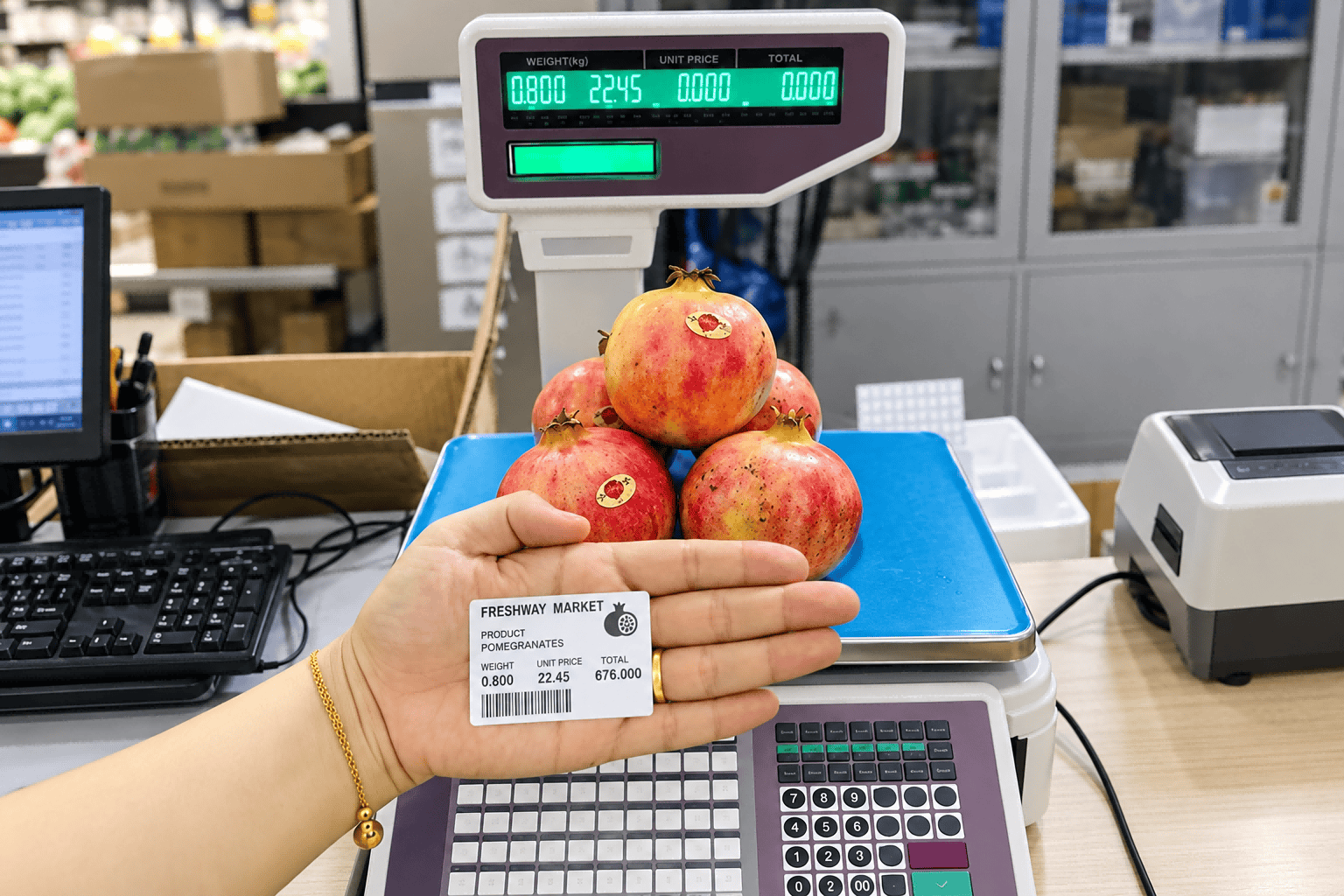
Supermarket weighing label showing product, weight, price and barcode information

WEIGHING INFORMATION

Product, Weight and Price Data

Weighing labels need enough space for the product name, weight, unit price and total value. A consistent layout helps the scale print changing information accurately while keeping the most important details easy to read at the produce or fresh-food counter.

  • Product fields should remain clear and easy to identify.
  • Weight, unit price and total value need consistent spacing.
  • The label layout should suit the weighing system and roll format.
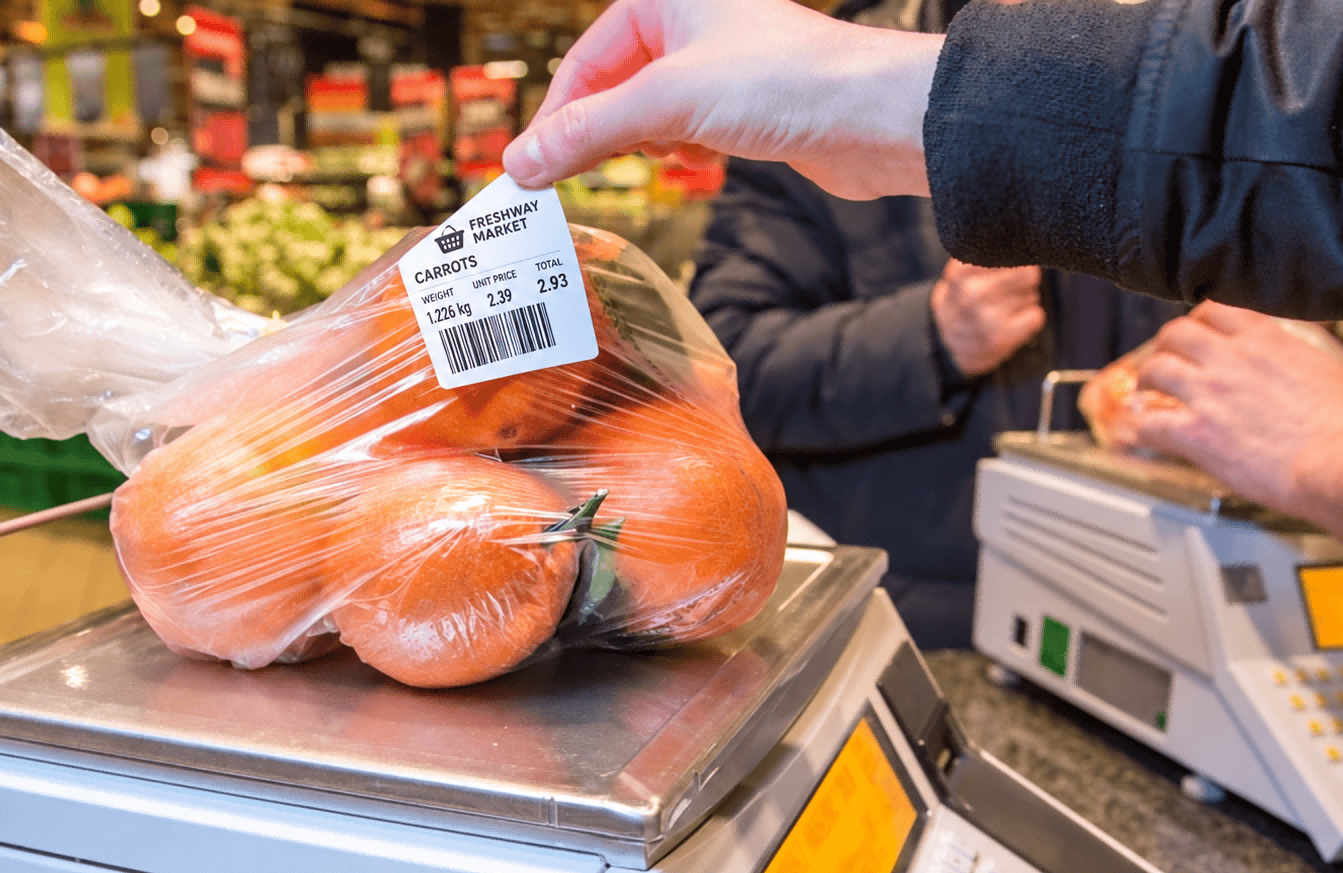
Thermal printer output with a supermarket price label and barcode

BARCODE READABILITY

Clear Printing for Reliable Scanning

Barcode areas should have strong contrast, clean edges and enough surrounding space. Product information, price data and decorative elements should not crowd the barcode, helping scanners read the label consistently during retail handling and checkout.

  • Use a clean print surface with strong black-and-white contrast.
  • Keep the barcode away from folds, edges and crowded text.
  • Check printed samples before large-scale label production.
LABEL MATERIALS

Which Materials Work Best for Supermarket Price Labels?

The right material depends on the weighing scale, printer, product surface, expected usage time and exposure to moisture or cold. Supermarket price labels should remain easy to read, securely attached and suitable for reliable barcode scanning.
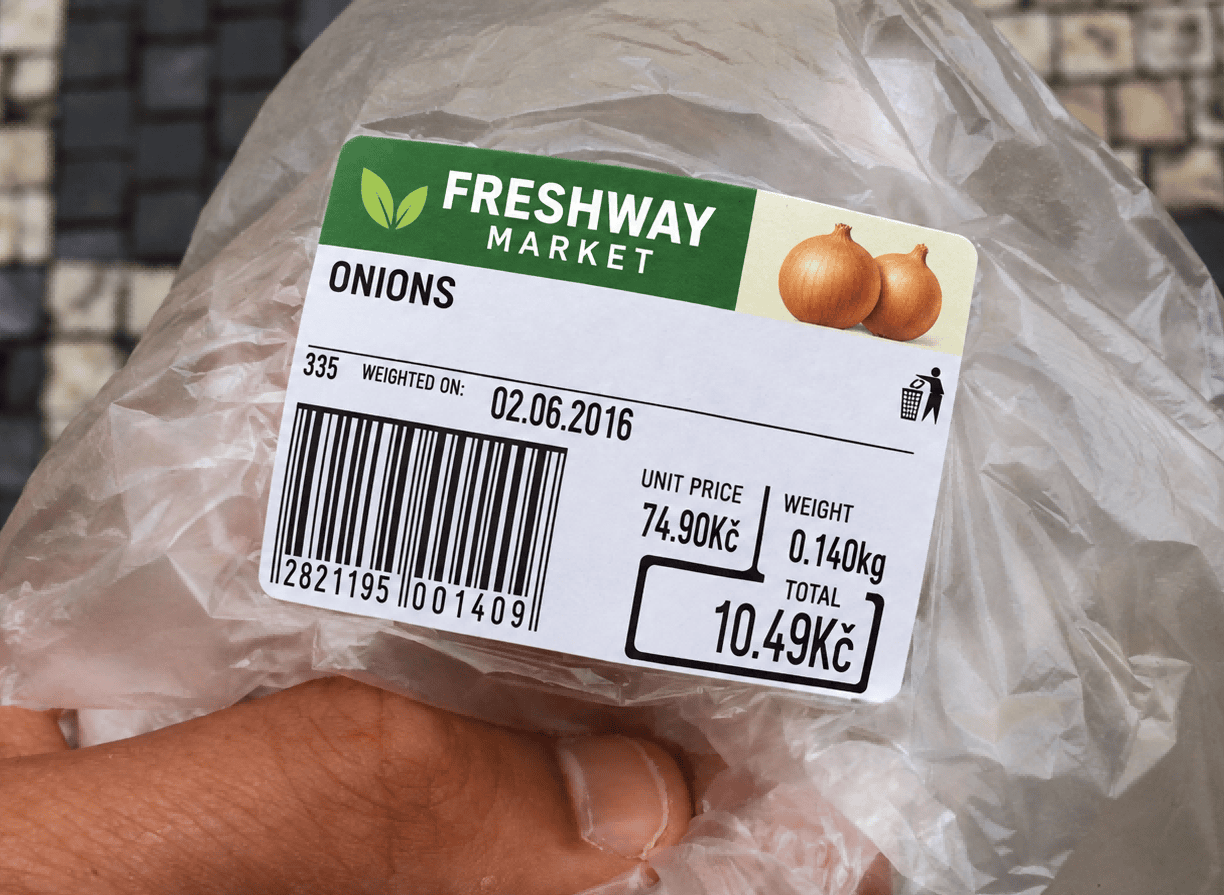
Supermarket onion bag with a printed price, weight and barcode label
Direct Thermal Labels Direct thermal labels are commonly used for weighed produce, product names, prices, weights and barcodes. They do not require a ribbon and are practical for high-volume scale printing.
Top-Coated Thermal Labels Top-coated thermal materials can provide better protection against handling, light moisture and surface abrasion. They are suitable for fresh-food departments where labels may be exposed to condensation.
Synthetic Labelstock Synthetic materials such as PP, PE or PET can be considered for chilled products, damp environments and applications requiring better resistance to water or tearing. Printer compatibility should be tested before production.
Adhesive and Surface Match The adhesive should match the application surface, whether the label is applied to a produce bag, plastic tray, carton or packaged food. PaperMyna can help select suitable self-adhesive labelstock for the application.
LABEL FORMATS

Supermarket Price Label Templates and Roll Formats

Supermarket price labels can be produced in different template styles, roll formats, colors, and variable-data layouts. The right option depends on the weighing scale, printer, product information, price fields, and retail application.
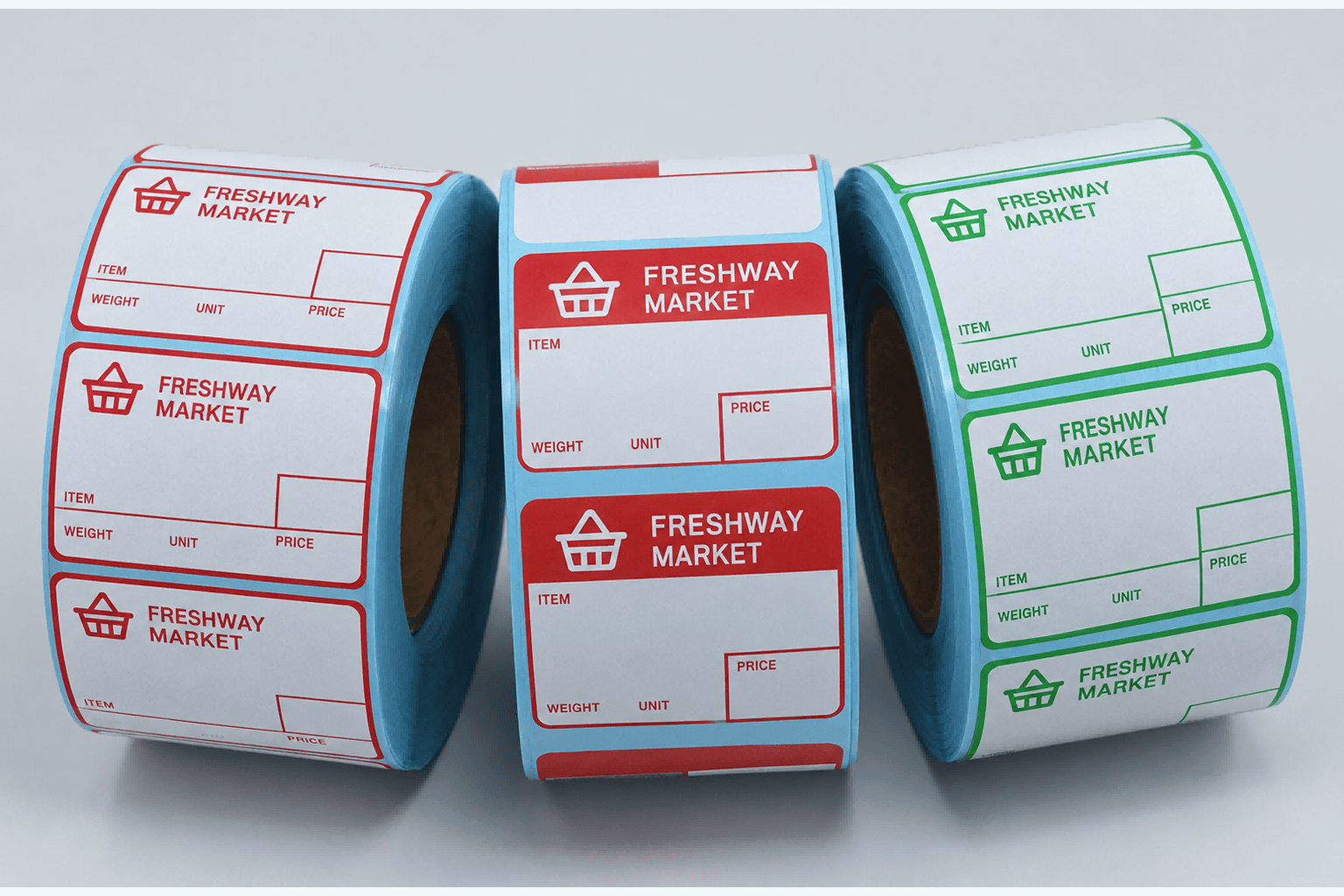
Supermarket price label template rolls with item, weight, unit and price fields

Variable-Data Label Rolls

These roll-format labels provide fields for item names, weight, units, and prices. They can be prepared for weighing scales and point-of-sale label printing.
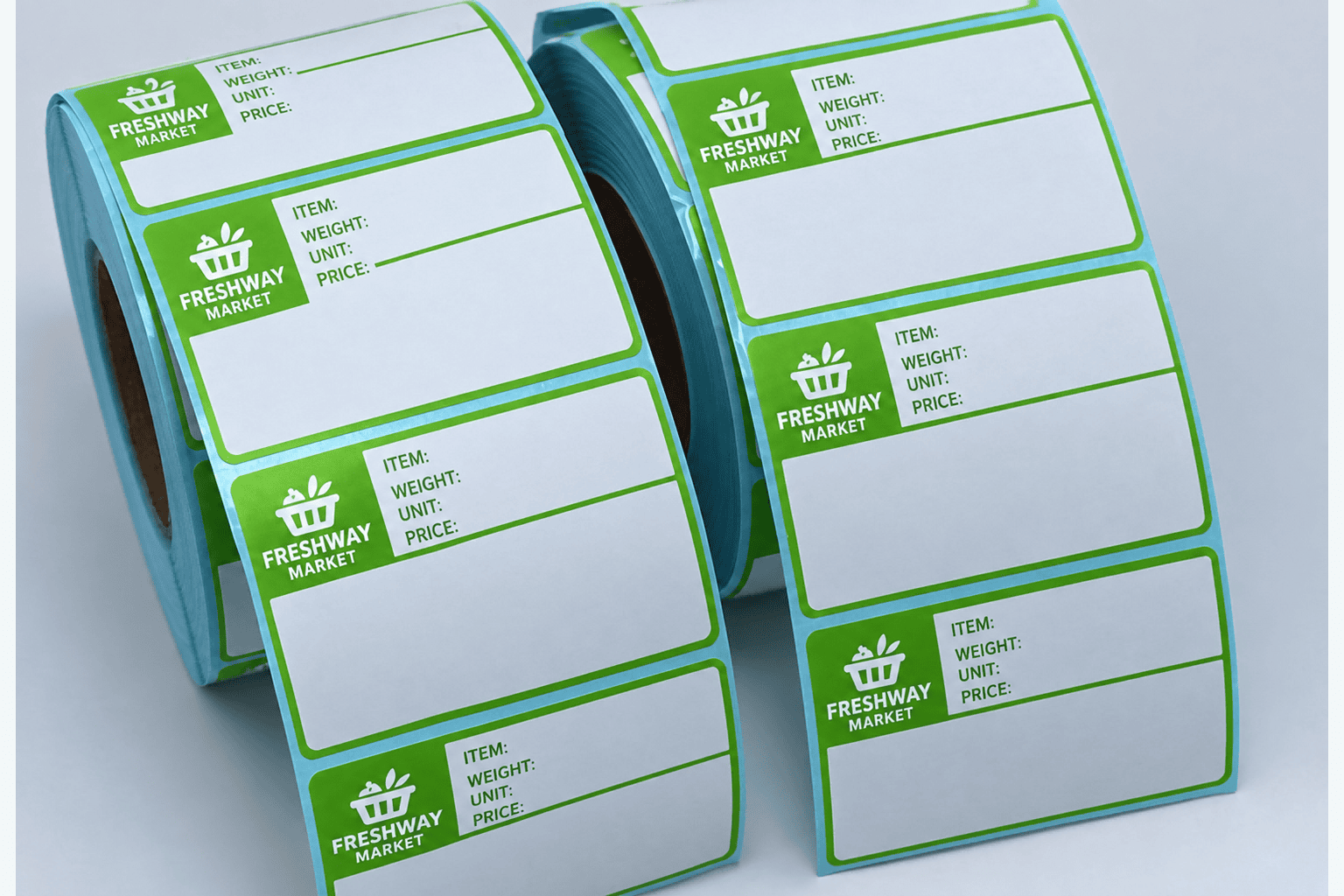
Green supermarket label template rolls with product, weight, unit and price fields

Department-Identified Label Rolls

Color-coded label rolls can help identify produce, deli, bakery, and other supermarket departments while leaving space for variable product data.
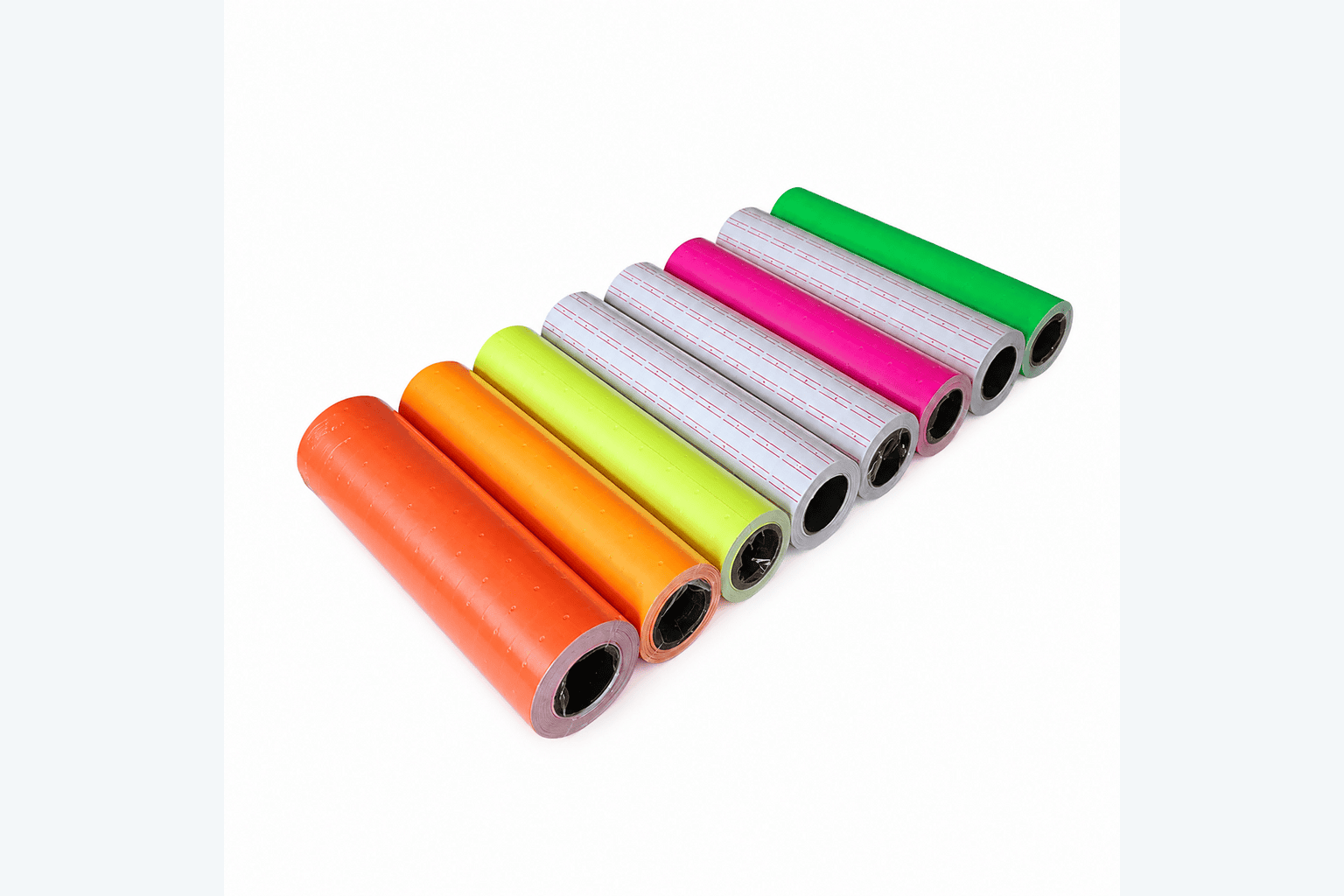
Colored supermarket thermal label rolls for retail price labeling

Colored Thermal Label Rolls

Colored thermal label rolls can support visual organization across product categories and retail labeling workflows, including produce, deli, bakery, and fresh-food counters.
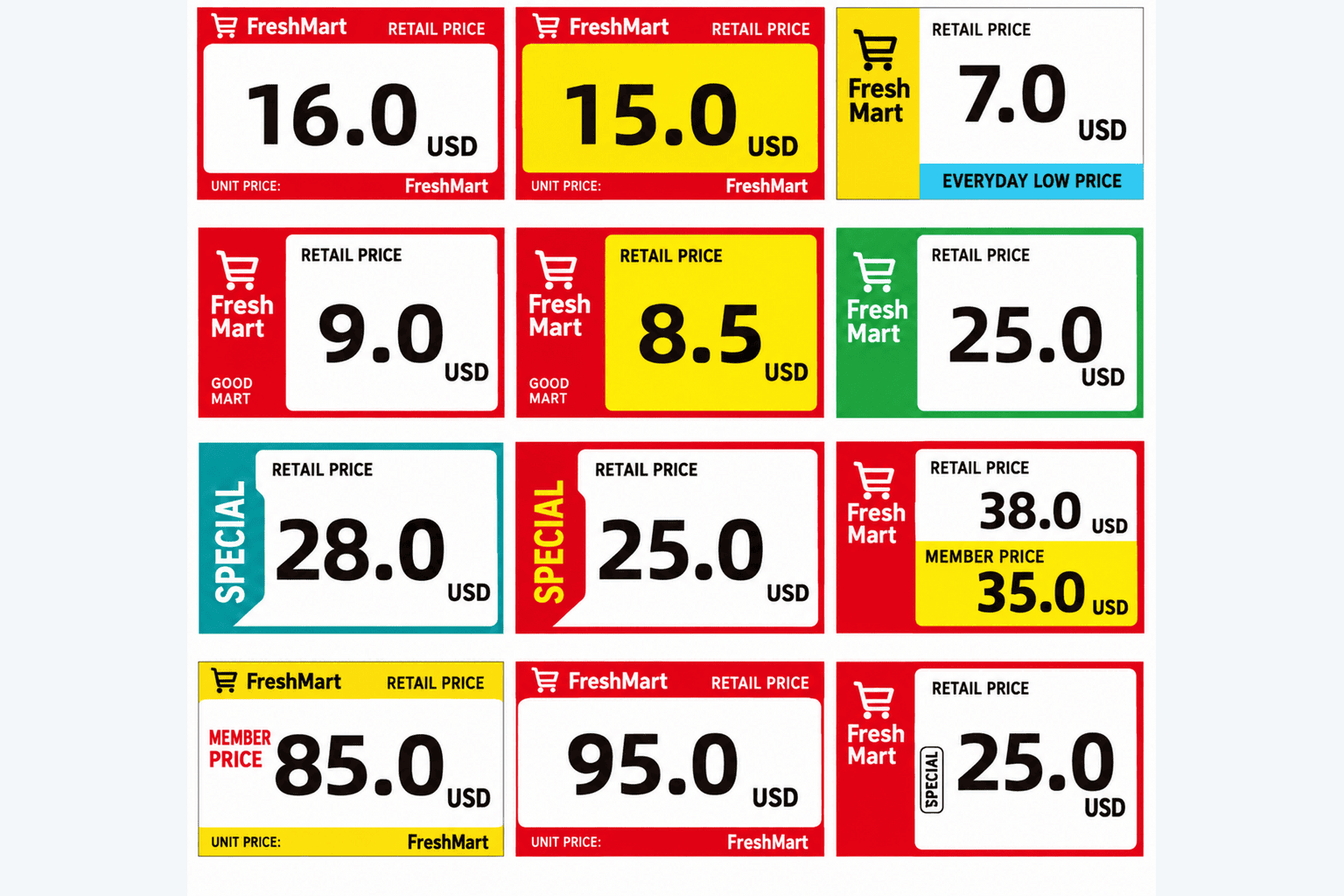
Retail price label template designs for supermarket products

Retail Price Label Templates

Retail price label templates can include everyday prices, unit prices, promotional messages, and member pricing for different supermarket departments.

FAQ

Frequently Asked Questions About Supermarket Price Labels

Supermarket price labels must balance material performance, variable data printing, barcode readability, and reliable application. The following answers cover common questions about choosing and ordering labels for weighing scales, fresh-food counters, retail shelves, and checkout workflows.

Direct thermal paper, top-coated thermal paper, and synthetic labelstock are commonly used for supermarket price labels. The right material depends on the printer, weighing scale, product surface, moisture level, expected label life, and whether the label will be used in a chilled or damp environment.

Yes. Supermarket price labels can be printed with variable information such as product names, weight, unit price, total price, packing dates, expiry dates, product codes, and barcodes. The label layout should be matched with the weighing system, printer software, and barcode requirements.

Yes. Many supermarket labels are designed for weighing and price-printing systems. Before production, it is important to confirm the printer or scale model, label dimensions, roll width, core size, winding direction, gap, and barcode position.

Top-coated thermal materials or synthetic labelstock are generally more suitable for chilled, damp, or frequently handled products than standard direct thermal paper. The adhesive and label surface should also be selected according to the packaging material, temperature, condensation, and expected application life.

Yes. Supermarket price labels can be supplied as blank thermal labels, pre-printed templates, colored label rolls, or fully customized labels with logos, department colors, product fields, and barcode areas. The required label format, printing data, roll specifications, and order quantity should be confirmed before production.

DISCUSS YOUR SUPERMARKET LABEL PROJECT

Need Custom Supermarket Price Labels for Your Retail Workflow?

Share your label material, label size, printer or weighing scale model, variable data fields, barcode requirements, adhesive preference, roll width, core size, winding direction, estimated quantity and delivery destination. PaperMyna can help review the specification and recommend suitable supermarket price labels for produce, deli, bakery, chilled food and other retail applications.

Request a Quote Explore Self-Adhesive Labelstock