
Liquid Detergent Refill Pouches: Material, Sealing and Filling Considerations

LIQUID DETERGENT PACKAGING

Choosing a Refill Pouch Starts with the Detergent and Filling Process

Liquid detergent refill pouches need to work through filling, transport, storage and pouring. The printed design is only one part of the specification: the film structure, pouch dimensions, spout and closure also need to suit the detergent formula and the way the pack will be used.

This guide looks at material compatibility, pouch and spout design, sealing and filling considerations, and the checks to discuss before sampling. Start with your detergent formula, target fill volume and filling equipment so these details can be reviewed together.

REFILL USE & POUCH DESIGN

Match the Pouch to the Way Customers Refill

Will the customer empty the pouch into a bottle in one go, or pour out part of the detergent and store the rest? Review the pouch size, grip, spout position and closure around that routine.
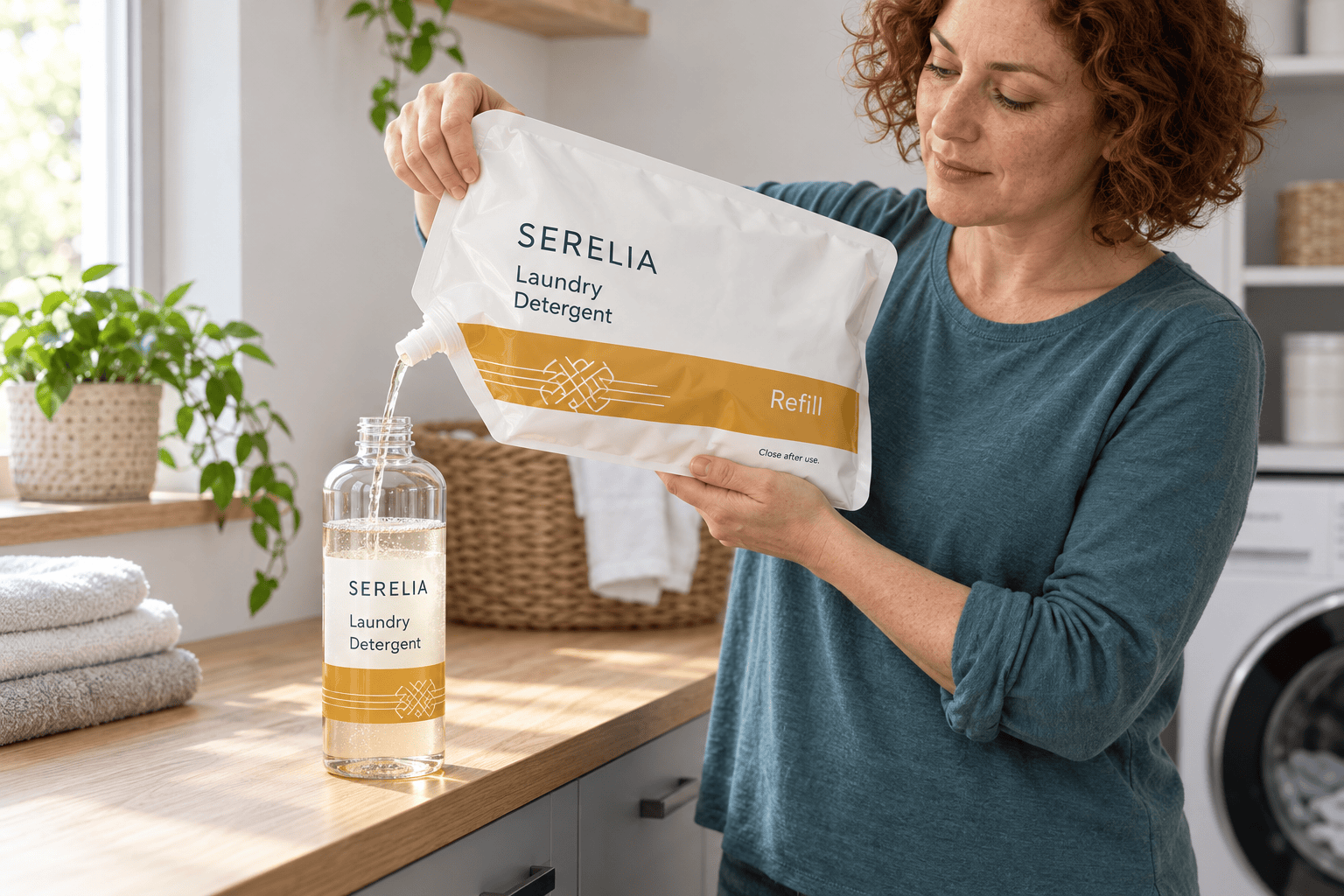
Woman pouring liquid laundry detergent from a spout refill pouch into a bottle
Check the Bottle and Pouring Position Try the sample pouch with the intended receiving bottle. Check spout alignment and pouring control, both when the pouch is full and when it is nearly empty.
Review Grip and Handling Test the pouch at its intended fill weight. Check where the user naturally holds the pack and whether a handle would make lifting and tilting more comfortable.
Consider Reclosing and Storage If detergent will remain in the pouch, include opening, reclosing and storage in the sample review. Check that the cap is easy to grip and the spout can be kept clean between uses.
MATERIAL SELECTION

Choose the Film Structure Around the Detergent Formula

Specify more than the total film thickness. Review how the complete pouch will perform with the actual detergent, intended fill weight and storage conditions before approving a material structure.

01

Formula Compatibility

Provide the detergent specification and a product sample for compatibility review. Evaluate the film, laminate bonds, spout and closure together.

  • Confirm the formula and intended storage conditions.
  • Check filled samples for swelling, separation or leakage.
  • Agree on the test duration and acceptance criteria.
02

Strength and Flexibility

Review the pouch at its intended fill weight. Material selection should account for handling, carton packing and transport as well as shelf appearance.

  • Check puncture and impact resistance.
  • Assess folds, corners and the bottom gusset.
  • Test filled packs in the intended shipping arrangement.
03

Sealant and Spout Fit

Review the inner sealant layer with the selected spout and sealing process. The pouch seams and the spout attachment both need evaluation.

  • Confirm sealant and spout material compatibility.
  • Establish suitable sealing settings through trials.
  • Check seal strength and leakage after filling.
04

Barrier and Appearance

Decide whether the formula requires protection from light or additional control of fragrance or moisture transfer. Review these needs alongside the printed finish.

  • Confirm product-specific barrier requirements.
  • Choose a clear or opaque appearance deliberately.
  • Check print and surface durability during handling.
SEALS & POUCH INTEGRITY

Check the Seams, Bottom Gusset and Spout Connection

A neat-looking seal is only the starting point. Review the pouch seams, folded base and spout attachment, then assess seal strength and leakage using suitable tests with agreed acceptance criteria.
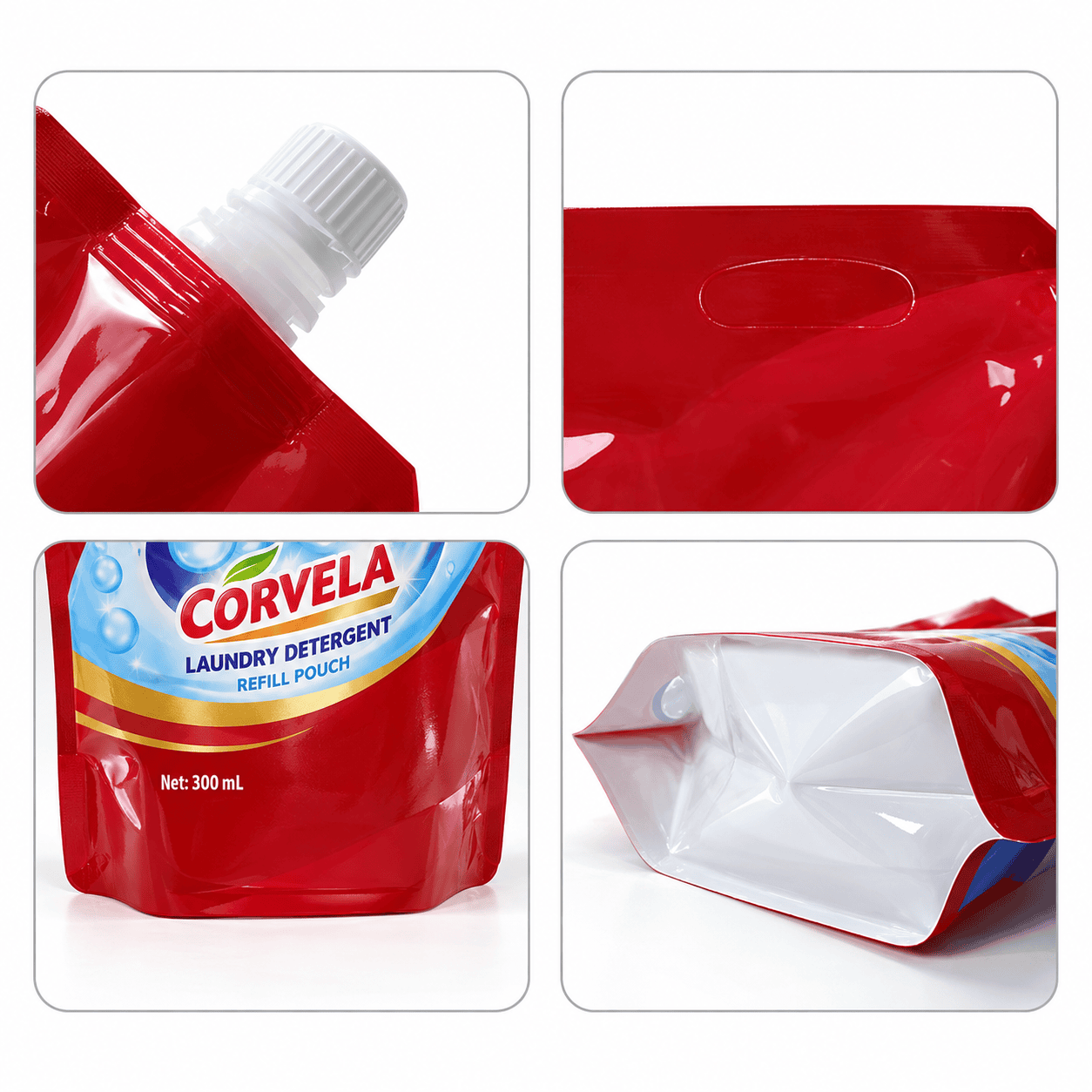
Detail views of a liquid detergent refill pouch showing the capped spout, handle, sealed edges and bottom gusset
Inspect the Pouch Seams Look for uneven sealing, trapped material and wrinkles crossing the seal area. Distinguish normal creases in the flexible pouch body from defects within the sealed joint.
Review the Bottom Gusset Examine the folded corners and the transitions where the gusset meets the side seals. Fill samples to the intended quantity and check how the base opens, supports the pouch and responds to handling.
Check the Spout Attachment Inspect the seal around the spout base and confirm that the fitment sits in its specified position. Check the cap and neck separately so a closure leak is not mistaken for a pouch-seal defect.
Test Beyond Visual Appearance Seal-strength testing measures resistance to separation; leak testing checks for escape paths. Include both where appropriate, and reassess filled samples after the agreed storage and transport trials.
FILLING & CAPPING

Check Filling and Capping Compatibility

Confirm how the pouch will be filled and closed before finalising its specification. Review the pouch, spout and cap with the equipment supplier, then run samples with the actual detergent under the intended operating conditions.
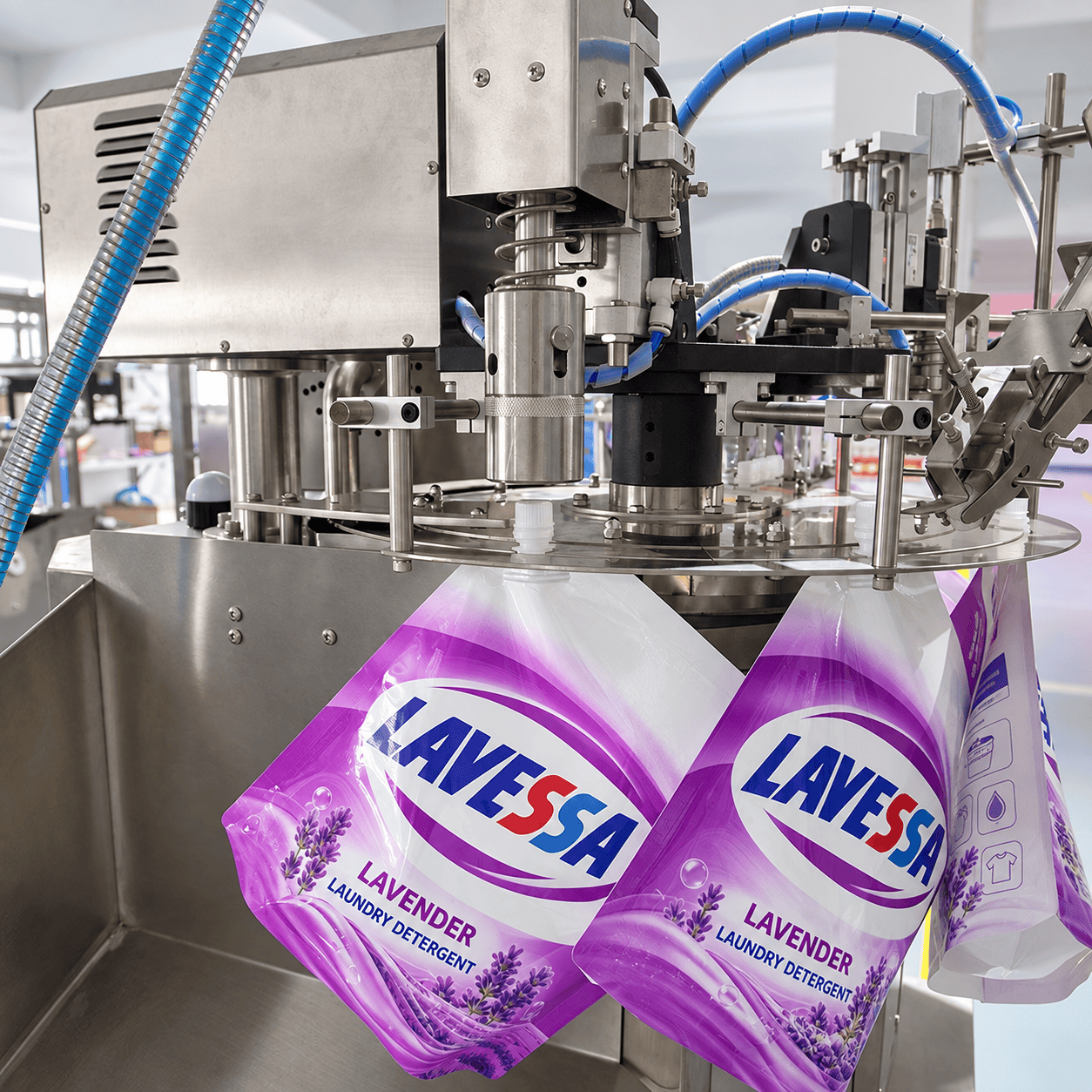
Laundry detergent spout pouches positioned beneath a rotary capping head
Confirm the Filling Route Establish whether detergent enters through the spout or through an open pouch edge that is sealed afterwards. Agree on how empty pouches will be supplied, including the cap and seal condition required by the line.
Match the Fitment to the Equipment Share the spout and cap drawings with the equipment supplier. Check the neck dimensions, support flange, cap profile and pouch clearance against the holders, guides and capping head.
Trial the Actual Detergent Use production-representative detergent to assess fill consistency, foaming and drips. Confirm the filling temperature and operating speed during trials, and check that the closure or final seal area remains clean.
Verify Capping and Finished Packs Agree on application torque and checks with the closure and equipment suppliers. Inspect cap seating, check for leakage and assess opening effort after filling and storage rather than relying on appearance alone.
BEFORE SAMPLING

Prepare a Clear Brief for Your Refill Pouch Samples

Bring the product, pack and filling requirements into one brief. Mark any undecided details for review so the sample trial can answer specific questions before bulk production.

01

Product & Fill

Provide the detergent details needed to review material compatibility and plan a representative filling trial.

  • Product specification and a detergent sample.
  • Target fill quantity and filling temperature.
  • Intended storage conditions and shelf-life target.
02

Pouch & Closure

Share a dimensioned drawing or reference pack, and identify which dimensions are fixed by the equipment or intended use.

  • Pouch width, height and bottom gusset dimensions.
  • Spout position, fitment drawing and cap type.
  • Handle requirements and receiving bottle dimensions.
03

Artwork & Supply

Define the printed appearance and how empty pouches should arrive at the filling site.

  • Artwork files, print coverage and surface finish.
  • Required cap and seal condition on delivery.
  • Order quantity, packing method and delivery destination.
04

Trial & Approval

Agree on what the samples must demonstrate and record the results against the specification being tested.

  • Equipment fit, filling consistency and capping checks.
  • Seal, leakage, handling and storage acceptance criteria.
  • Approved sample reference and any changes to retest.

FREQUENTLY ASKED QUESTIONS

Liquid Detergent Refill Pouches: Common Questions

Find practical answers about material selection, pouch capacity, spout compatibility and sample testing before specifying your detergent refill packaging.

Choose the material structure around the detergent formula, fill weight, storage conditions and filling process. There is no single structure suitable for every detergent. Evaluate the film, laminate bonds, spout and closure together using the actual product before approving the specification.

Do not assume that a pouch approved for one formula will suit another. Changes in fragrance, solvents or other ingredients may affect packaging compatibility. Review each formula and decide whether additional testing is needed, even when the pouch size and appearance remain unchanged.

Use the target fill volume as a starting point, then confirm the pouch dimensions through filling trials. The bottom gusset, spout position and space needed for filling and closing all affect usable capacity. Check the filled pouch for stability, comfortable handling and controlled pouring.

Compatibility needs to be checked against the specific equipment. Provide the pouch dimensions, spout and cap drawings, filling route and required delivery condition. Trial samples on the line to assess positioning, clearance, filling consistency and capping before placing a production order.

Review material compatibility, pouch dimensions, seal integrity, spout attachment and closure performance. Include filling, pouring and reclosing checks where relevant, followed by agreed storage and transport trials. Record the test conditions and acceptance criteria, and retain an approved sample as the production reference.

DISCUSS YOUR DETERGENT REFILL POUCH PROJECT

Need Custom Liquid Detergent Refill Pouches?

Share your detergent specification, target fill quantity, preferred pouch dimensions, spout and cap requirements, filling setup and printing details. PaperMyna can help review the packaging options and prepare a sample specification for evaluation with your product and equipment.

Discuss Your Pouch Requirements Review the Sampling Checklist