
Dry Pet Food Packaging: Bag Types, Zippers and Seal Checks

DRY PET FOOD PACKAGING

Match the Bag to the Kibble and Filling Process

A bag size cannot be confirmed from net weight alone. Dog and cat kibble vary in shape, size and bulk volume, so a useful starting point is a filled sample made with the actual product.

At the intended fill weight, leave room to handle the bag and make a clean top seal. Check that the zipper is accessible and free of crumbs, then assess how the pack stands, pours and recloses. The initial heat seal and the zipper used after opening need separate checks.
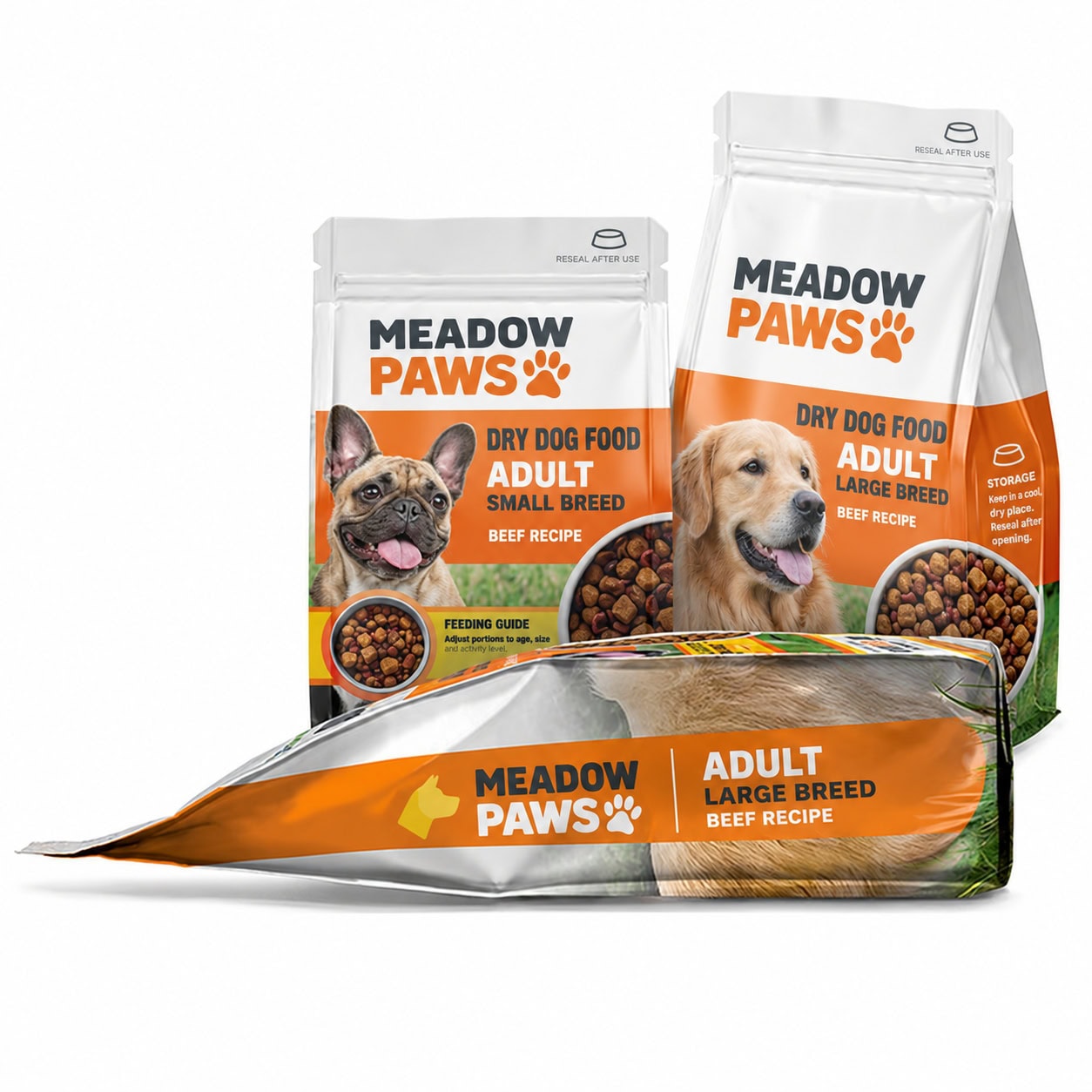
Three printed dry dog food bags showing resealable tops and side gusset construction
Illustrative dry pet food bags showing resealable tops and side gussets.
  • Bag fit: Confirm product volume, filling access and space for the top seal.
  • Material choice: Review barrier needs against the food, storage conditions and shelf-life target.
  • Closure details: Check zipper clearance, seal cleanliness and repeated reclosing.
View Pet Food Packaging Options

Choose the Right Bag Format for Dry Pet Food

Shelf space, product volume and the filling setup all affect format choice. Compare the structures below, then use a filled sample to check how the selected bag stands, handles and opens.

Stand-Up Pouch

An expanding bottom gusset supports an upright pack. Consider this format when you need a compact retail pouch with a resealable opening. Check on the filled sample: whether the base opens fully, the pouch stands at the intended fill level and the opening is wide enough to pour the kibble.

Flat Bottom Bag

A defined flat base and side gussets create a box-like shape with front, back and side panels. Consider it when shelf footprint and panel layout are priorities. Check on the filled sample: base formation, the filled shape and access to the zipper after the top is opened.

Quad Seal Bag

Side gussets and four vertical corner seals help define the bag body. Include this format when comparing options for larger-volume dry food packs. Check on the filled sample: gusset unfolding, handling at full weight and how the bag passes through filling and top sealing on the intended equipment.

Confirm the construction before approving the format. A side gusset alone does not make a bag a quad seal design. Ask for a drawing showing the bottom construction and seal positions. Film strength, closure choice and filling-line fit still need to be confirmed for the selected bag.

Confirm Capacity Before Fixing the Bag Dimensions

Two dry food recipes with the same net weight can occupy different volumes. Kibble size, shape and bulk density affect the space needed, so the weight printed on another bag is only a starting reference.
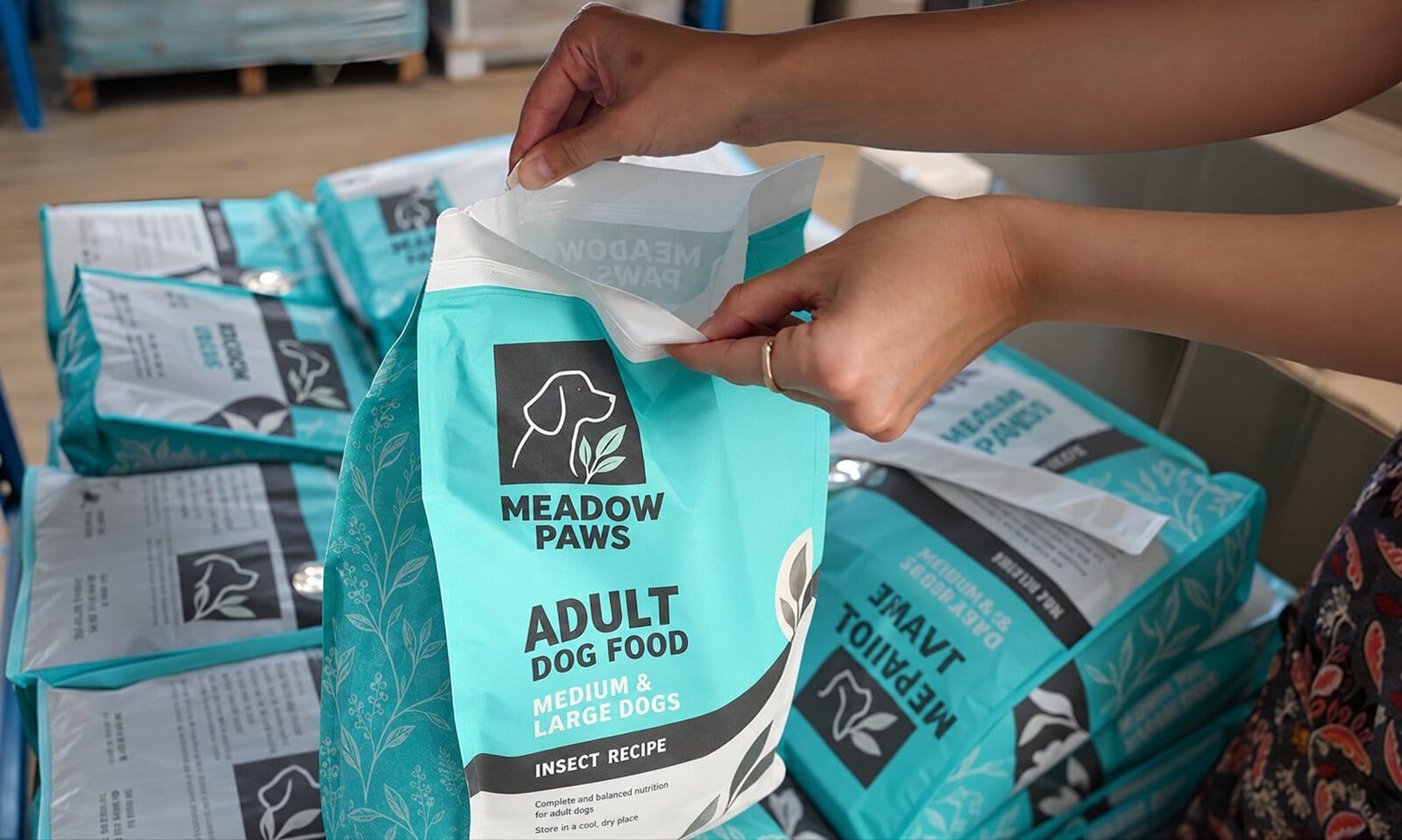
Hands holding open a resealable dry dog food bag to show the zipper and bag opening

OPENING & CAPACITY

Check the Opening and Closure Space

Confirm the filling opening, zipper position and top-seal area on the size drawing, together with overall width, height and gusset dimensions. Ask how the gusset is measured and which dimensions describe the space available inside the bag.

A finished bag size is not the same as its usable filling capacity. Seals, folds and closure placement all take up space.

Check a Sample with the Actual Food

Fill a sample to the intended net weight using the product and handling method planned for production.

  • Observe the fill level. Let the kibble settle as it would during normal filling, without pressing it down to make the sample fit.
  • Leave room for the closure. Keep food below the zipper and top-seal area, with enough clearance to handle and seal the bag cleanly.
  • Try normal use. Check standing, lifting, pouring and reclosing. Confirm that the filled pack fits the intended shelf and shipping carton.
  • Recheck product changes. A different kibble shape or recipe may need another fill check, even when the declared net weight stays the same.

Match the Film to the Food and Storage Conditions

Start with the recipe, intended shelf life and distribution conditions. Dry kibble may need protection from moisture and oxygen, as well as enough strength for filling, storage and transport.

Before comparing materials, record the food's fat content, target pack weight, expected temperature and humidity, and the filling and sealing equipment. These details help define what to check in a sample trial.

Ask for the proposed film structure and its barrier data. Oxygen transmission rate (OTR) and water vapour transmission rate (WVTR) should be supplied with their test conditions so the figures can be compared meaningfully.

Confirm the shelf-life target with the actual food in the finished pack. Film data is one input; seals, storage and distribution also affect the result.

Moisture Barrier

Compare WVTR at relevant temperature and humidity conditions. Check whether the packed food maintains its intended texture over the storage period, including exposure to humid conditions during distribution.

Oxygen Barrier

Review OTR against the recipe and shelf-life target, especially for foods containing fats and oils. Confirm performance through product testing in the sealed bag under the planned storage conditions.

Grease and Sealing

Check the inner layer's compatibility with the food and the intended sealing process. Review any oil or crumb contamination near the closure, and assess seals made under the proposed production conditions.

Handling Strength

Review puncture resistance, filled-bag handling and transport loads. Select appropriate drop and compression checks for the finished pack, then inspect the folds and seals for damage after testing.

Check the Zipper and Initial Heat Seal Separately

The zipper is used for reclosing after opening. The initial heat seal closes the pack before first use. Review both on samples made with the intended bag, product and sealing setup.
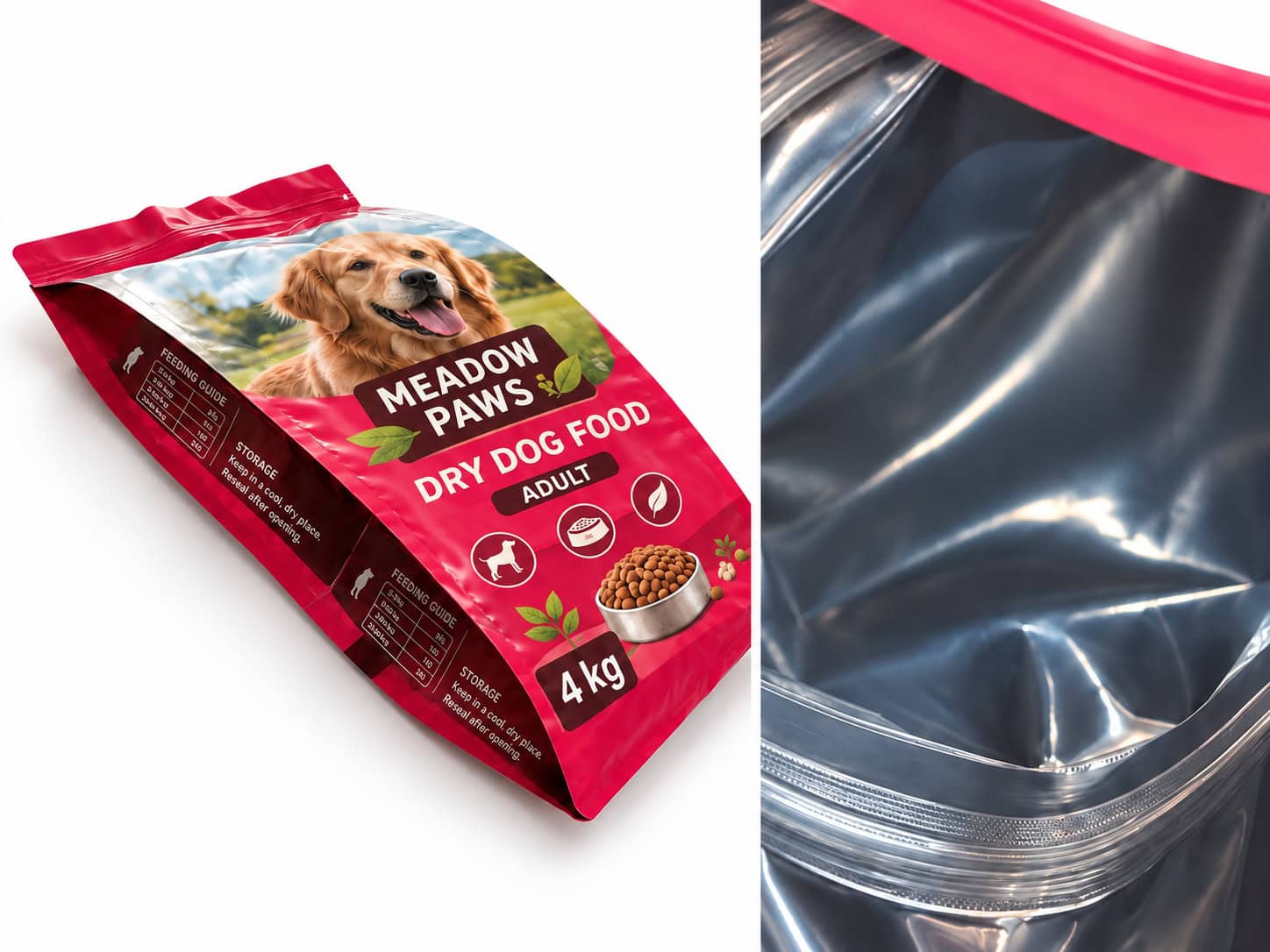
Red dry dog food bag beside a close-up of the resealable zipper and silver-coloured inner surface

Review the Complete Opening Sequence

Open the sealed top as a customer would, then pour and reclose the bag. Check that the opening leaves the zipper intact and easy to grip.

Opening Access Check tear-notch or score position, grip space and zipper clearance. The opening route should leave the closure usable.
Clean Seal Area Keep crumbs, dust and oil away from the seal band and zipper tracks. Inspect for folds or trapped product across the sealing area.
Heat-Seal Settings Confirm temperature, contact pressure and dwell time through trials on the intended film and equipment. Evaluate seal strength and leaks against agreed acceptance criteria.
Reclosing Check After pouring, reclose along the full zipper length and repeat normal opening and closing. Check engagement at the ends and for particles lodged in the tracks.

Confirm the Bag on the Intended Filling Line

For premade bags, assess feeding, opening, product delivery and transfer to sealing together. Run a trial with the actual kibble and the final bag material, dimensions and zipper arrangement before approving the setup for production.
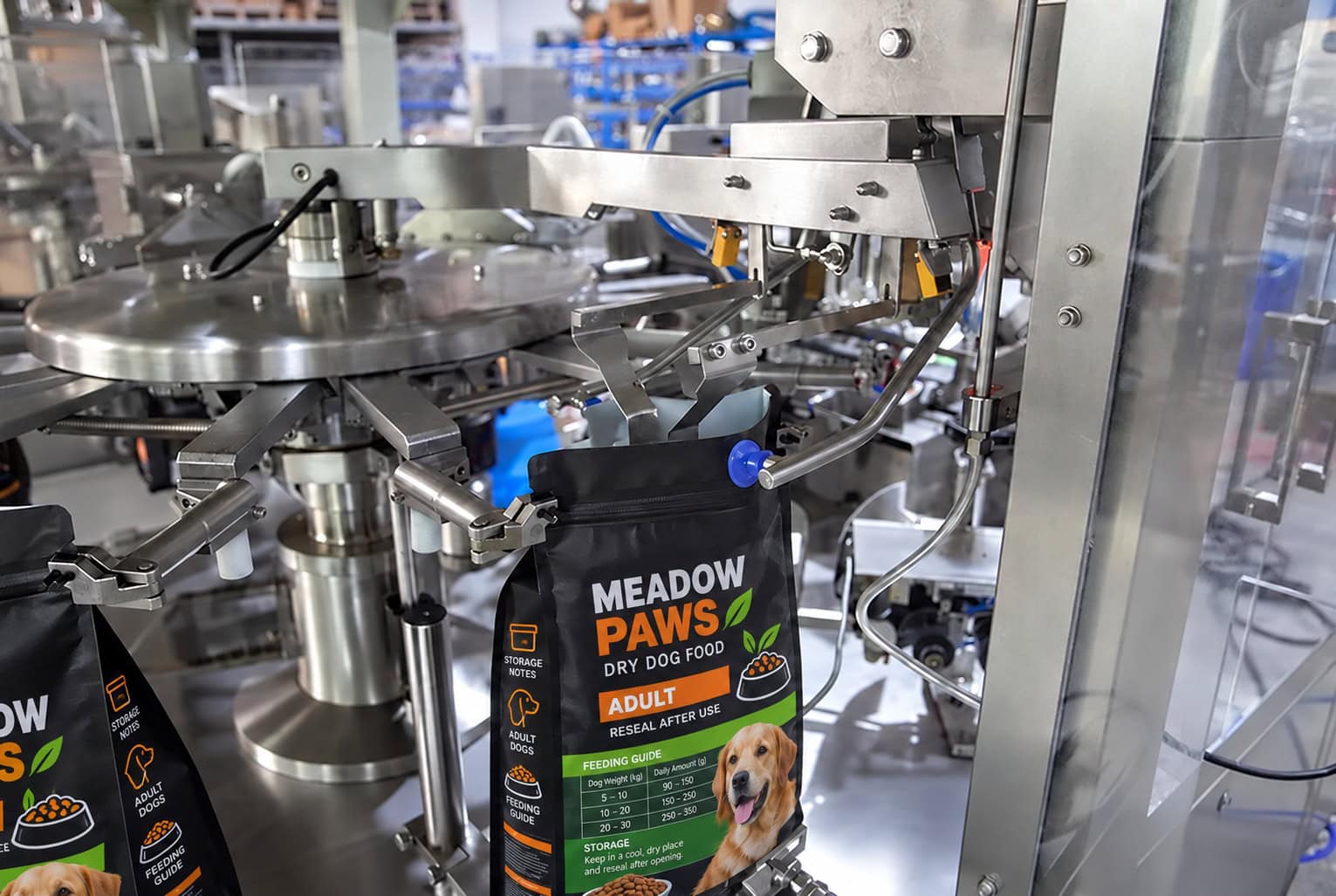
Black dry dog food bag held by rotary packaging machine grippers beside a blue suction cup

BAG HANDLING

Check Pickup, Gripping and Opening

Review the empty bag with the equipment supplier, including the gripping area, opening method and position of the zipper.

  • Feeding: Check that bags separate and enter the grippers consistently.
  • Opening: Confirm suction contact and sufficient opening clearance for the filling spout.
  • Bag control: Look for slipping, creasing or zipper interference as the bag moves between stations.
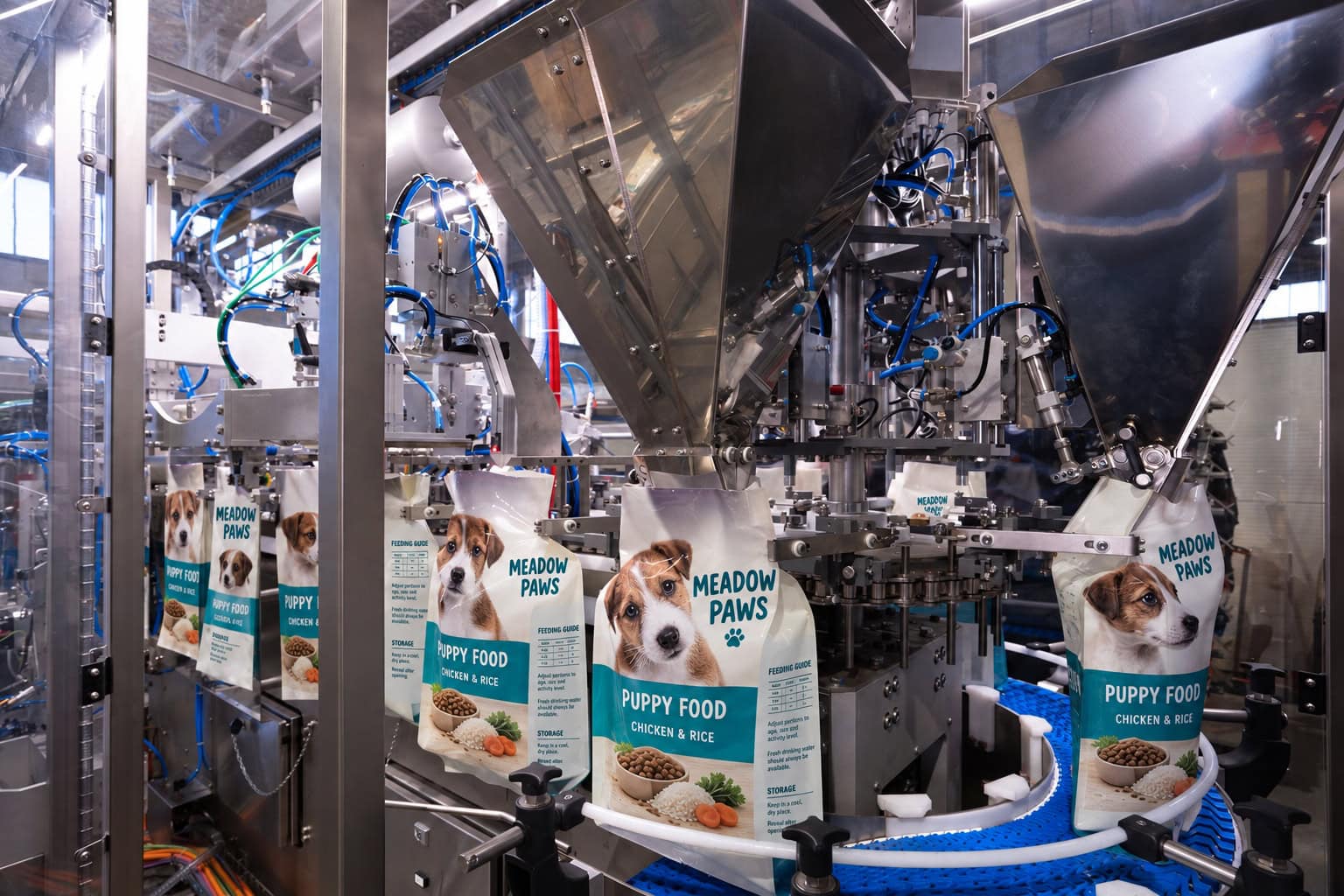
White and teal dry pet food bags positioned beneath stainless steel filling hoppers on a rotary packaging line

PRODUCT FILLING

Check Filling and Transfer to Sealing

Run the intended kibble at the target fill weight and planned operating speed. Observe the bag throughout filling and handover to the sealing station.

  • Product delivery: Check that the spout enters correctly and kibble falls into the bag without bridging or spillage.
  • Transfer: Check top alignment and support for the filled bag on its way to sealing.
  • Trial record: Log opening failures, fill-weight checks and seal results before approving the setup.

Dry Pet Food Packaging FAQs FAQs

Dry Pet Food Packaging FAQs

Answers to common questions about bag formats, capacity, barrier specifications and closure checks.

Compare stand-up pouches, flat bottom bags and quad seal bags against the product volume, shelf footprint and filling method. Check the chosen format with a filled sample so you can assess standing, handling, pouring and access to the closure.

Net weight gives a starting point, but kibble shape and bulk density affect the required volume. Confirm dimensions with the actual food at the intended fill weight, allowing room for the zipper, handling and a clean top seal.

The initial heat seal closes the pack before first use. The zipper lets the user reclose it after opening. Check seal integrity and repeated zipper operation separately, including the opening route and whether kibble or dust becomes trapped in the zipper tracks.

Request the film structure, oxygen transmission rate (OTR) and water vapour transmission rate (WVTR), with test conditions stated. Review these against the recipe, storage environment and shelf-life target, then validate the finished pack with the actual food.

Share the food type, net weight, product volume or a sample, preferred bag format, closure requirements and target shelf life. Include the filling-machine details, artwork, quantity for each size or design, delivery destination and required timing.

DISCUSS YOUR PET FOOD PACKAGING

Need Custom Dry Pet Food Packaging?

Share the food type, target net weight, product volume or current bag sample, preferred format and closure requirements. Include your filling setup, shelf-life target, artwork, estimated quantity and delivery destination. PaperMyna can help review bag dimensions, material requirements and sample options for your dry dog or cat food project.

Request a Pet Food Packaging Quote View Pet Food Packaging Options