
Matcha Packaging: Pouches, Stick Packs and Sealing Checks

MATCHA PACKAGING

Choose a Pack That Fits How the Matcha Is Used

Before choosing a pouch size for matcha, confirm the fill weight and how the powder will be packed. A pouch for repeated use needs an opening that allows easy scooping and enough space to close the zipper. A single-serve stick pack needs to open easily and let the portion pour out without getting trapped in the corners.

The filling process also deserves attention. Powder left in a zipper can make it harder to reclose, while powder caught between the sealing surfaces can weaken a heat seal. Check the space above the fill level and try the opening, filling and sealing steps with the actual product before approving the dimensions.

This guide covers pouch and stick pack choices, barrier materials and the sealing details to confirm before ordering. For other tea formats, explore our tea packaging options.
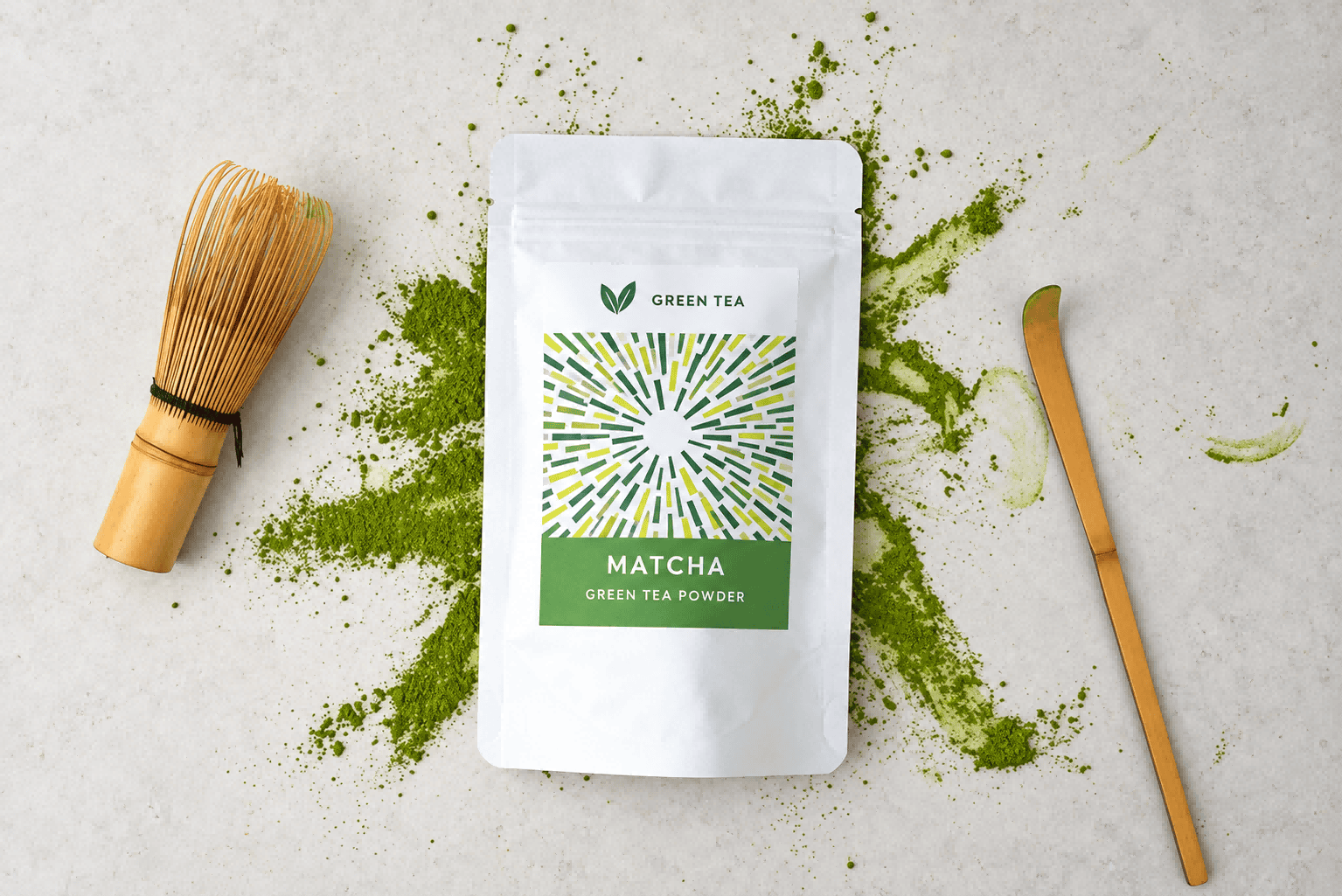
Printed matcha pouch with a bamboo whisk, scoop and loose matcha powder on a light surface

PACK FORMAT

Resealable Pouches and Single-Serve Packs

A multi-serve pouch leaves portioning to the customer. An individual pack sets the portion during filling. This affects the opening, usable capacity and the specifications needed for production.

REPEATED USE

Resealable Matcha Pouches

A resealable pouch suits customers who scoop out several portions from one pack. For retail display, stand-up pouches are one option. Check the usable space below the zipper with the actual powder, including the clearance needed to insert a scoop and reclose the pack.

  • Check that the intended scoop fits comfortably through the opening.
  • Allow space for the zipper and final top heat seal above the filled product.
  • Check how the filled pouch stands and how easily the remaining powder can be reached as the pack empties.

INDIVIDUAL PORTIONS

Matcha Stick Packs and Sachets

Individual packs suit measured portions for drinks, samples or retail multipacks. Stick packs offer a narrow format, while flat sachets provide a broader face for product information. When the packs are formed from rollstock, confirm the film width, print repeat and seal layout with the packing line.

  • Confirm the portion weight and acceptable filling variation.
  • Test the tear position and how easily the powder pours through the opening.
  • Decide how many portions will go into each outer pouch or carton before finalising the retail pack.

Use filled samples to check capacity, opening and handling before approving the dimensions. Include the intended scoop for a resealable pouch and the proposed outer pack for individual portions.

BARRIER MATERIALS

Check the Barrier Layer Behind the Printed Surface

For matcha, review moisture, oxygen and light protection as part of the complete laminate. Ask for a material specification that identifies the outer film, barrier layer and inner sealing layer, together with their thicknesses.

Material Option
Barrier Structure
What to Confirm
Aluminium Foil Laminate

Example: PET / AL / PE

AL refers to a separate aluminium foil layer within the laminate. Review the foil together with the outer film, adhesive system and inner sealant.
Confirm the complete layer structure, foil thickness and barrier data. Include checks on the formed pouch and its seals when reviewing the finished pack.
Metallised Film Laminate

Example: PET / VMPET / PE

VMPET is polyester film with a deposited aluminium coating. Different film grades can provide different levels of barrier performance.
Identify the film grade and request data for the proposed laminate. A silver appearance alone does not establish its oxygen or moisture barrier.
Paper-Faced Laminate

Paper combined with barrier and sealing layers

The paper creates the outer appearance and feel. Protection of the matcha depends on the complete structure beneath it, including the barrier and sealing layers.
Confirm the underlying laminate and any window construction. Review light protection as well as oxygen and moisture transmission.

These structures are examples for discussion. Compare oxygen and water-vapour transmission figures using matching units and test conditions. Confirm the intended shelf life with the actual matcha in its filled, sealed pack under the planned storage conditions.

OPENING AND SEALING

Check the Opening, Zipper and Final Heat Seal

A pouch that looks right when empty may feel different once filled. Use the intended fill weight and scoop to check how the opening and closure work before approving the bag dimensions.
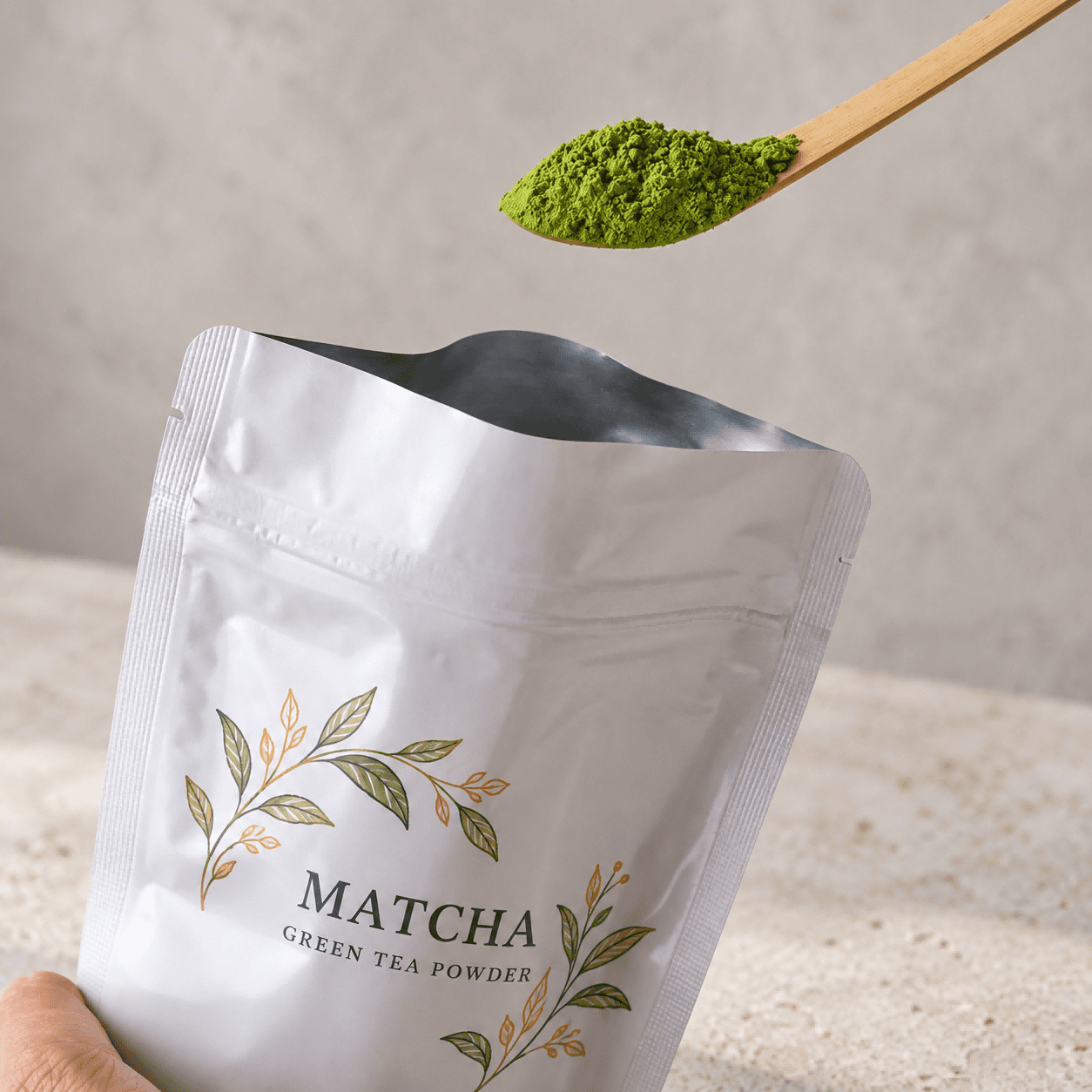
Open white matcha pouch held beneath a bamboo scoop filled with green tea powder
Open matcha pouch shown with a bamboo scoop of powder.

Leave Enough Room for the Scoop

Try inserting, filling and removing the scoop with the pouch filled to its intended level. The mouth should open comfortably, with room to lift out a portion without repeatedly brushing powder into the zipper. Check access again as the pouch empties.

Check Where the Tear Line Meets the Zipper

For a resealable design, check that opening the top leaves enough film above the zipper to grip. Try this on a filled sample, then open and close the zipper several times. Powder caught in the tracks can make resealing difficult.

Keep the Final Heat-Seal Area Clear

The zipper serves repeated use; the separate top heat seal closes the pouch after filling. Keep powder and folds out of that sealing area. Confirm temperature, pressure and sealing time with the actual laminate and equipment, then check seals on filled packs before starting the production run.

FILLING LINE CHECKS

Confirm the Filling Setup Before Ordering

Ask the filling team for its packaging specification before finalising the artwork. Whether you pack in-house or use a co-packer, work from an agreed bag drawing or film specification rather than dimensions estimated from a product photo.

PREMADE POUCHES

Check How the Bag Is Held, Filled and Sealed

For machine filling, confirm how the equipment grips and opens the pouch, where the filling nozzle enters, and how much space is needed for the final top seal. A zipper or gusset can affect the usable space inside the bag.

  • Confirm bag width, height, gusset dimensions and any areas needed for the machine grippers.
  • Check that the filling nozzle clears the opening and zipper.
  • Use a filled sample to confirm that the intended weight leaves enough room for closing and sealing.

PRINTED ROLLSTOCK

Agree the Film Specification With the Filling Team

For stick packs and sachets formed from printed rollstock film, confirm the machine requirements before releasing the print file. The finished pack dimensions are only part of the specification.

  • Confirm film width, pack repeat length and the number of lanes.
  • Specify core inner diameter, maximum roll diameter and unwind direction.
  • Check the registration mark position, sealing layout and sealant-side orientation against the machine specification.

Arrange a filling trial with the actual matcha powder and proposed packaging material. Check portion weights, powder around the seals, and how the finished packs open. Record the approved specification and keep a filled sample as a reference for production.

COMMON QUESTIONS

Matcha Packaging FAQs

Answers to common questions about materials, pack sizes, resealing and shelf life.

Start with a laminate that provides moisture, oxygen and light protection. Ask for the complete layer structure and barrier data, and confirm that the inner sealing layer suits your filling equipment. A matte finish, kraft appearance or silver interior alone does not establish barrier performance.

A resealable pouch suits customers who measure out their own portions over several uses. Stick packs suit individually measured servings. Consider how the matcha will be used, the amount per serving and the filling equipment available before choosing the format.

Net weight is a starting point. Fill a sample with your actual powder, leaving room for the zipper and final top seal. If a scoop will be included, check that it fits inside and can be used comfortably through the opening.

A zipper allows the customer to reclose the pouch after opening. In a heat-sealed zipper pouch, a separate seal above the zipper provides the initial closure after filling. Check that the tear position leaves the zipper accessible and enough film to grip.

Shelf life depends on the matcha, packaging material, filling process, seal quality and storage conditions. Confirm it through testing with the actual filled pack. After opening, repeated exposure to air and moisture also matters, so storage instructions should reflect the product and intended use.

DISCUSS YOUR MATCHA PACKAGING

Need Custom Packaging for Matcha Powder?

Tell us the pack format, fill weight, estimated quantity and how the matcha will be filled. Include your artwork, material requirements, target shelf life and delivery destination. If you work with a co-packer, send its pouch drawing or rollstock specification. PaperMyna can review the packaging details and sample requirements, then prepare a quotation.

Request a Packaging Quote View Stand-Up Pouches