
TAKEAWAY SEALING LABELS
Start with the Opening You Need to Seal
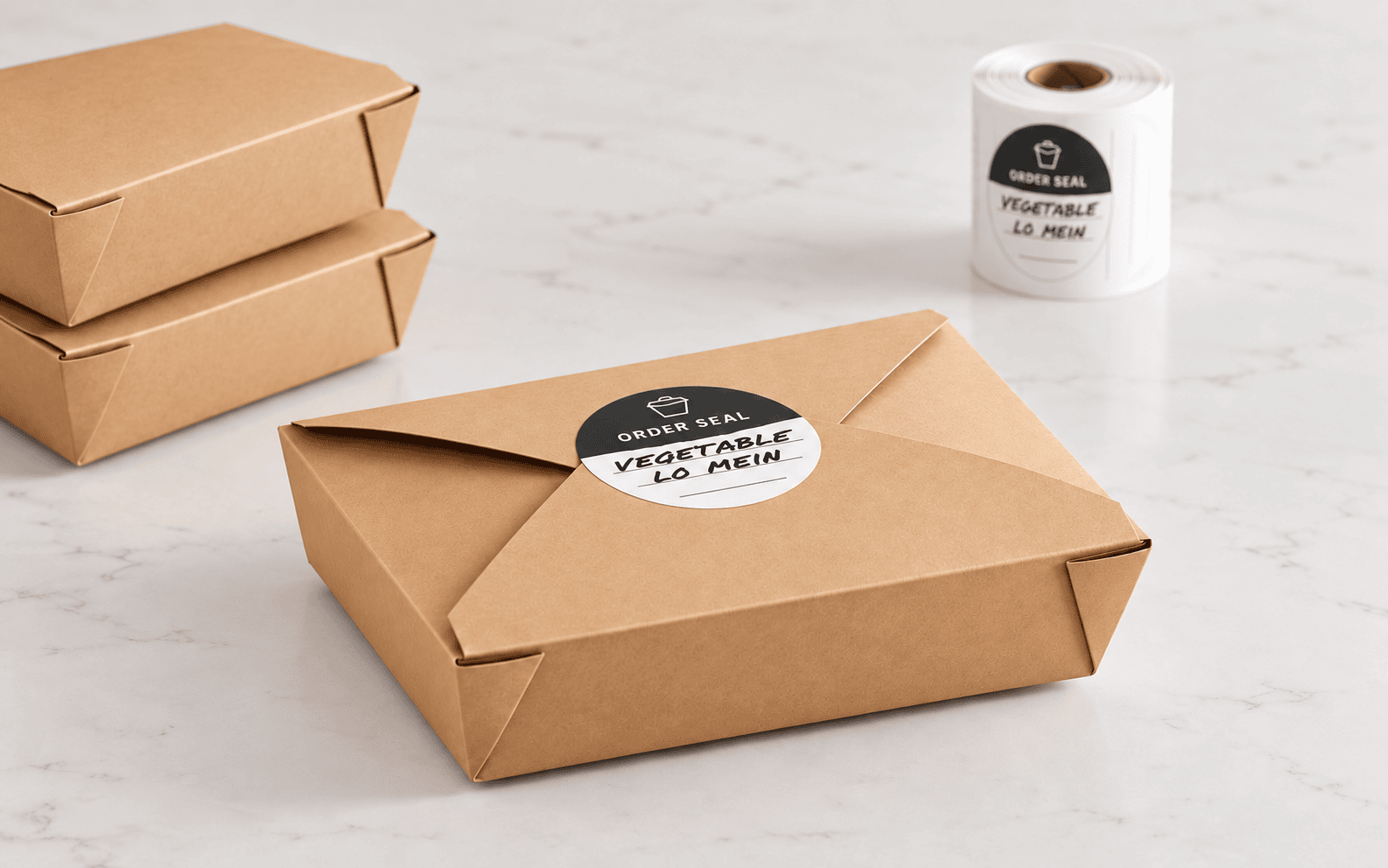
Takeaway sealing labels need to bridge the parts that separate when the pack is opened. A label placed entirely on a lid may leave the box free to open without disturbing it.
On a carton, the label may cross overlapping flaps or reach from the lid to the box body. On a paper bag, it needs to extend beyond the folded mouth. Choose the size, material and adhesive around that position and the conditions during packing and delivery.
Decide whether you need a simple closure label or a construction that leaves visible evidence of opening. Include that requirement in the sample brief for custom printed labels, then check samples on the actual packaging before approving the artwork.
Measure Across the Closure, Including the Fold
Close the actual package before measuring. Mark where the label will start and finish, then measure along the surface it needs to follow. Include any corner, raised rim or folded edge rather than measuring straight across the gap.
Choose the Material and Adhesive Together
Two labels with the same printed design can behave differently on a takeaway pack. Confirm the face material, adhesive and finish included in the sample you are reviewing.
Face Material and Finish
Paper and film are both used for sealing labels. Check how the proposed material follows the fold or lid profile, whether the edges stay down, and how the printed surface handles rubbing or moisture during normal handling.
Include the intended varnish or laminate in the sample. An unfinished material can help with an early review, but the final construction still needs to be checked on the actual pack.
Adhesive and Packing Conditions
Identify the surface the label will touch: uncoated board, coated board, a plastic lid or a paper bag. A brown carton is not necessarily uncoated, so provide a packaging sample where possible.
Note whether that surface is warm, cold, dry or affected by condensation when labelled. Review these conditions with the adhesive supplier, along with the temperatures and handling the pack will encounter after application.
Specify What Should Happen When the Pack Opens
Holding a closure in place and showing evidence of opening are different requirements. Decide which result you need, then check the proposed label on the intended packaging.
CLOSURE APPLICATION
Holding the Closure
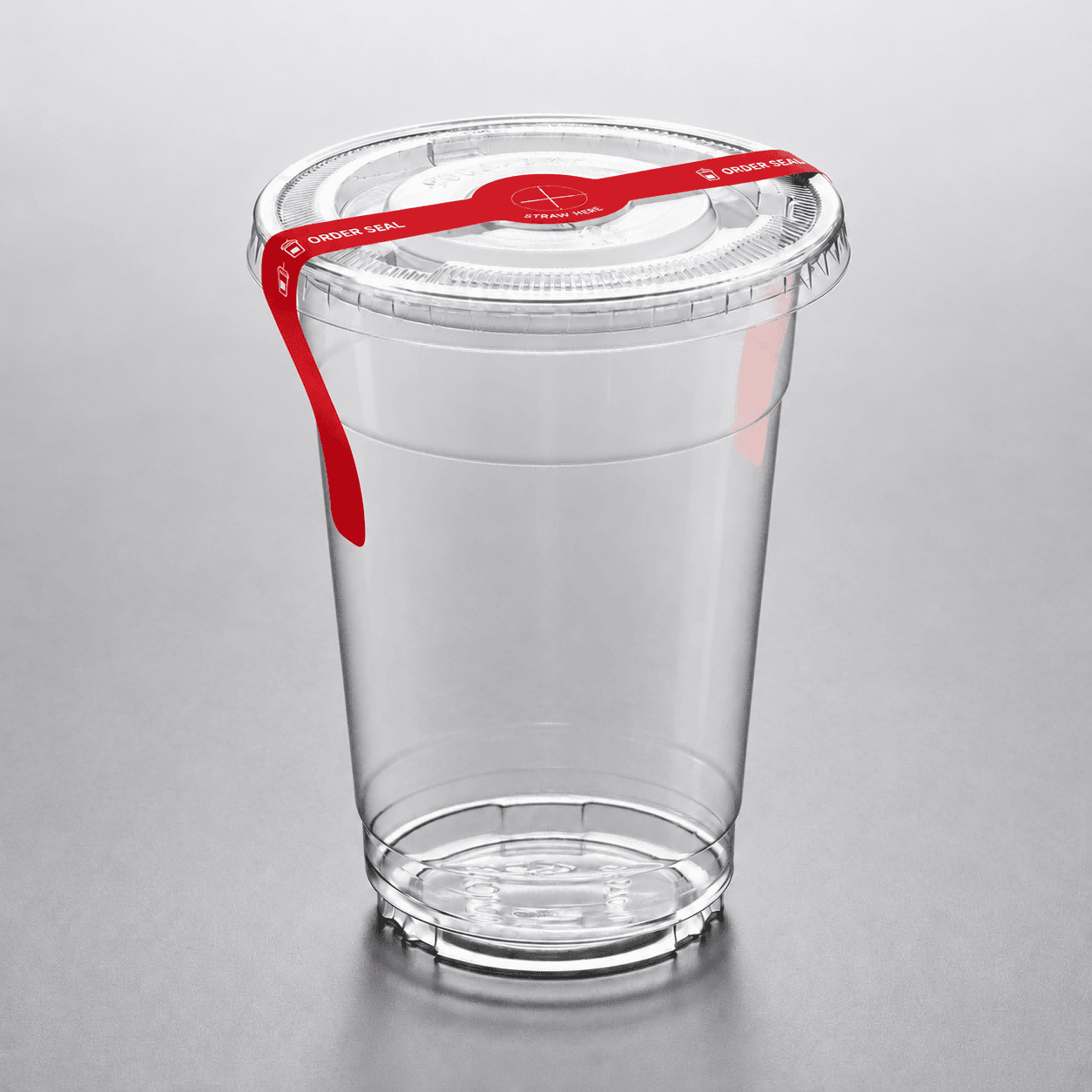
A label that bridges the lid and container can help keep the closure in place during normal handling. The application image shows where the label sits, but its opening behaviour still needs to be checked.
If the label can be peeled off and reapplied without a clear change, it has not demonstrated the visible opening evidence required for a tamper-evident application.
SECURITY-CUT ILLUSTRATION
Making Opening Visible
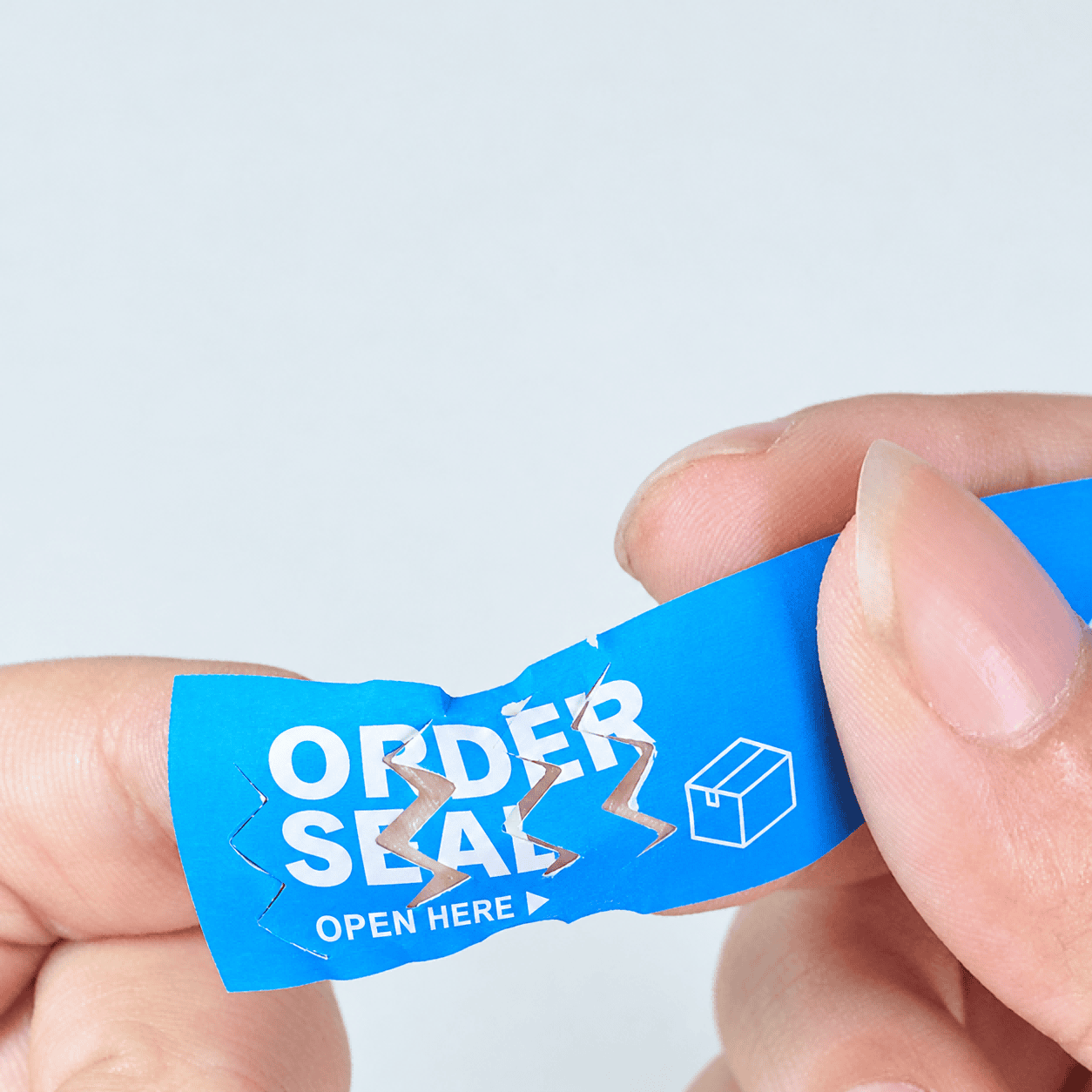
Some labels use security cuts that separate during removal. Other constructions rely on material fragmentation or visible damage to the packaging surface. Specify which change is expected and where it should appear.
Check that finished samples survive packing and carrying, then assess what happens during deliberate opening. The resulting damage should be easy to recognise on the actual pack.
When a Label Edge Lifts, Check Where It Starts
Photograph a lifted edge before pressing it back down. Record where the label first comes away and when it happens. The observations below help guide the next check rather than identify the cause on their own.
Change one part of the trial at a time where practical. If the size, adhesive and application method all change together, it becomes harder to tell which adjustment improved the result.
Run the Sample Through the Packing Routine
An empty carton on a desk is useful for checking the label shape. For approval, continue with a filled pack and the handling it will receive before customer handover.
Include the usual waiting and carrying period. A quick peel check immediately after application does not show how the seal will behave throughout the order.
A result on one carton does not automatically cover every container on the menu. Include each different pack surface in the review, particularly when hot and chilled orders share the same label.
Use the proposed position and normal packing method. Record the pack surface, temperature and any moisture present during application.
Lift, stack and bag the package as staff normally would. Include the expected waiting and carrying conditions.
Check for lifted edges, tearing, rubbed print and movement of the closure. Photograph any change before adjusting the label.
Follow the customer's likely opening route. If visible opening evidence is required, record whether access leaves the agreed change.
Keep the sample reference, packaging details, artwork revision, trial conditions and photographs together with the results.
Send the Package Details with the Artwork
Send the artwork together with photos or samples of the closed pack. If your restaurant and takeaway packaging includes several container types, provide an example of each.
Package and Performance
- Photos or samples showing how the package closes.
- Proposed label position, dimensions and shape.
- Packaging material, surface coating and condition.
- Conditions during labelling, waiting and delivery, including heat, chilling or condensation.
- Whether visible evidence of opening is required and what change should be visible.
Printing and Supply
- Artwork, print colours and preferred surface finish.
- Any area needed for handwriting or variable printing.
- Hand application, dispenser or labelling equipment.
- Core size, roll diameter, winding direction and labels per roll, where relevant.
- Required quantity and delivery destination.
TAKEAWAY LABEL FAQ
Questions About Takeaway Sealing Labels
A few common questions come up when choosing labels for takeaway boxes, cups and bags. Here is what to check before approving a sample.
Measure the path across the closed package, including the edge or fold. Leave usable adhesive contact area on both parts of the closure. Use a paper template to review the shape, then test an adhesive sample on the actual pack.
No. A sticker may hold a closure while still peeling off without clear evidence. If tamper evidence is required, specify the opening behaviour and assess the proposed material, adhesive and any security cuts on the intended packaging.
Possible causes include poor contact around a fold, movement of the closure, contamination, condensation or an unsuitable adhesive for the surface. Record where and when lifting begins, then compare sample trials under the same conditions before changing the specification.
It may be possible, but test each relevant surface and packing condition. Include the temperature and moisture present when the label is applied, along with later handling and storage. Approval on a dry carton alone does not establish performance on a damp chilled container.
Send package photos or samples, label size and position, surface and packing conditions, required opening behaviour, artwork, quantity and delivery destination. Include dispenser or labelling equipment details and the required roll specification where applicable.
DISCUSS YOUR SEALING LABEL PROJECT
Need Custom Sealing Labels for Takeaway Packaging?
Send photos or samples of the closed pack, your proposed label size and position, and the conditions during packing and delivery. Include the artwork, quantity, destination and any requirement for visible evidence of opening. PaperMyna can review the details, prepare a quotation and discuss samples to try on your packaging before production.