
FLAT BOTTOM BAG VS QUAD SEAL BAG
Check the Bag Structure Before Choosing a Format
Choosing between a flat bottom bag and a quad seal bag starts with the base and seal layout. Filled bags can have a similar front profile, and side gussets alone do not tell you which construction you are looking at.
Open an empty sample or review a dimensioned drawing, then check a filled sample with your actual product inside. Compare the usable filling space, the clearance for the final seal and the way the pack stands at the intended fill weight.
This guide explains what to compare before ordering either format for coffee, pet food and other dry products. Explore our flat bottom bags and quad seal bags alongside the sample checks below to develop the dimensions, material structure and artwork for your pack.
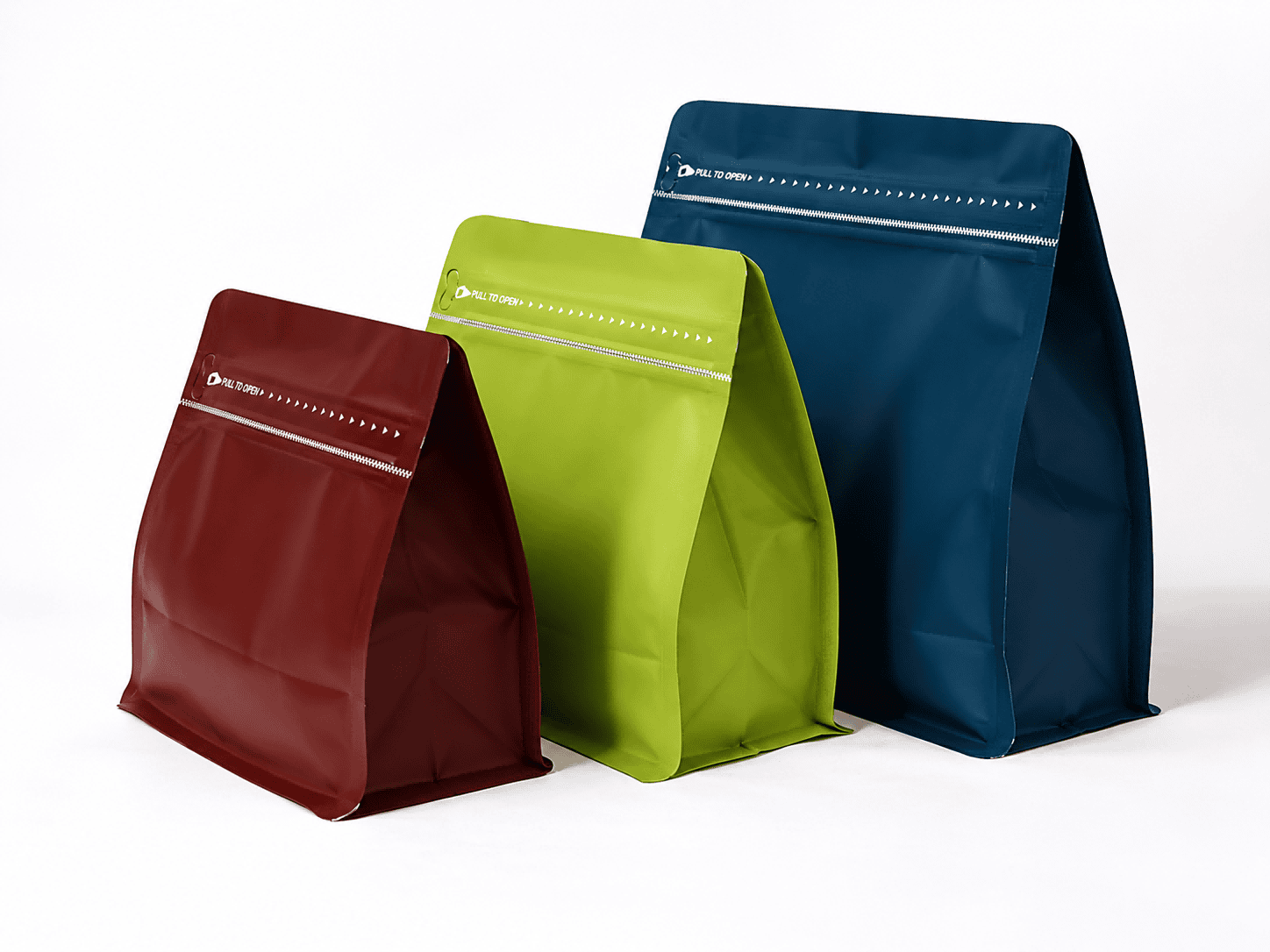
BASE CONSTRUCTION & SEAL DETAILS
Where Flat Bottom and Quad Seal Bags Differ
A flat bottom bag has a distinct rectangular base panel. A conventional quad seal bag has four vertical corner seals around its side-gusseted body. These details are easier to check in an opened sample or a dimensioned drawing than in a front-facing product photo.
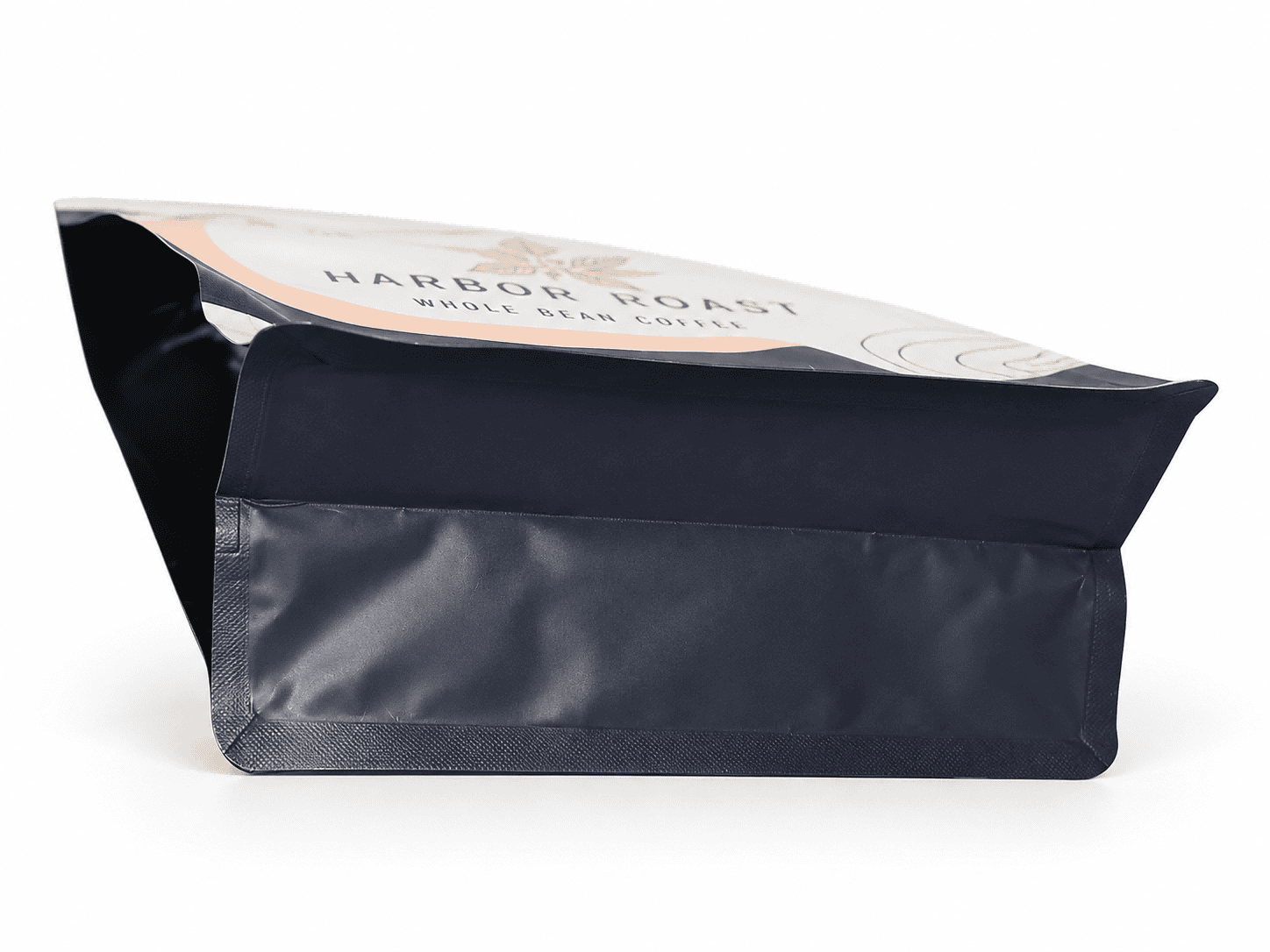
BOTTOM PANEL & CORNER FOLDS
Check How the Base Is Formed
Open the sample and look at the base from underneath. For a flat bottom specification, confirm the rectangular bottom panel, its width and depth, and the position of the corner folds and seals.
Then fill the sample with your product to the intended weight. Check the footprint and balance on a level surface. Film stiffness, bag proportions and the way the product settles all affect how the finished pack stands.
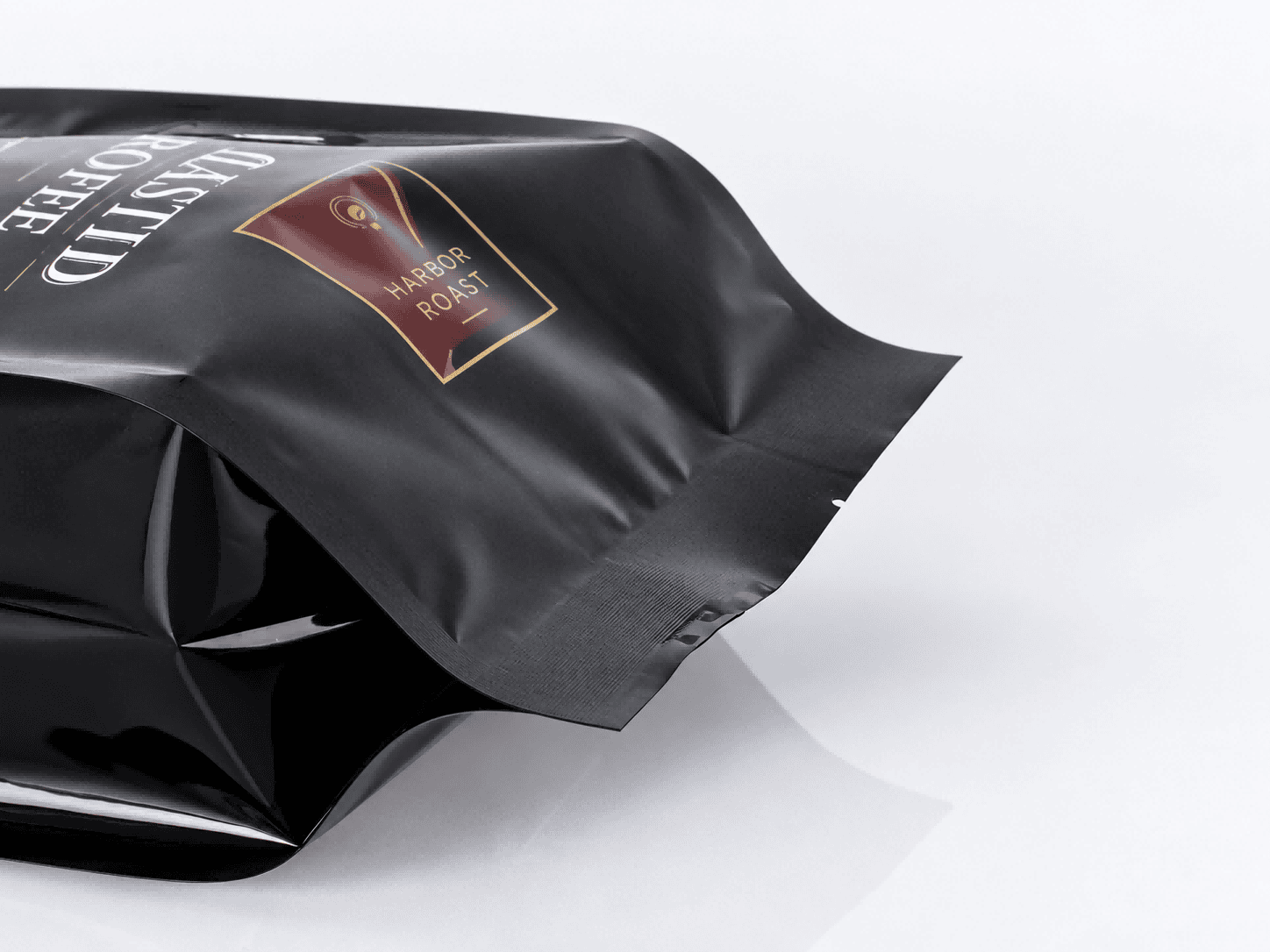
CORNER SEALS & OPENING DETAILS
Trace the Seals Along the Bag Body
For a quad seal specification, ask the supplier to identify the four vertical corner seals on the drawing. Check how the side gussets fold between them and how the seams connect with the end-seal area.
This close-up shows the end seal, gusset fold and tear notch. Use a full-length sample or drawing to confirm the vertical seams as well. Check the opening details against the final top seal and any zipper before approving the artwork.
Supplier naming can overlap. Confirm the base construction and seal layout on the same approved drawing used for the bag dimensions and artwork.
CAPACITY, ARTWORK & PACKING
Compare the Details That Affect Your Finished Pack
Once the construction is clear, compare how each format fits your product, shelf space and packing process. The table below shows what to review for a flat bottom bag and a conventional quad seal bag.
A capacity description such as 500 g depends on the product being packed. Whole coffee beans and fine powder can occupy different volumes at the same weight. Use your product's bulk density and a filling trial to set the bag dimensions.
For a useful price comparison, give both options the same material, print finish, closure features, order quantity and delivery terms, with dimensions sized for the same fill weight. A plain bag and a printed bag with a zipper are different specifications, even when their listed capacity is the same.
COFFEE, PET FOOD & DRY MIXES
Choose the Format Around Your Product
A flat bottom bag is a useful starting point when a defined base and a separate bottom panel are part of the retail design. A conventional quad seal bag is worth comparing when your specification calls for a side-gusseted pack with four sealed corners.
The next question is how the product is filled, stored and used. A small coffee pack, a heavier pet food bag and a fine powder pack place different demands on the opening, film and seals.
For coffee packaging, compare the filled shelf shape and access to the zipper or opening. Where degassing is required, confirm the valve type and position separately from the bag format. Keep the valve, seals and folds clear of important artwork.
For pet food and treats, review fill weight, particle shape and handling conditions. Bulky or irregular pieces can press against the film, so evaluate the material and seals in filled handling trials. Check portioning access and zipper operation as well.
Choose dimensions around the actual powder, filling nozzle and clear sealing space. Watch for powder caught in the top seal or zipper during a filling trial. A change of format can require a different bag width, gusset depth or opening arrangement.
SAMPLE REVIEW & FINAL SPECIFICATION
Approve a Filled Sample Before Ordering
Review each candidate with the same product and target fill weight. Use the results to agree one final specification, then keep the selected sample and drawing together.
These checks support format selection. Agree any required seal-strength, leak, drop or distribution testing separately. A visual review alone does not establish package integrity.
POUCH FORMAT FAQs
Flat Bottom Bag vs Quad Seal Bag FAQs
Answers to common questions about bag construction, usable capacity, barrier materials, closure options and quotation details.
A flat bottom bag has a distinct rectangular base panel. A conventional quad seal bag is identified by four vertical corner seals around a side-gusseted body. Supplier terminology can overlap, so confirm the base and seal layout on the finished-bag drawing.
Confirm the new size with a filling trial. Base construction, gusset depth, seal margins and closure position change the usable space. Two bags with the same outside width and height may hold different volumes, even when they are intended for the same product.
Barrier performance depends on the film structure and package integrity. Four corner seals describe the construction; they do not specify oxygen or moisture protection. Set the required barrier properties for your product, then evaluate the material and finished seals for either format.
Both can be developed with resealable zippers and degassing valves, subject to the selected construction. Confirm the feature type and position with the supplier, allowing space for filling and the final top seal. Specify a valve when the coffee and packing process require degassing.
There is no fixed price ranking. Material structure, bag dimensions, print method, closure features and order quantity all affect the quotation. Compare specifications sized for the same product and fill weight, and ask whether samples, printing preparation and freight are included.
DISCUSS YOUR POUCH PROJECT
Need Help Choosing a Flat Bottom or Quad Seal Bag?
Share your product, target fill weight, current bag dimensions or sample, filling method and required closure features. Include the material specification or barrier needs, artwork, estimated quantity and delivery destination. PaperMyna can help review the details and discuss dimensions, materials and sample options for your flat bottom or quad seal bag project.