
Flexible Packaging, Food & Consumer Goods
Liquid Detergent Packaging
Custom flexible packaging for liquid laundry detergent, fabric softener,
dishwashing liquid, and household cleaning products. PaperMyna helps
brands develop printed refill pouches, spout pouches, sachets, and
rollstock film with practical material structures, dependable seals,
and clear retail presentation.
Liquid Detergent Packaging for Everyday Cleaning Products
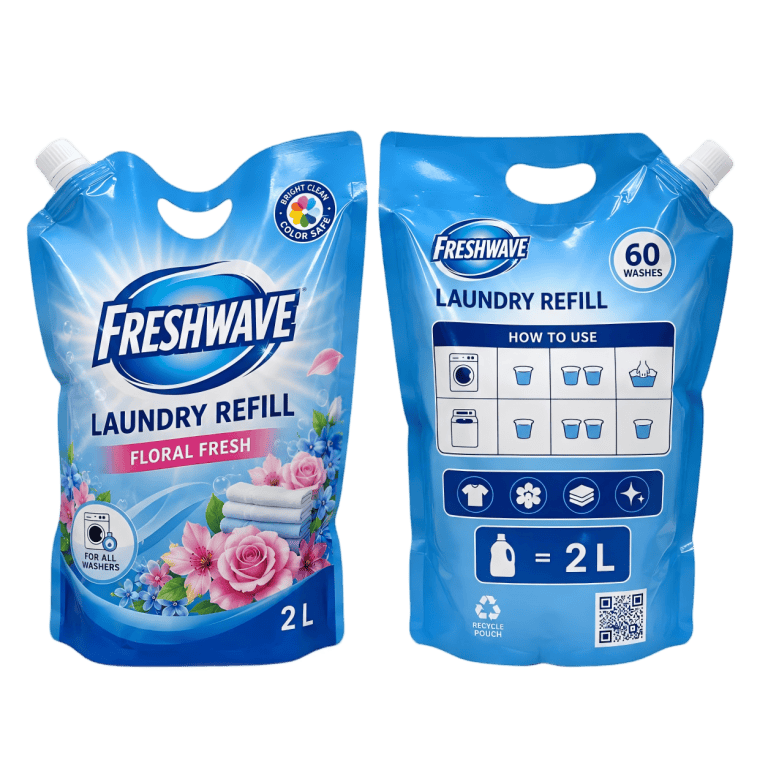
Liquid detergent is not one uniform product category. Laundry formulas, fabric softeners, dishwashing liquids, and surface cleaners can differ in viscosity, fill volume, dispensing method, and the way the product is used or sold. PaperMyna helps turn those requirements into a practical flexible packaging format before artwork and production are finalised.
Laundry Detergent & Fabric Softener
Spout pouches, refill pouches, sachets, and rollstock film can be planned for concentrated laundry detergent, fabric softener, and related laundry products. We review the fill volume, closure format, pour direction, and whether the pack is intended as a refill or a stand-alone retail unit.
Dishwashing & Kitchen Care Liquids
Hand dishwashing liquid, kitchen cleaner, and refill products benefit from a package that seals reliably and gives users a controlled way to pour or dispense the product. The printed area can be organised around directions, dosage guidance, product details, and barcode requirements.
Surface & Multi-Purpose Cleaners
Bathroom, floor, and multi-purpose cleaning liquids often run across several sizes, fragrances, or performance variants. Custom pouches and printed film help keep product identification, application guidance, and brand presentation consistent across the range.
Refill Pouches, Spout Pouches & Rollstock Film
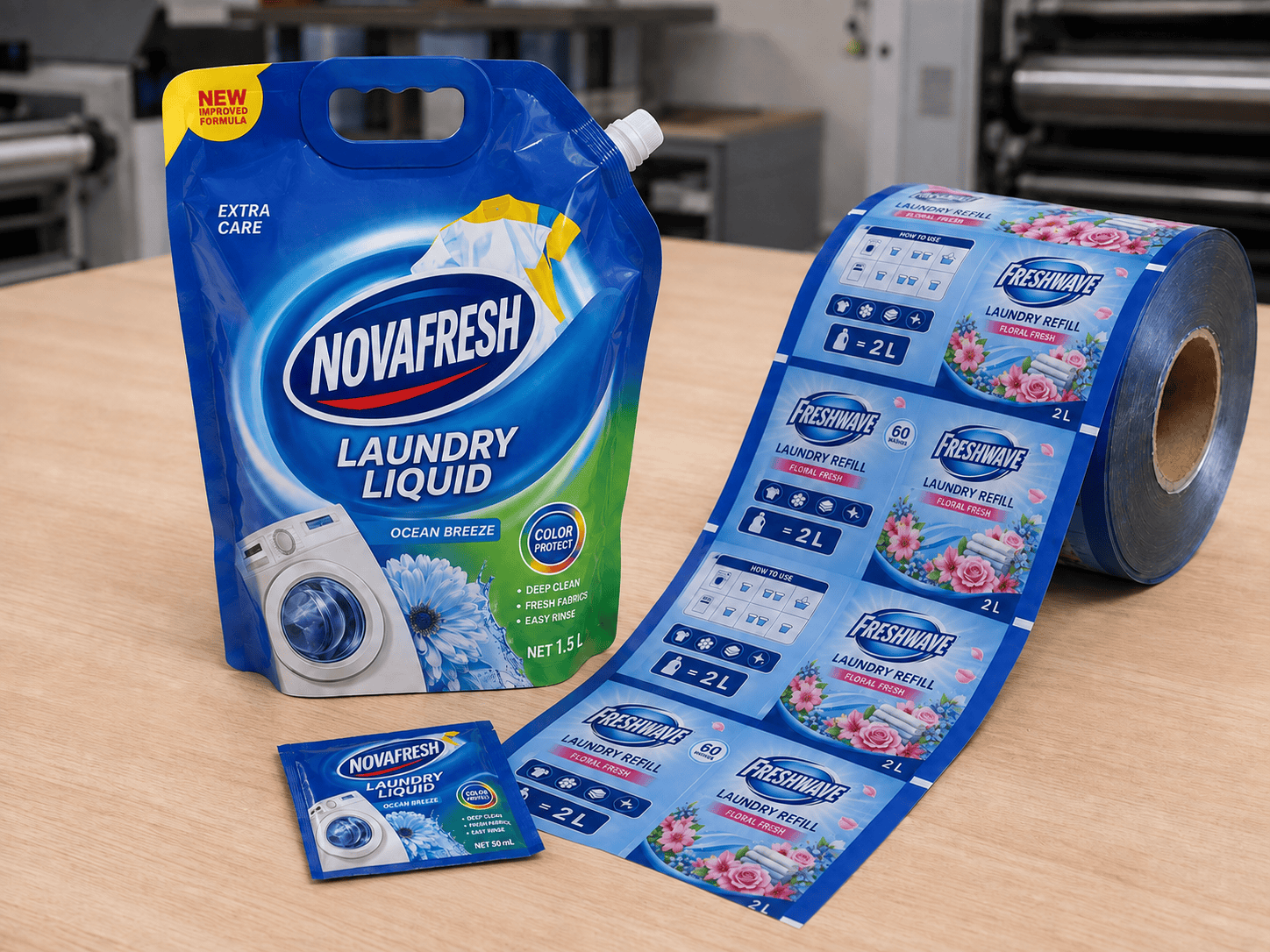
The right liquid detergent packaging format starts with the filling process and the way the product will be used. Some lines need a resealable pouch for repeat use, while others need a compact refill, single-dose sachet, or rollstock film for automated packing. Making that choice early keeps the material, artwork, and filling plan aligned.
What We Check Before Producing Liquid Detergent Packaging
Liquid detergent packaging has to do more than look good on shelf. Before a pouch structure, spout, or film specification is confirmed, we review the product, fill method, pack size, handling requirements, and printed information so the finished pack is practical to fill, transport, and use.
Product Formula & Compatibility
The detergent type, concentration, fragrance system, and expected storage conditions all affect the material discussion. Sharing these details early helps us suggest a practical film structure and arrange any appropriate compatibility checks.
Fill Volume & Dispensing
Fill volume influences pouch dimensions, base width, fitment size, handle requirements, and the way users pour the product. We also consider whether the pack will be a stand-alone retail item, a refill, or part of a multi-size range.
Filling, Sealing & Transport
The filling line, product temperature, seal area, headspace, and transport route should be considered together. These details help guide the pouch construction and reduce avoidable sealing or handling issues.
Artwork, Information & SKU Control
Detergent packs may carry directions, dosage guidance, ingredient or safety information, barcodes, and batch or date coding. A well-planned print layout keeps this information legible while leaving room for brand recognition and variant identification.
FILLING METHOD, HEADSPACE & SEALING PLANNING
Filling Method, Headspace & Sealing for Liquid Detergent Pouches
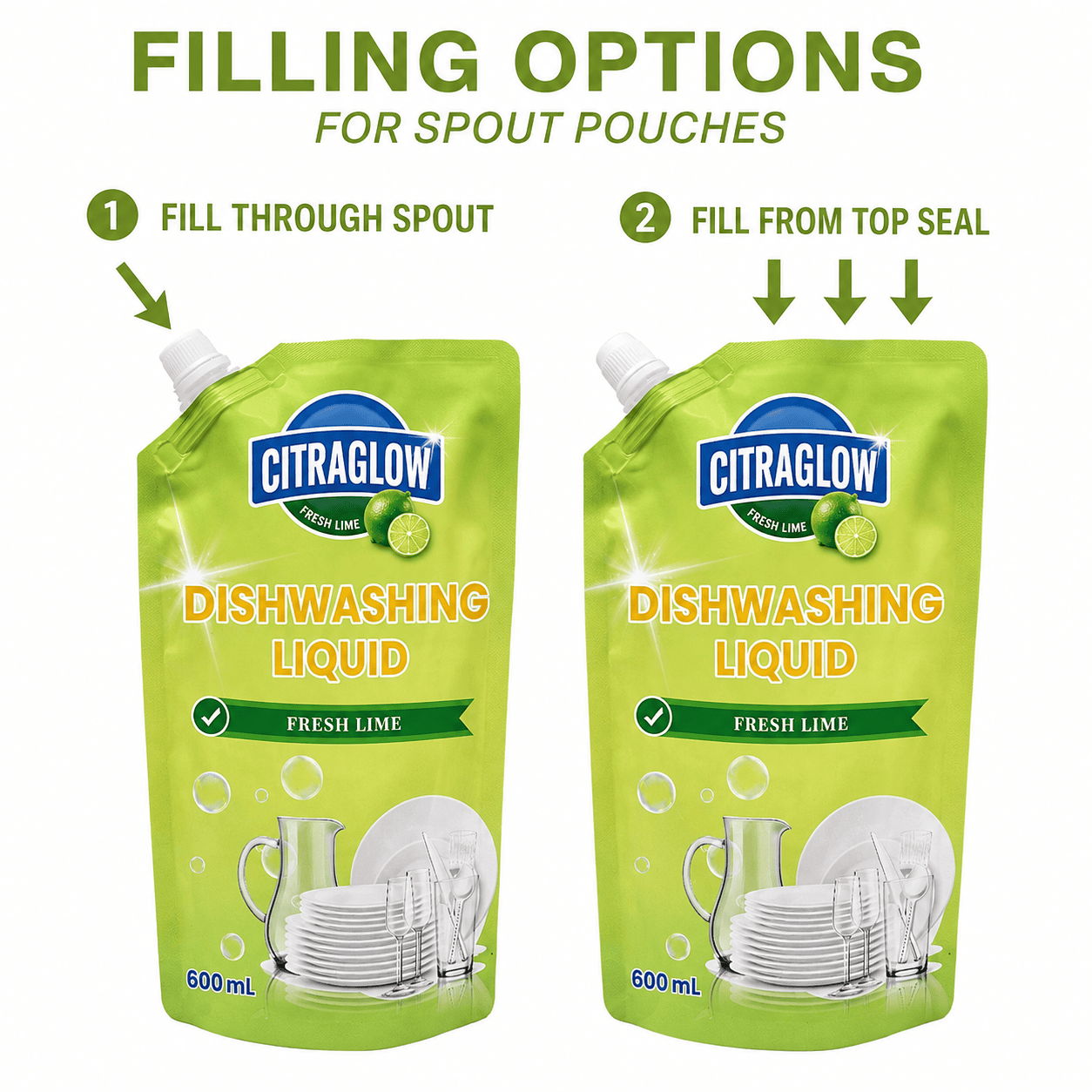
Spout pouches can be filled through the fitment or through an unsealed top area. The right approach depends on the filling equipment, pouch construction, planned fill volume, and the way the finished pack will be capped or sealed. These details should be considered early, alongside the product and artwork requirements.
FROM PACKAGING BRIEF TO PRODUCTION
A Practical Development Route for Liquid Detergent Packaging
The earlier product and production details are aligned, the fewer avoidable changes arise later. We work through the packaging brief in a practical order, starting with the liquid itself and ending with an approved specification ready for production.
Start With the Product Brief
Share the liquid type, concentration, intended fill volume, target market, and whether the pouch will be a retail pack, refill, or sample. A reference pack or filling-line detail is also useful.
Set the Pouch and Filling Plan
We confirm how the pouch will be filled, closed, and handled, then review the size, spout or top-seal option, material structure, and display requirements around that plan.
Check Artwork and Pack Details
Artwork is reviewed alongside fitment position, seal zones, dosage guidance, barcode, required product information, and space for batch or date coding.
Approve the Production Specification
Once the main details are confirmed, the approved artwork, pouch dimensions, material structure, packing method, and order requirements can move forward as one clear production specification.
RELATED GUIDES
Explore Liquid Detergent Packaging Guides
Practical guides for laundry detergent, fabric softener, dishwashing liquid, and household cleaning packaging, covering refill pouches, spout pouches, sachets, rollstock film, filling considerations, and production planning.
Guide
Frequently Asked Questions About Liquid Detergent Packaging
Answers to practical questions about custom refill pouches, spout pouches, sachets, rollstock film, filling methods, and packaging development for liquid detergent products.
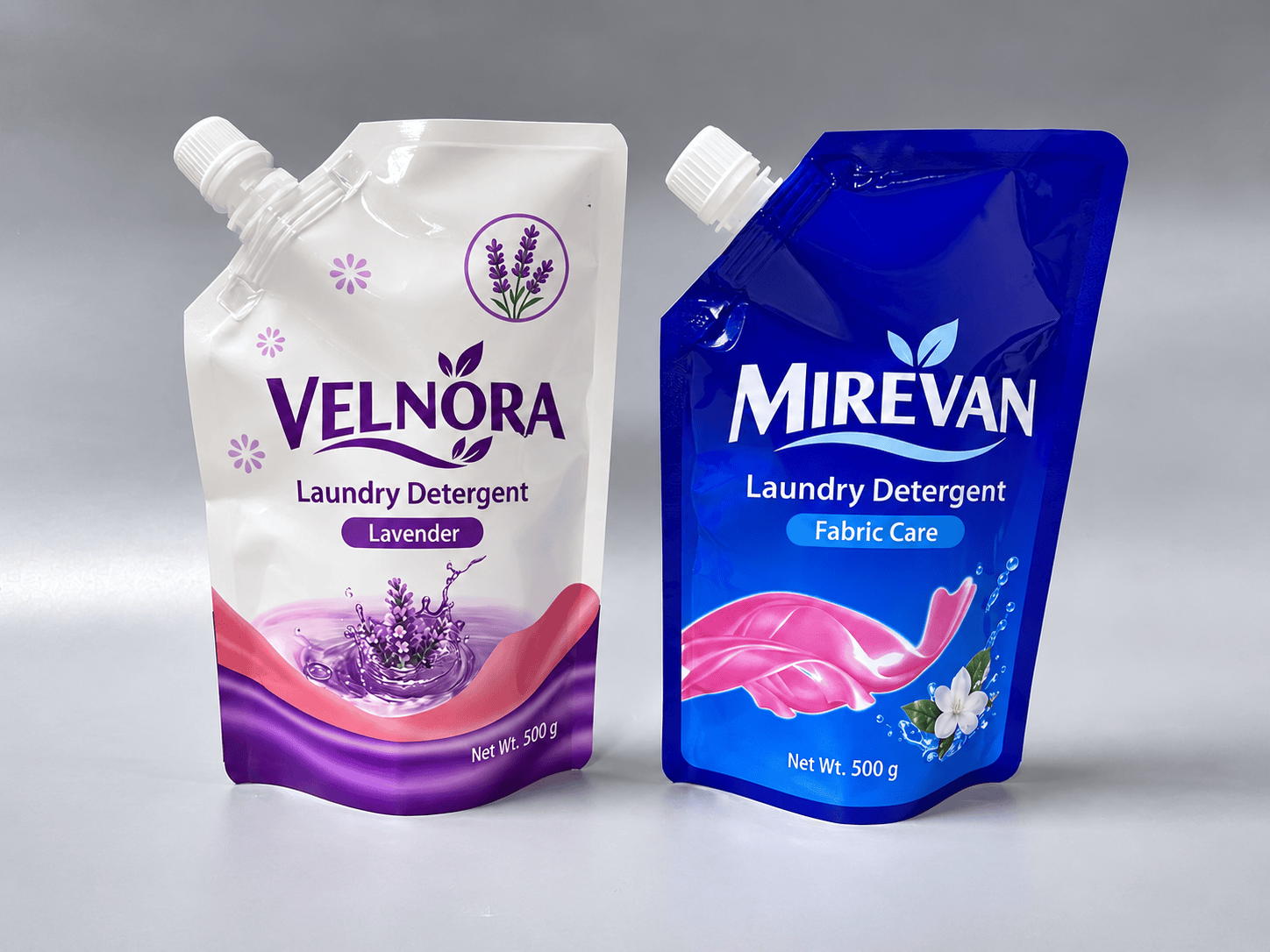
We develop custom flexible packaging for laundry detergent, fabric softener, dishwashing liquid, and other household cleaning products. Depending on the project, options may include stand-up refill pouches, spout pouches, sachets, and rollstock film for automated packing.
Yes. Spout pouches can be developed with a fitment and reclosable cap for repeat pouring and storage. We review the fill volume, spout position, pouch shape, cap style, and intended filling process together before confirming the specification.
The product formula, viscosity, fragrance or solvent content, storage conditions, filling temperature, and distribution route all need consideration. We can discuss practical material options once we understand the product and packing process, while final compatibility requirements should be confirmed through relevant testing.
Both approaches are possible, depending on the filling equipment and pouch design. Filling through the spout normally involves capping after filling, while top-fill pouches are sealed after filling. In either case, the seal zone and required headspace should be planned early.
Beyond branding, pouch artwork often includes usage and dosage directions, product description, ingredients or safety information where required, barcode, recycling information, and a clear area for batch or date coding. We can flag layout areas that need consideration before production.
Yes. If the project requires it, a sample or trial can be arranged after the key pouch details and artwork direction are understood. The appropriate sample route depends on whether you need to review print appearance, pouch format, material handling, or the filling process.
START YOUR LIQUID DETERGENT PACKAGING PROJECT
Ready to Develop Custom Liquid Detergent Packaging?
Share your product type, fill volume, preferred pouch format, filling method, material or barrier requirements, print artwork, quantity, and destination market. PaperMyna can help review the details and prepare a practical quotation for your project.