
Perforated Roll Bags for Supermarket Produce Packaging

SUPERMARKET PRODUCE PACKAGING

Perforated Roll Bags Keep Produce Packing Simple at the Point of Sale

In supermarket produce areas, packaging needs to be available exactly where customers or staff are selecting fruit and vegetables. Perforated roll bags provide a practical way to keep a continuous supply of bags beside produce displays, weighing stations and fresh-food preparation areas without taking up unnecessary counter space.

Each bag is supplied as part of a continuous roll and separated for individual use, allowing the next bag to remain ready on the dispenser. This simple format works well for loose vegetables, fruit and other fresh products that need lightweight containment before weighing, pricing or checkout.

ROLL & DISPENSING

Roll Format and Dispensing Affect How Easily Produce Bags Are Used

A produce bag may be simple, but the way it is supplied on the roll has a direct effect on everyday use. In a busy supermarket produce section, customers need to locate the bag opening, separate one bag and leave the next bag ready without slowing down the packing process.
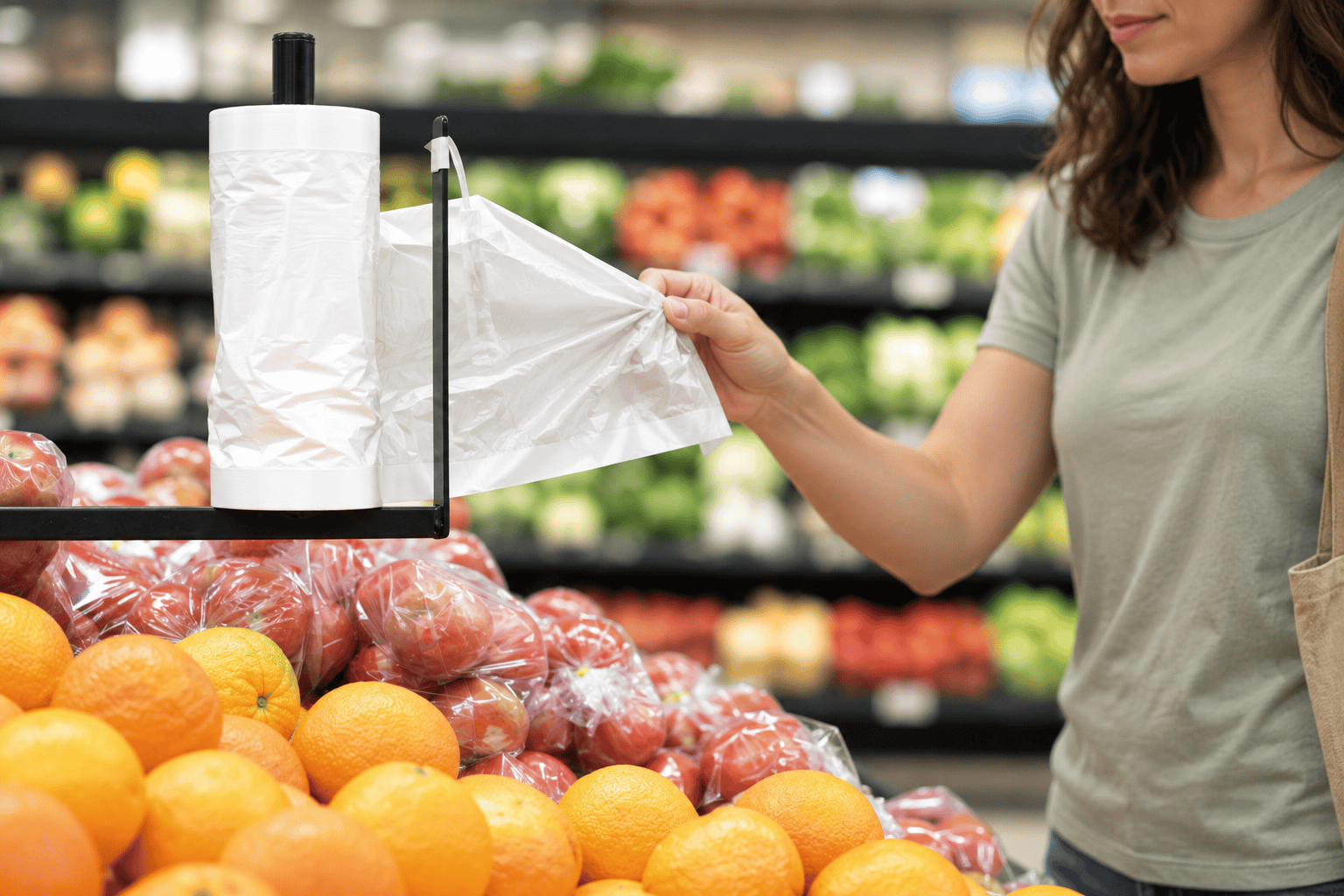
Customer pulling a perforated produce bag from a supermarket roll bag dispenser

The roll diameter, core size, bag orientation and perforation position should work together with the dispenser being used. A roll that is too large for the fixture can restrict rotation, while inconsistent perforations can make individual bags harder to separate cleanly.

For produce displays, the bag should also open easily after it is torn from the roll. Thin film can cling to itself, so film construction and surface feel need to be considered together with dispensing performance rather than treating the roll as a simple collection of individual bags.

Matching the roll configuration to the supermarket fixture helps keep bags accessible beside fruit and vegetable displays while reducing unnecessary handling during busy shopping periods.

FILM SELECTION

Film Choice Changes the Feel, Strength and Opening Performance of Produce Bags

Produce roll bags can be made from different polyethylene films, and the material choice affects much more than appearance. Film stiffness, softness, clarity and surface feel all influence how the bag opens, how it handles around fresh produce and how it performs after separation from the roll.

HDPE is commonly used when a lightweight, crisp-feeling bag is preferred. It can provide good stiffness at relatively low film thickness and works well for many everyday fruit and vegetable applications where the bag mainly needs to contain loose produce during weighing and checkout.

LDPE generally feels softer and more flexible, with a smoother surface and different stretch characteristics. It may be selected when the packed product, handling method or presentation calls for a softer bag with more flexibility.

The practical choice should also consider bag dimensions, packed weight and how easily customers can separate and open the film. A thinner bag is not automatically the better option if it becomes difficult to open or lacks the handling strength required for the intended produce.
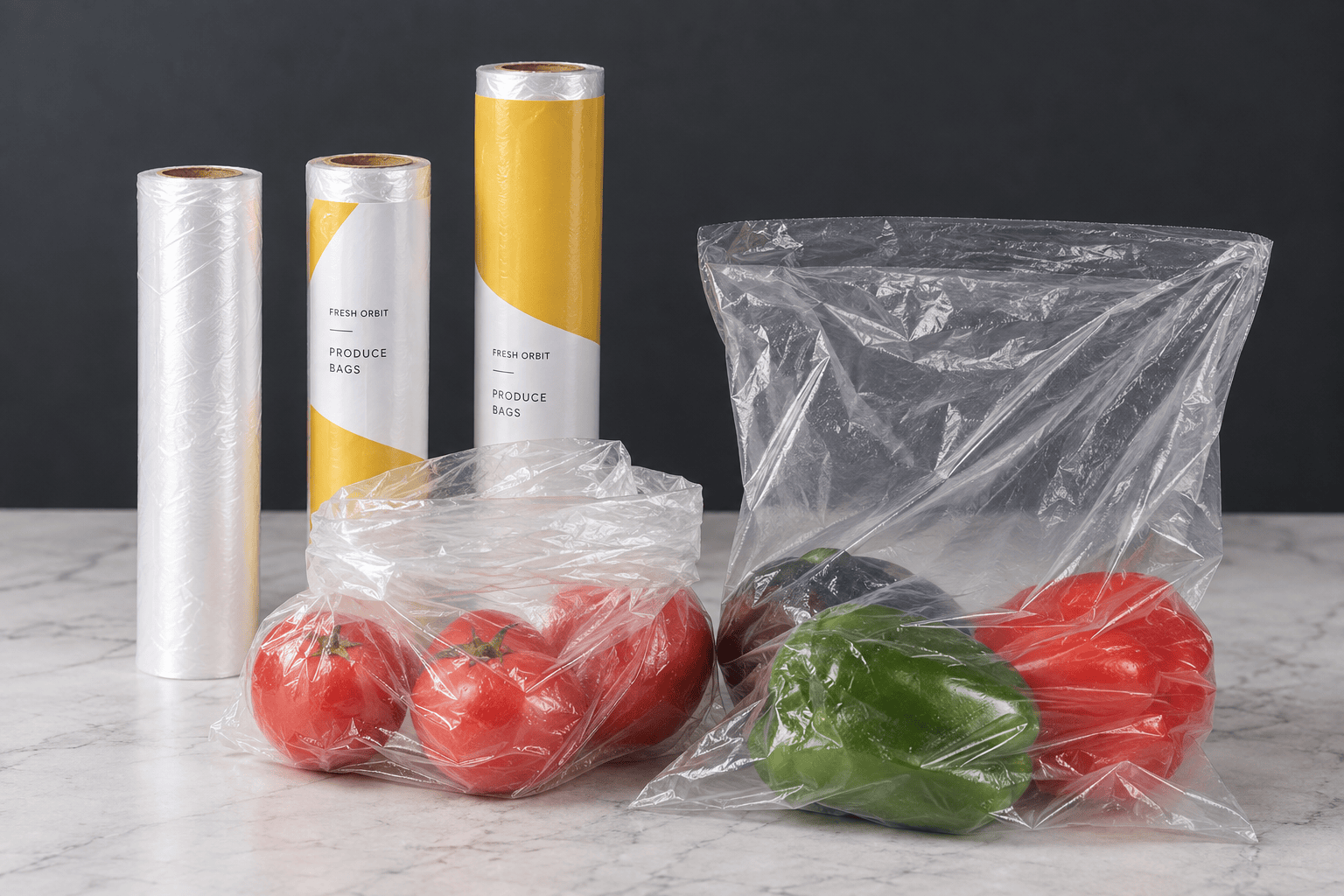
Clear produce roll bags showing different film and bag formats

BAG SIZE & ROLL SETUP

Bag Dimensions and Roll Setup Should Match the Produce and the Fixture

Produce bags need enough usable space for the intended fruit or vegetables without creating excessive loose film. At the same time, the finished roll has to fit the dispenser, rotate smoothly and provide a practical number of bags for the supermarket location.

BAG DIMENSIONS

Size the Bag Around the Typical Produce Load

Bag width and length should reflect the products normally packed in the department. Lightweight items such as herbs, small fruit or a few vegetables may need less volume, while larger leafy vegetables, multiple pieces of produce or heavier loads require more usable space.

Extra film is not always helpful. An oversized bag uses more material, creates more loose film around the packed product and can make weighing and handling less convenient.

ROLL CONFIGURATION

Core Size and Roll Diameter Need to Fit the Dispenser

The core diameter, finished roll diameter and number of bags per roll should be confirmed together with the supermarket fixture. A larger roll may reduce replacement frequency, but only when the dispenser has enough clearance for the roll to rotate freely.

Bag count also depends on bag dimensions and film thickness, so two rolls with the same outside diameter may contain a different number of bags.

PERFORATION & SEPARATION

Perforation Placement Should Make Each Bag Easy to Separate

A perforated roll needs to balance two requirements: the bags must stay connected securely while the roll is being handled, but each bag should separate cleanly when a customer or staff member pulls it from the dispenser.
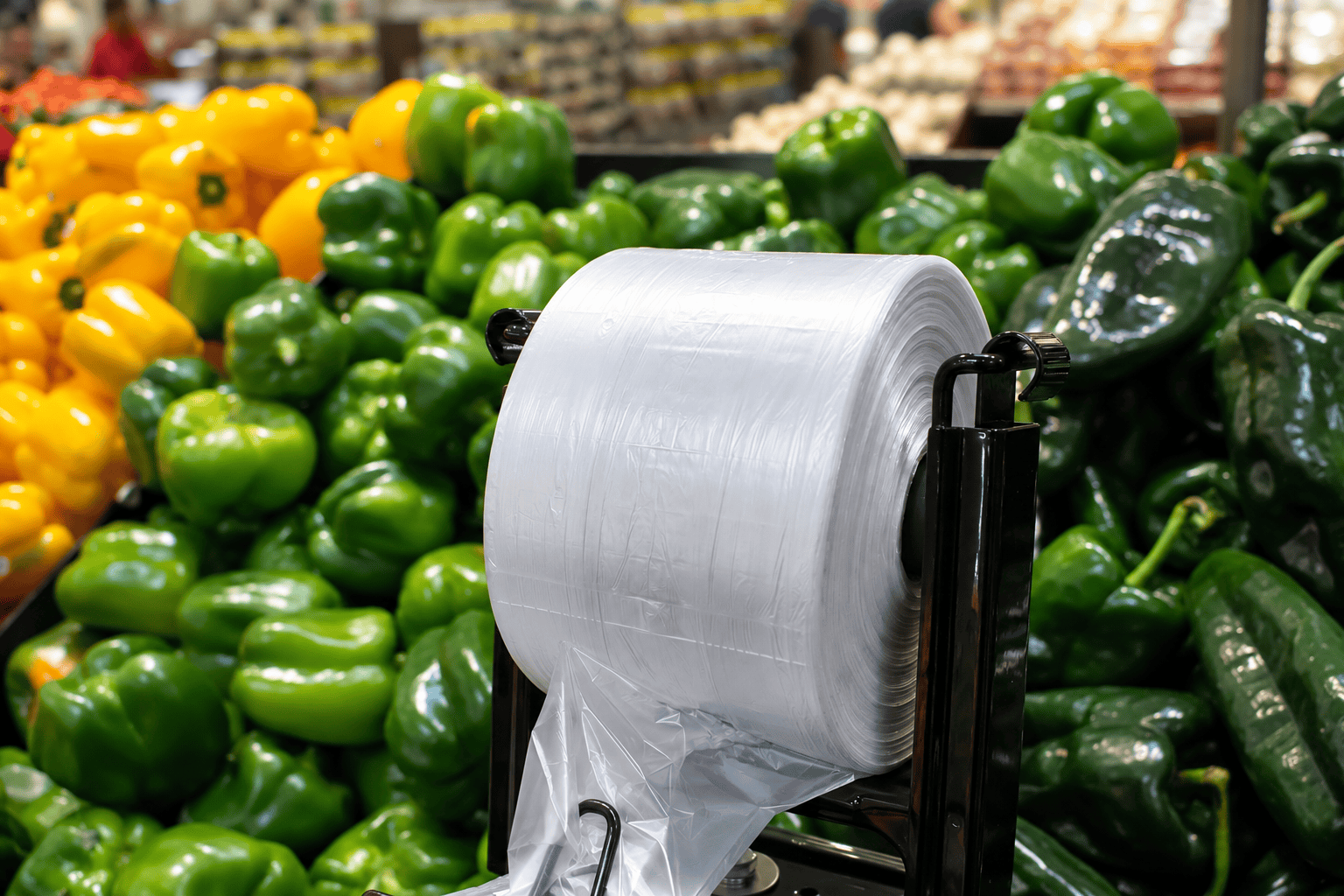
Perforated produce roll bags mounted on a supermarket dispenser

The perforation is normally positioned between consecutive bags so that separation does not interfere with the usable bag body. Its strength needs to suit the film thickness and bag width: if the perforation is too strong, customers may need excessive force to tear off a bag; if it is too weak, bags can separate prematurely during transport or dispensing.

Consistent perforation also matters across the width of the roll. Uneven tearing can leave part of one bag attached to the next or distort the opening, making the following bag more difficult to use.

The tear position should therefore be confirmed together with the bag length, sealing position and dispensing direction. These details work as one system rather than as separate specifications.

CUSTOM PRINTING

Custom Printing Can Add Branding Without Complicating Produce Bag Use

Printed produce roll bags can carry supermarket branding, simple graphics or handling information while retaining the lightweight structure needed for everyday fruit and vegetable packing.

Print placement should be planned around the finished bag rather than the roll alone. Artwork needs to appear in a useful position once an individual bag is separated, opened and filled with produce, without sitting too close to the bag opening, seal or perforation area.

Simple one- or two-colour designs are often practical for clear produce bags because they keep the film visually light while still providing recognizable branding. More detailed graphics can also be considered when the film, print area and required coverage support the design.

Print direction and repeat position should also match the way the bags unwind from the roll. Checking the artwork against the actual bag orientation before production helps prevent logos or text from appearing upside down or in an awkward position during use.
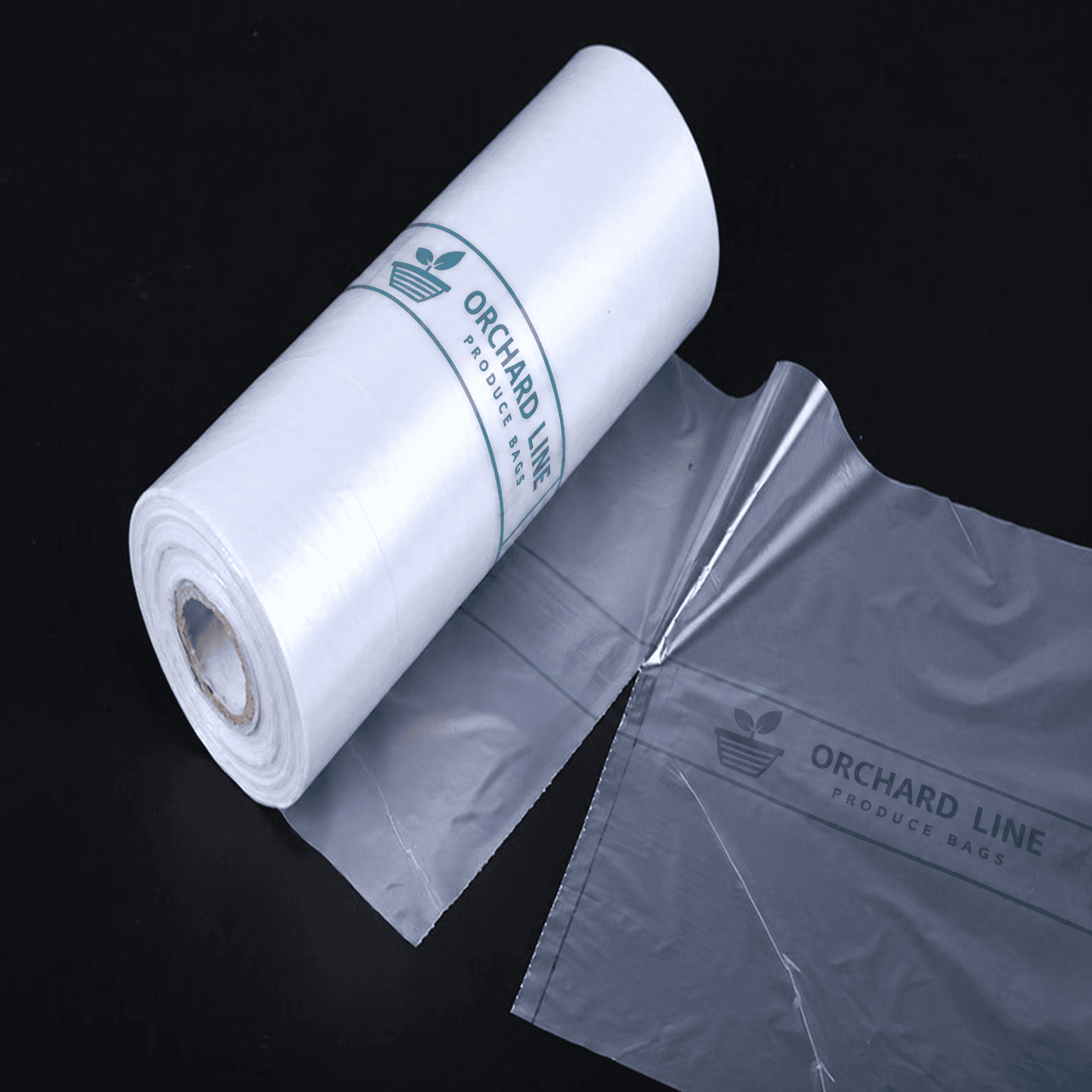
Custom printed produce roll bags with green branding on clear film

PRODUCE APPLICATIONS

Match the Bag to the Produce Being Packed

Supermarket produce varies widely in size, weight and shape, so the most suitable bag format depends on what customers are actually packing.

FRUIT & LOOSE VEGETABLES

Everyday Produce Packing

Apples, citrus fruit, tomatoes, peppers and similar loose produce usually work well with lightweight clear bags sized for easy filling, weighing and checkout.

LEAFY & BULKY PRODUCE

More Volume for Larger Items

Leafy vegetables, broccoli and other bulky produce often benefit from greater bag width and length so the product can be packed without excessive stretching or bunching of the film.

COMMON QUESTIONS

Common Questions About Perforated Roll Bags for Supermarket Produce

Choosing the right produce roll bag involves more than bag size alone. These common questions cover material, roll setup, perforation and printing for supermarket use.

HDPE and LDPE are both common options. HDPE generally provides a lighter, crisper feel, while LDPE is softer and more flexible. The suitable film depends on the produce, bag size, packed weight and required handling performance.

Bag width and length should match the typical produce being packed. Small fruit and loose vegetables may need less volume, while leafy or bulky produce usually benefits from a wider or longer bag.

Consistent perforation helps each bag separate cleanly from the roll without tearing into the usable bag area. The perforation strength should also match the film thickness and dispensing method.

Yes. Produce bags can be printed with logos, simple graphics or handling information. Print position and direction should be confirmed against the finished bag so the artwork appears correctly after the bag is separated and opened.

Useful details include bag width and length, film preference, thickness, roll diameter, core size, bags per roll, printing requirements, dispenser type and approximate order quantity.

DISCUSS YOUR PRODUCE ROLL BAG PROJECT

Need Custom Perforated Roll Bags for Supermarket Produce?

Share your bag dimensions, film preference, thickness, roll diameter, core size, bags per roll, perforation requirements, printing details, dispenser setup, estimated quantity and delivery destination. PaperMyna can help review the specification and develop perforated roll bags for fruit, vegetables and other supermarket produce applications.

Request a Quote Explore Perforated Roll Bags