
Potato Chip Packaging: Barrier Films, Seals and Nitrogen Flushing

SNACK PACKAGING GUIDE

Match Potato Chip Packaging to the Product and Packing Line

Potato chip packaging needs to protect a fragile snack while working consistently through filling and sealing. The film structure, bag dimensions and seal quality should suit the chips, packing equipment and intended storage conditions. A printed design is only one part of that specification.

This guide explains barrier film options, pillow bag formats, seal quality and nitrogen flushing, along with the details to confirm before ordering custom printed rollstock. For the wider range of formats used for chips, nuts and other dry snacks, explore our snack packaging options.

FILM & BARRIER REQUIREMENTS

Choose Potato Chip Packaging Film by Its Barrier Requirements

Moisture, oxygen and light call for different protective functions. Define these requirements before selecting the laminate, then review the film with the intended shelf life, storage conditions and packing process.

Moisture Barrier Limit moisture entering the pack to help maintain crispness. Review the required moisture barrier against storage humidity and the intended shelf life.
Oxygen Barrier Use a suitable oxygen barrier to help slow oxidation of the oils in the chips. Evaluate the film together with seal quality and any nitrogen-flushing process.
Light Protection Where light protection is required, confirm the opacity and coverage of the proposed film. A silver-looking surface alone does not establish its moisture or oxygen barrier performance.

Metallised BOPP or CPP may be used within a snack-packaging laminate. Review the complete structure, each layer's function, total thickness and sealing surface rather than choosing a material from appearance alone.

Request barrier data with the test conditions stated, and compare like-for-like figures. For more on controlling moisture exposure, see our guide to moisture barrier packaging for dry food .

PRINTED ROLLSTOCK & PILLOW BAGS

Match Printed Rollstock to the Finished Potato Chip Bag

For potato chip packaging on a form-fill-seal line, the printed film and finished bag need to be planned together. The laminate must suit the sealing process, while the artwork must fit the bag after forming, filling and cutting.
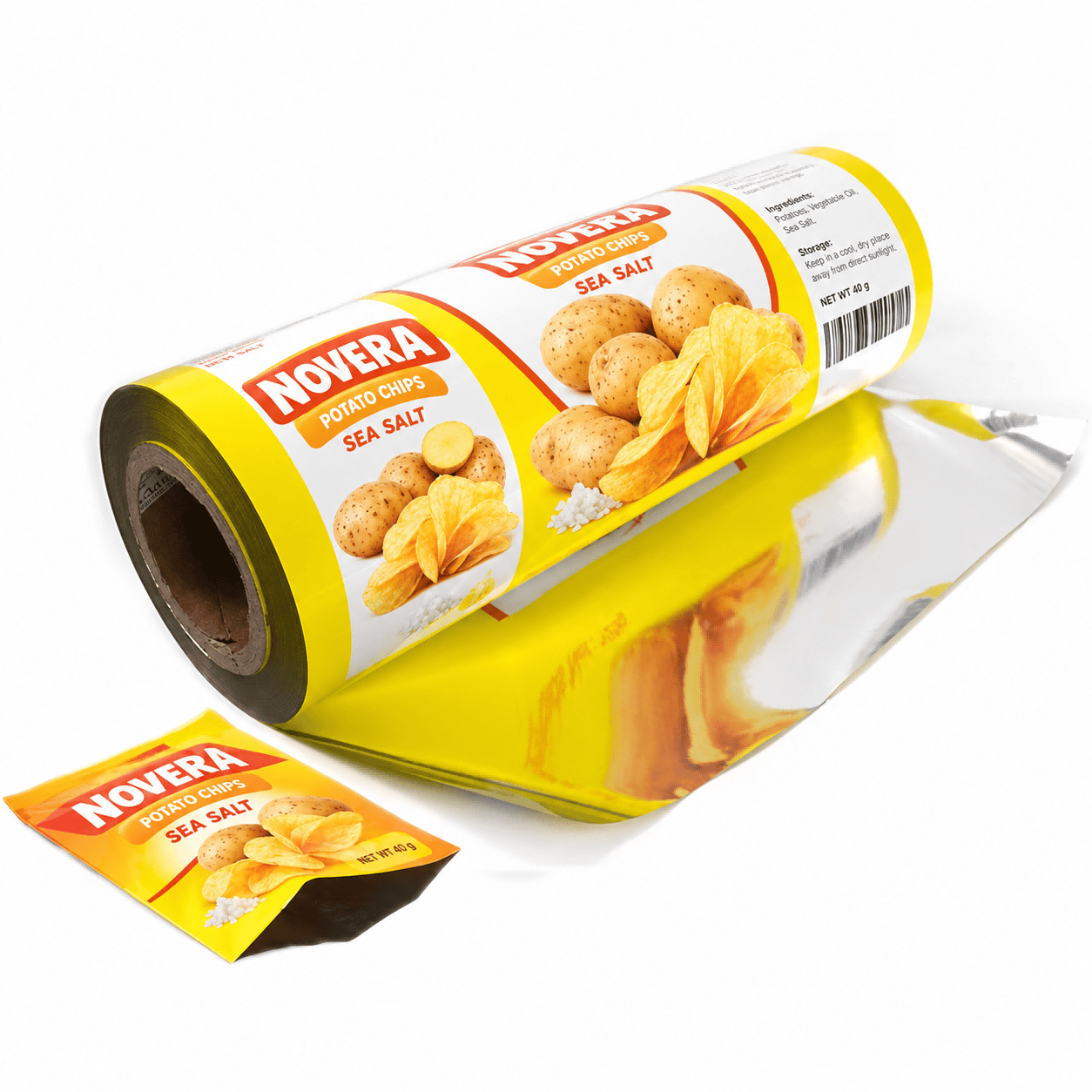
Yellow printed rollstock film with a matching potato chip pillow bag on a white background
From Roll Film to a Pillow Bag On a typical vertical form-fill-seal line, film unwinds from the roll and forms around a tube. A longitudinal seal closes the back of the bag, while cross seals form the top and bottom. The film is cut into individual packs as the filling and sealing cycle continues.
Keep Artwork Clear of Seams and Cuts Work from the approved bag layout, with the back seam, end seals, cut positions and registration mark clearly identified. Keep essential text and barcodes clear of these areas, and check their position on a formed bag sample as well as on the flat artwork.
Match the Roll to the Packing Line Confirm film width, print repeat, unwind direction, core size and maximum roll diameter with the equipment supplier. Trial the selected laminate for feeding, print registration and sealing at the intended operating speed. Explore our custom rollstock film options when preparing the specification.
SEAL QUALITY & PACK INTEGRITY

Check the Back Seal and Both End Seals

The back seam and both end seals are part of the bag's protective barrier. Check production samples for continuous seals, then verify their performance with suitable leak and seal strength tests.
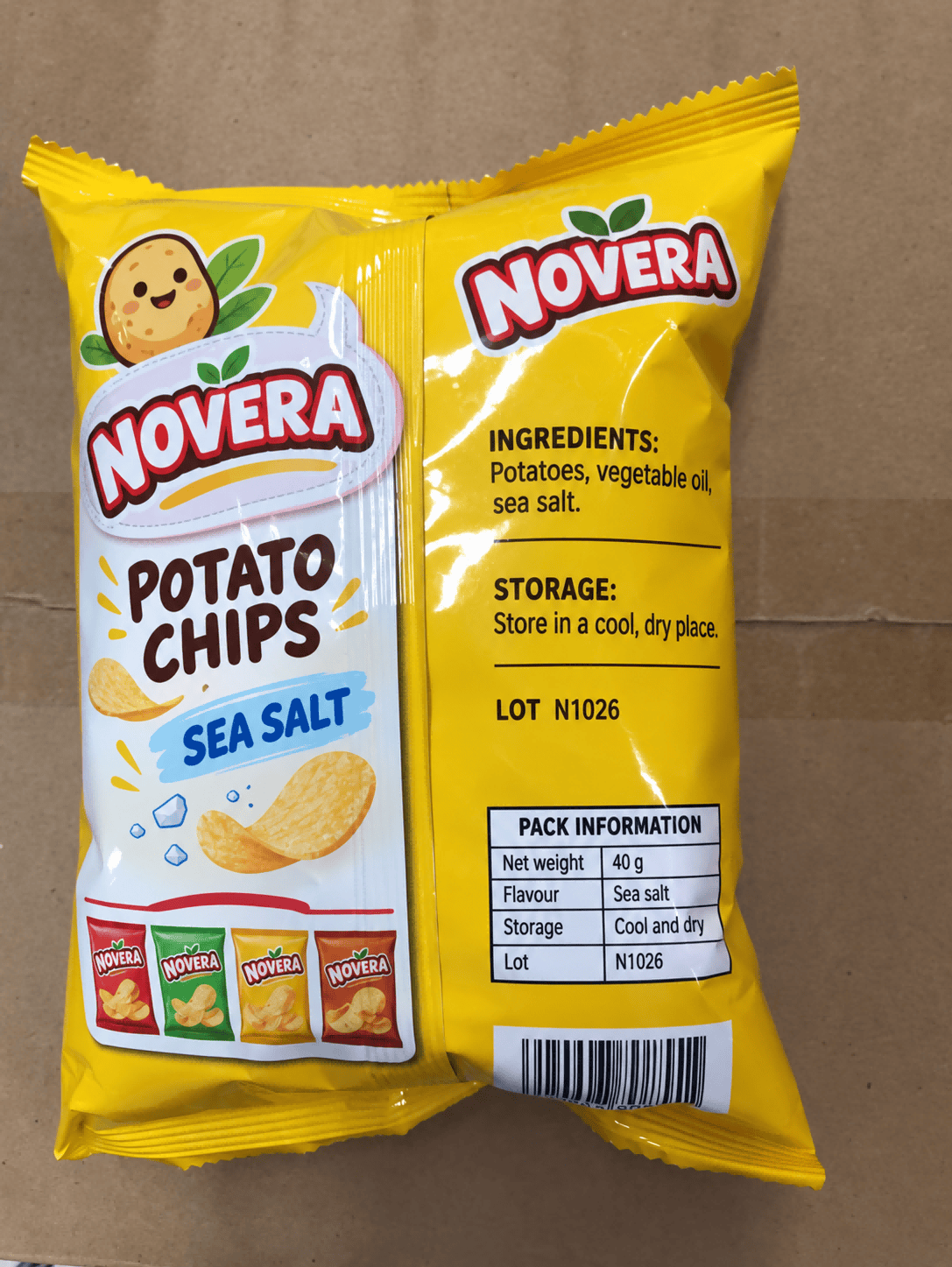
Back of a yellow potato chip pillow bag showing the vertical seam and top and bottom seals
Follow the Full Back Seam Inspect the longitudinal seal along its full length. Look for uneven bonding, folds and visible channels, paying particular attention to the junctions where the back seam meets the top and bottom seals.
Keep the End Seal Areas Clean Look for chip fragments, oily residue or creases crossing the sealing area. Product trapped between the film layers can interfere with bonding. Review both end seals and check that the cut position leaves the intended seal width.
Check Consistency During Production Establish sealing temperature, dwell time and pressure for the chosen laminate at the intended line speed. Take samples at start-up and after restarts or adjustments to check whether the seals remain consistent.
Verify Leakage and Seal Strength Define the test methods, sample conditions and acceptance criteria before comparing results. Use appropriate leak tests to assess finished bag integrity and seal strength tests to assess the sealed material.

NITROGEN FLUSHING & HEADSPACE

Balance Nitrogen Flushing and Space Around the Chips

Nitrogen flushing is commonly used in potato chip packaging to displace air before sealing. Lowering residual oxygen helps slow oxidation of the oils in the chips, which can otherwise lead to rancid flavours during storage.

Headspace is the gas-filled space inside the bag around the product. It can help cushion fragile chips during handling. Review bag dimensions and headspace with the actual fill weight, chip shape and packing line, then assess breakage after representative handling and transport trials.

Effective nitrogen flushing depends on the film's gas barrier, seal integrity and filling conditions. Set residual oxygen targets through product-specific trials, and confirm flavour, crispness and pack integrity over the intended storage period.

FREQUENTLY ASKED QUESTIONS

Potato Chip Packaging: Common Questions

Find practical answers about film selection, nitrogen flushing, printed rollstock, quotation requirements and shelf-life testing before ordering custom potato chip packaging.

Potato chip bags commonly use laminated films that combine moisture and oxygen protection with a heat-sealable layer. The structure and thickness should suit the chips, target shelf life, storage conditions and packing equipment. Confirm the complete laminate using barrier data and trials with filled bags.

Nitrogen flushing displaces air before sealing, helping reduce oxidation of the oils in the chips. The gas-filled space inside the bag can also cushion fragile chips during handling. Its effectiveness depends on the film barrier, seal integrity and filling conditions, so residual oxygen and storage performance should be checked.

Yes. PaperMyna offers custom printed rollstock film for snack packaging. Confirm film width, print repeat, unwind direction, core size and maximum roll diameter with your equipment supplier. Trial the proposed film on the packing line to check feeding, print registration and sealing before approving a production run.

Share your target fill weight, bag dimensions, film requirements, printing artwork, packing machine details, estimated order quantity and delivery destination. For rollstock, include the required roll specifications. A sample bag, film drawing or existing packaging specification can also help clarify the quotation.

Validate shelf life using the actual chips, selected packaging and intended storage conditions. Assess flavour, crispness, oil oxidation and pack integrity during agreed storage trials. For nitrogen-flushed packs, include residual oxygen checks. Use the trial results to establish a suitable shelf life for the complete packaged product.

DISCUSS YOUR POTATO CHIP PACKAGING PROJECT

Need Custom Potato Chip Packaging for Your Packing Line?

Share your target fill weight, bag dimensions, film requirements, artwork and packing machine details. For rollstock, include film width, print repeat, unwind direction, core size and maximum roll diameter, together with the estimated quantity and delivery destination. PaperMyna can help review the specification and propose a printed film structure for evaluation with your chips and packing line.

Discuss Your Chip Packaging Explore Snack Packaging