
ROLLSTOCK FILM UNWIND DIRECTION
Agree How the Film Will Enter the Machine
Before approving printed rollstock, ask the packing team to show how the film leaves the roll and enters the machine. The artwork proof and the unwind drawing need to agree on the direction in which the design will travel through the line.
A clear rollstock film unwind direction specification identifies the reference face, the leading edge and the viewing position used in the drawing. Add the sealant side and any registration-mark requirements, then have the packing team review the complete layout.
For a new project, a marked film strip can help communicate the orientation before a representative roll is available for a machine trial. Keep that reference with the drawing so the next order can be checked against the same instruction.
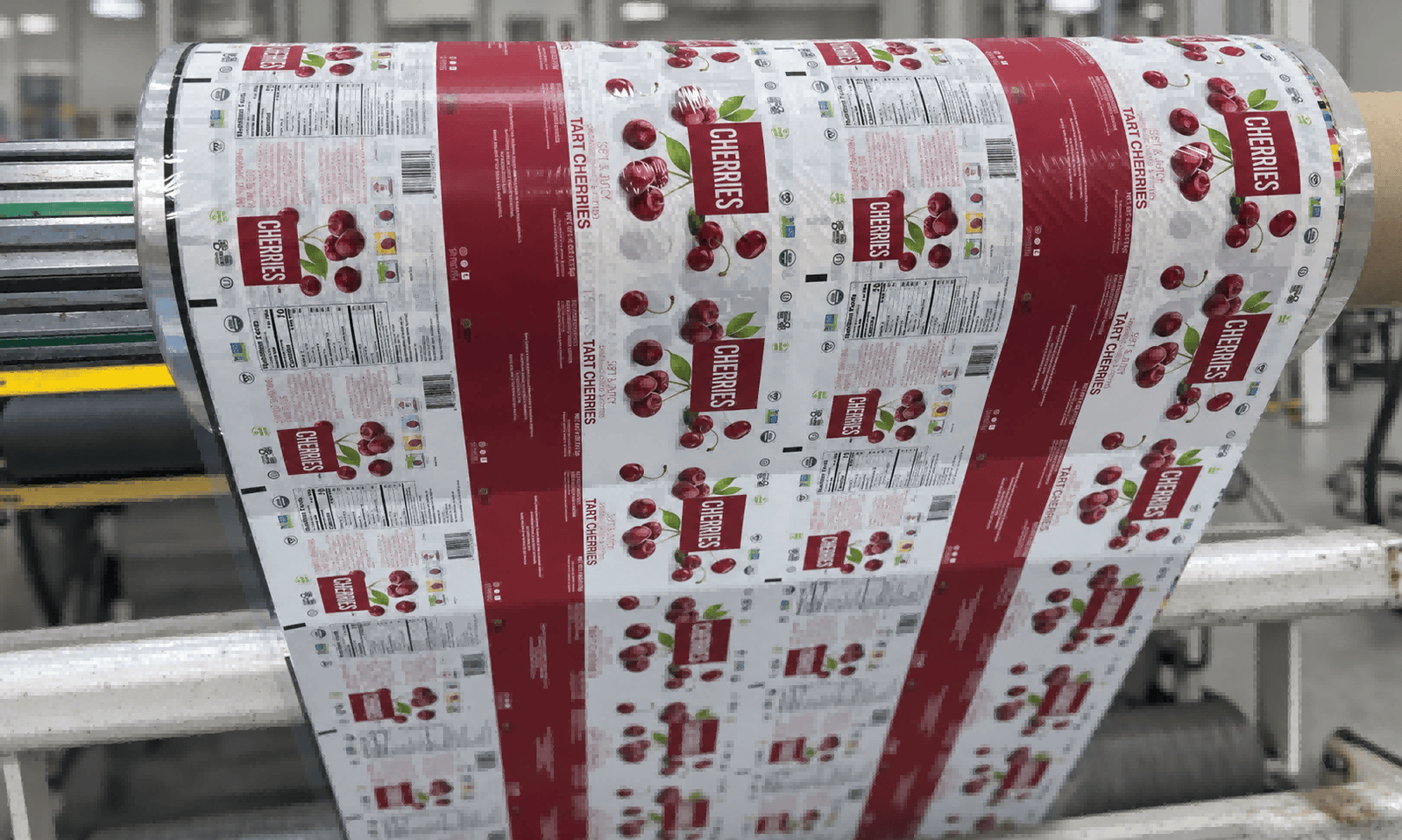
PRINT FACE AND LEADING EDGE
Show Both the Wound Face and the Artwork Orientation
Start with the printed-design face of the finished film. Confirm whether it should face away from the core (print wound out) or toward the core (print wound in). Make this reference clear on the drawing, especially when the film has a laminated structure.
Then mark which edge of the printed design should enter the machine first. Identify the top, bottom, right or left edge of the artwork, and add an arrow showing web travel. Show the viewing position too, so everyone checks the roll from the same end.
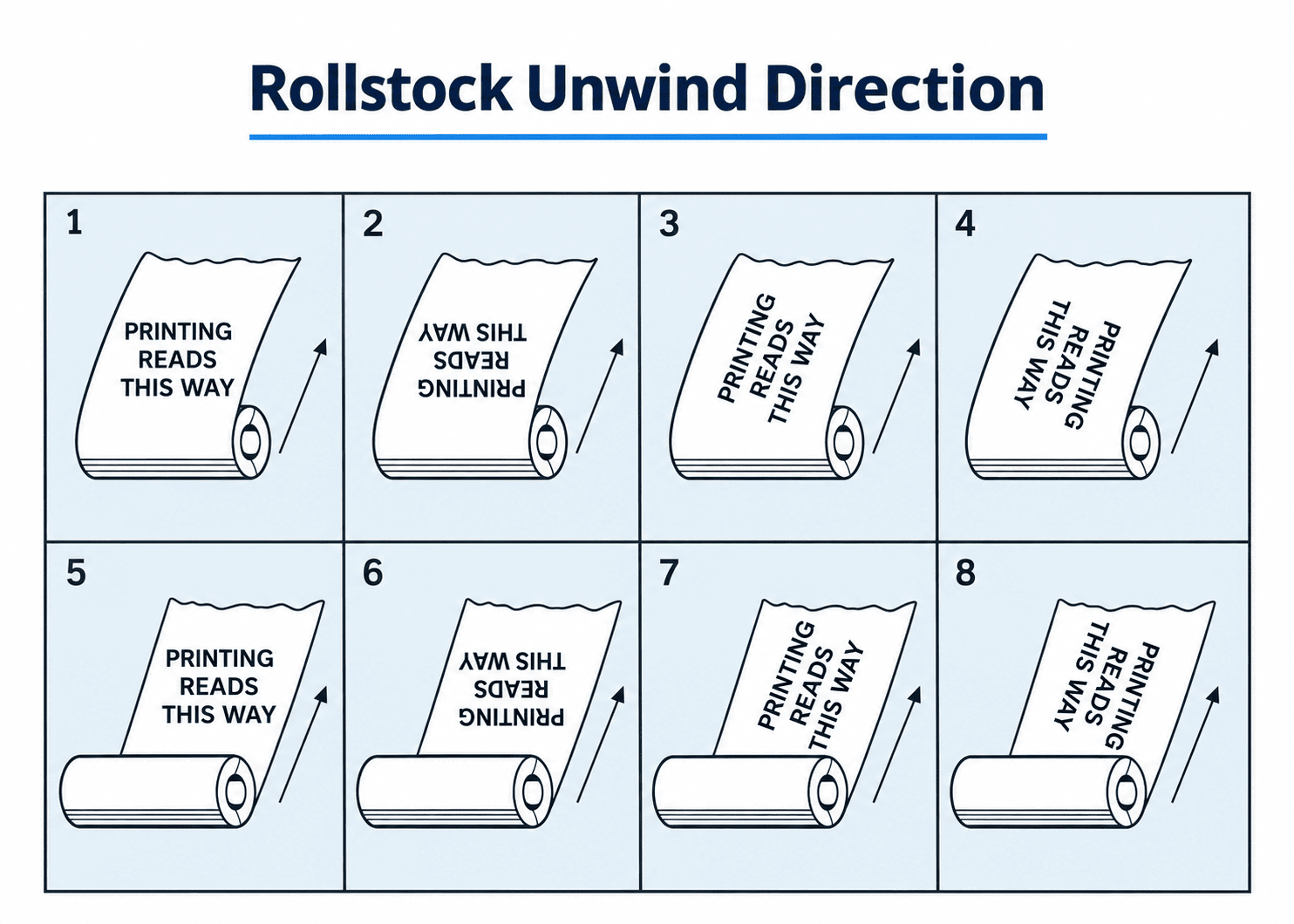
| Artwork edge off first | Print wound out | Print wound in |
|---|---|---|
| Top edge | 1 | 5 |
| Bottom edge | 2 | 6 |
| Right edge | 3 | 7 |
| Left edge | 4 | 8 |
Keep the selected number and its diagram with the approved artwork. If another supplier uses a different chart, compare the drawings before transferring the number to the order. Have the packing team check the agreed orientation against the roll mounting position and actual film path on the machine.
SEALING SURFACE AND PRINT REGISTRATION
Add the Sealant Side and Registration Mark
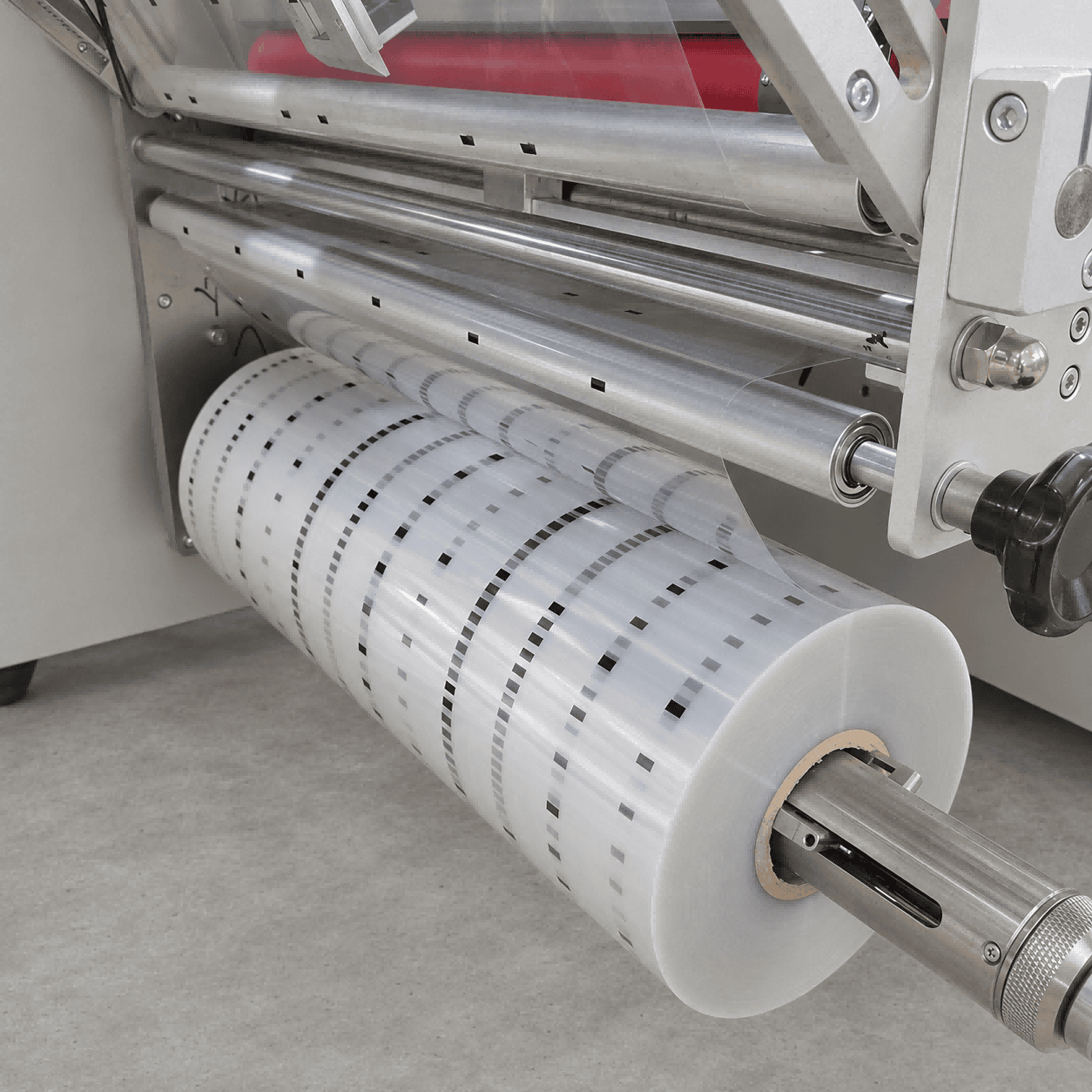
Before signing off, have the packing team trace these details along the intended film path. Record the agreed arrangement on the drawing used for production.
DRAWING AND SAMPLE REVIEW
Use a Marked Reference Before the Machine Trial
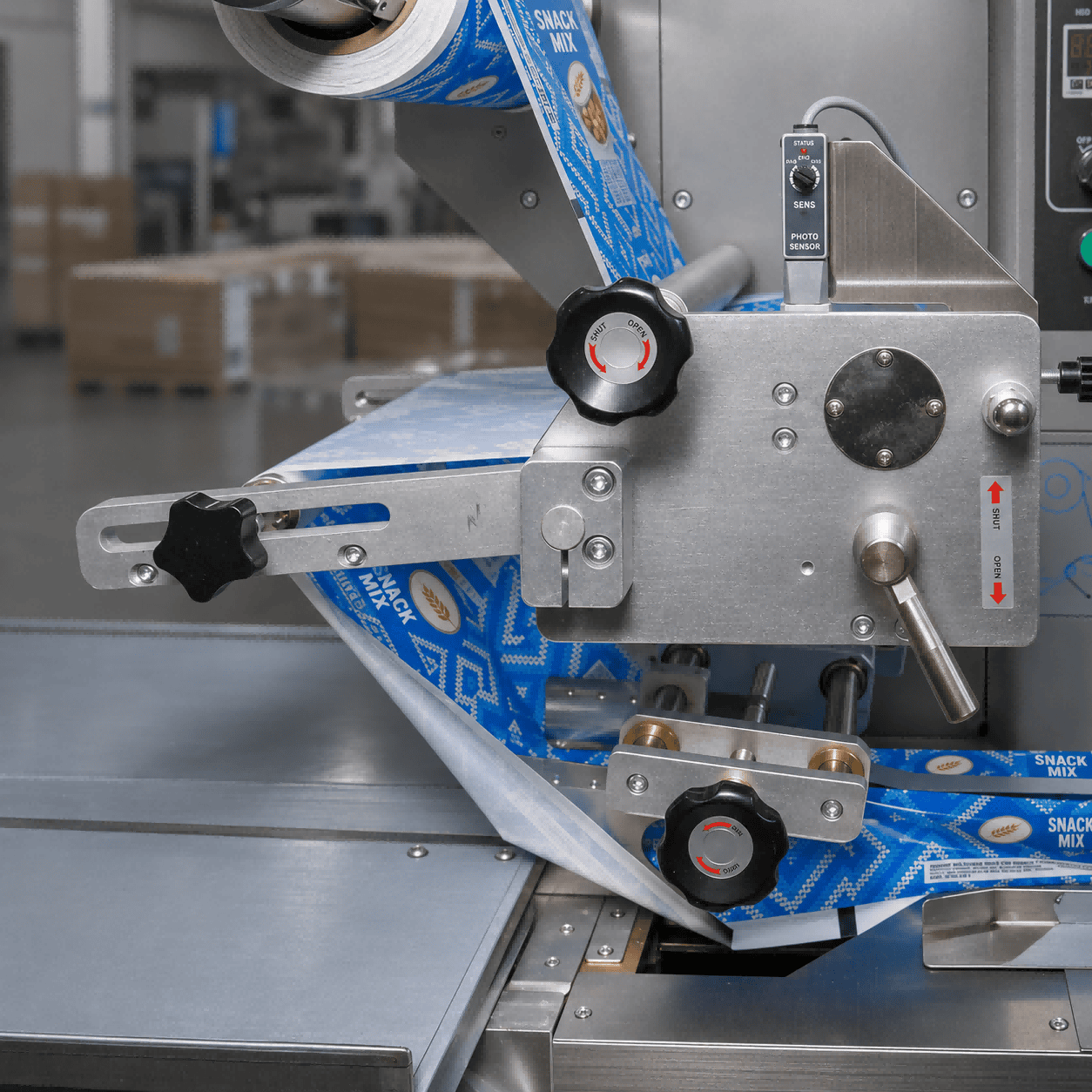
Prepare a reference strip containing several complete print repeats where practical. Mark the pack top, web-travel direction and printed-design face. Include the registration-mark position if the design uses one.
Ask the packing team to compare the strip and unwind drawing with the intended film path. Put any changes on the drawing, and keep the updated strip with it so both references show the same arrangement.
A reference strip helps confirm orientation. A machine trial needs a representative roll with suitable material, roll dimensions and winding. If a substitute film is used during development, record which requirements that trial can assess.
During the trial, check the artwork orientation on the formed pack and the relationship between the print, seals and cut positions. Keep the machine identification, roll reference and drawing revision with the trial notes, including any adjustments that still need to be made.
PURCHASING SPECIFICATION
Keep the Approved Direction on Every Order
Once the packing team has confirmed the unwind arrangement, put it on the purchase specification as well as the artwork approval. Keep the drawing reference on repeat orders so the agreed direction can be checked when a new roll arrives.
| Item | Details to provide |
|---|---|
| Packing equipment | Machine or co-packer, pack format and the relevant film-path information. |
| Unwind instruction | Agreed reference face, wound-in or wound-out arrangement, leading artwork edge and viewing position. |
| Approved references | Artwork revision, the exact unwind chart used and any approved reference strip or sample. |
| Print registration | Print repeat length, registration-mark size and position, and sensor requirements confirmed by the packing team. |
| Roll dimensions | Film width, core specification, maximum roll outside diameter and permitted roll weight. |
| Film specification | Material structure and thickness, intended sealing surface and agreed processing requirements. |
PaperMyna can review the artwork, film structure and roll requirements together for a custom rollstock film project. Include the machine information with your enquiry, and recheck the unwind instruction if the packing line, co-packer, artwork orientation or film construction changes. Retain the approved drawing and sample reference for the next order.
ROLLSTOCK FILM FAQ
Rollstock Film Unwind Direction FAQs
If you are unsure which unwind direction to request, start with the machine setup and an agreed drawing. The answers below explain what to confirm before ordering printed or unprinted rollstock.
No. Print-in or print-out identifies how the agreed printed-design face is wound. You also need the leading artwork edge and the viewing position. Show these on the same drawing, together with the sealing surface and any registration-mark requirements.
No. Reverse printing describes the print construction. It does not determine how the finished roll is wound. Confirm the winding arrangement against the packing equipment requirements and show it separately on the approved drawing.
It can. If only one face carries a sealant or coating, that surface may need to face a particular way through the machine. Identify the functional surface on the drawing and confirm its winding arrangement with the packing team.
No. A marked strip helps confirm the artwork orientation, reference face and registration-mark position. A machine trial needs a representative roll with suitable material, dimensions and winding. Record what each sample has been approved to demonstrate.
Send the product and pack format, machine or co-packer details, film structure and thickness, film width, print repeat, core specification, maximum roll diameter and weight, artwork and estimated quantity. Include the required unwind drawing or an existing roll reference so the orientation can be reviewed with the other specifications.
DISCUSS YOUR ROLLSTOCK FILM REQUIREMENTS
Need Rollstock Film for Your Packing Line?
Share your machine or co-packer details, film structure, film width, print repeat, core requirements and maximum roll diameter and weight. Include the artwork, unwind drawing or existing roll reference, estimated quantity and delivery destination. PaperMyna can review the specification with you, prepare a quotation and discuss sample requirements for a machine trial.