
STAND-UP POUCH STABILITY
Check the Base Before Changing the Pouch Size
Two stand-up pouches filled with the same weight of coffee beans or nuts can sit differently on a shelf. One may stand upright while the other leans or rocks when placed on a flat surface.
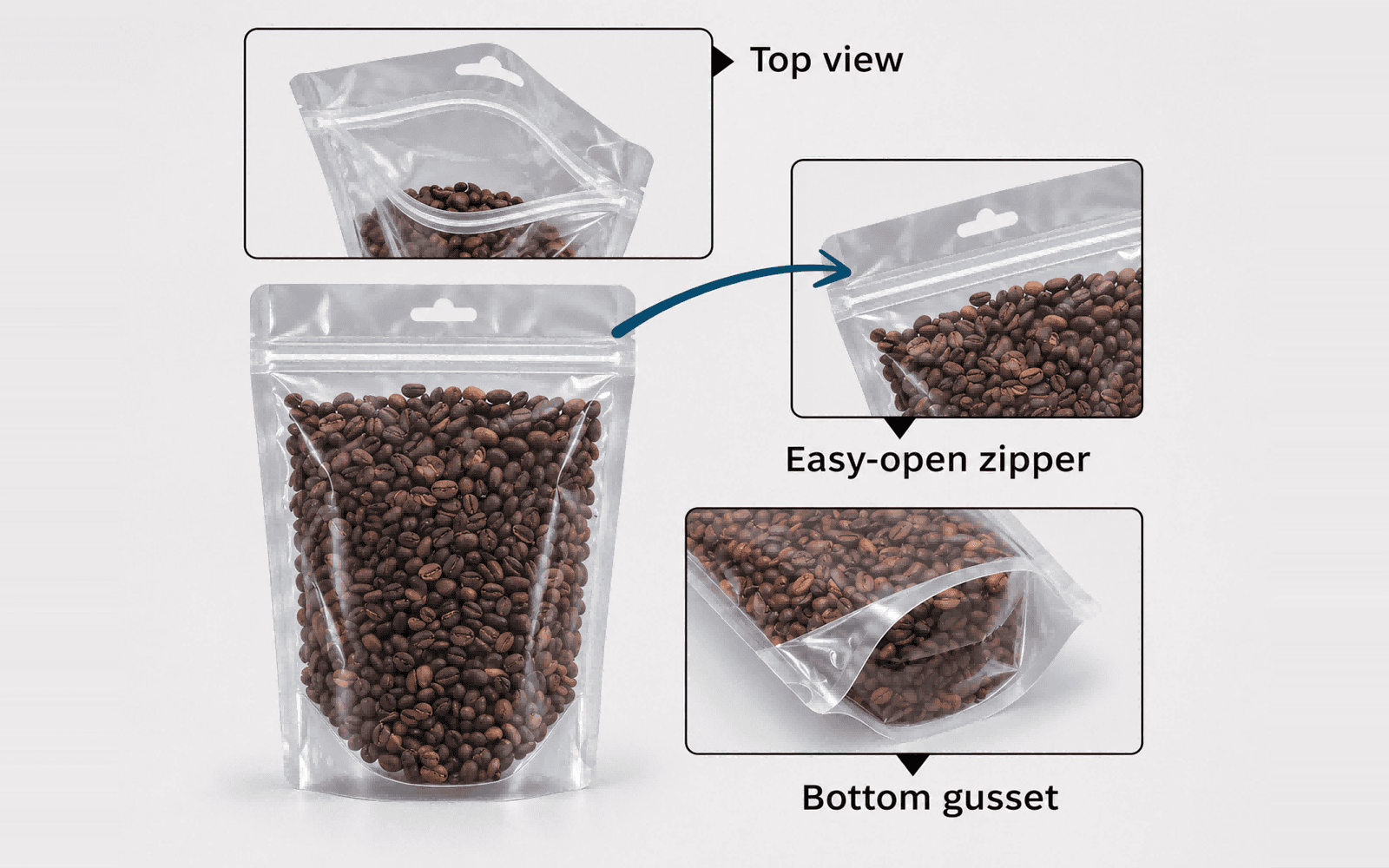
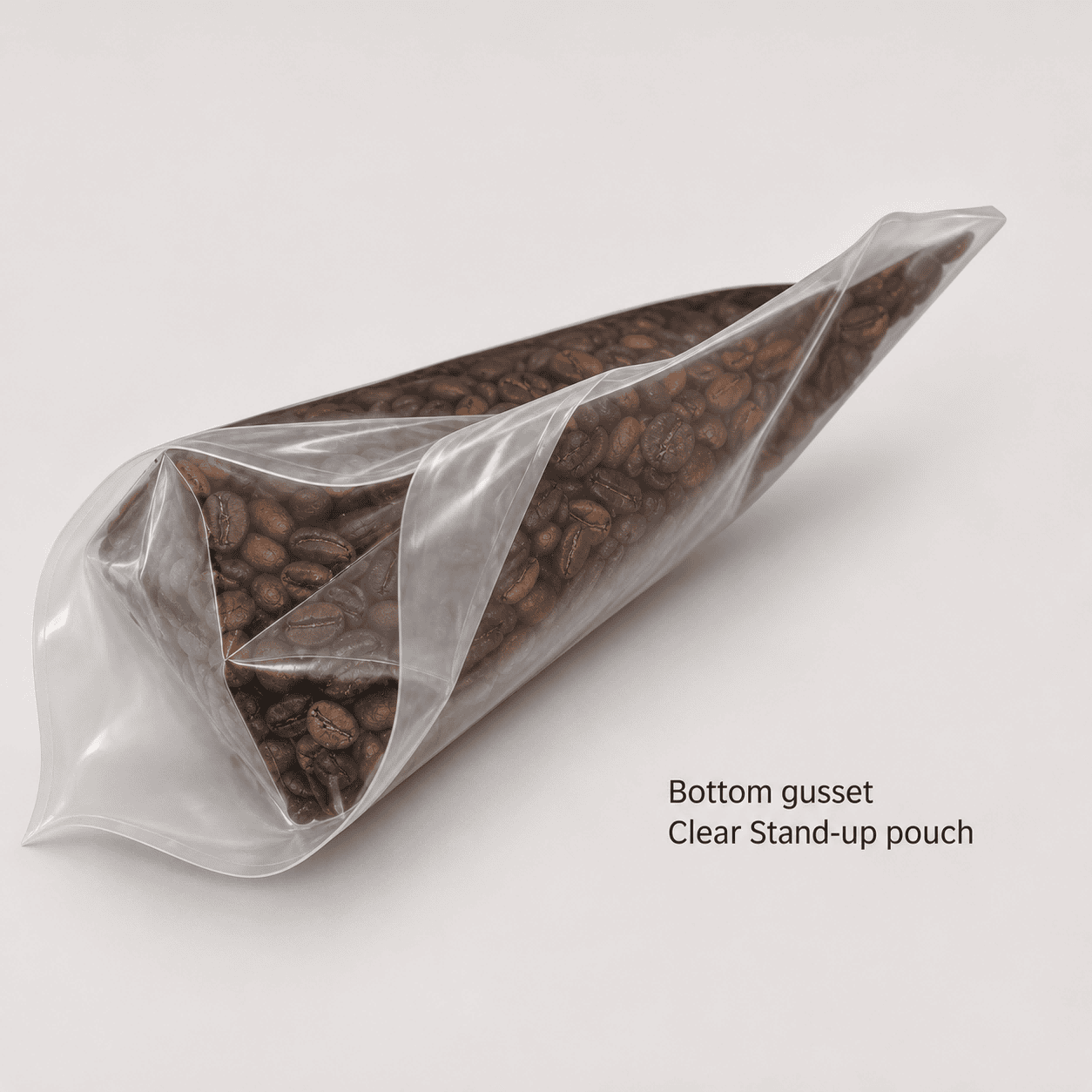
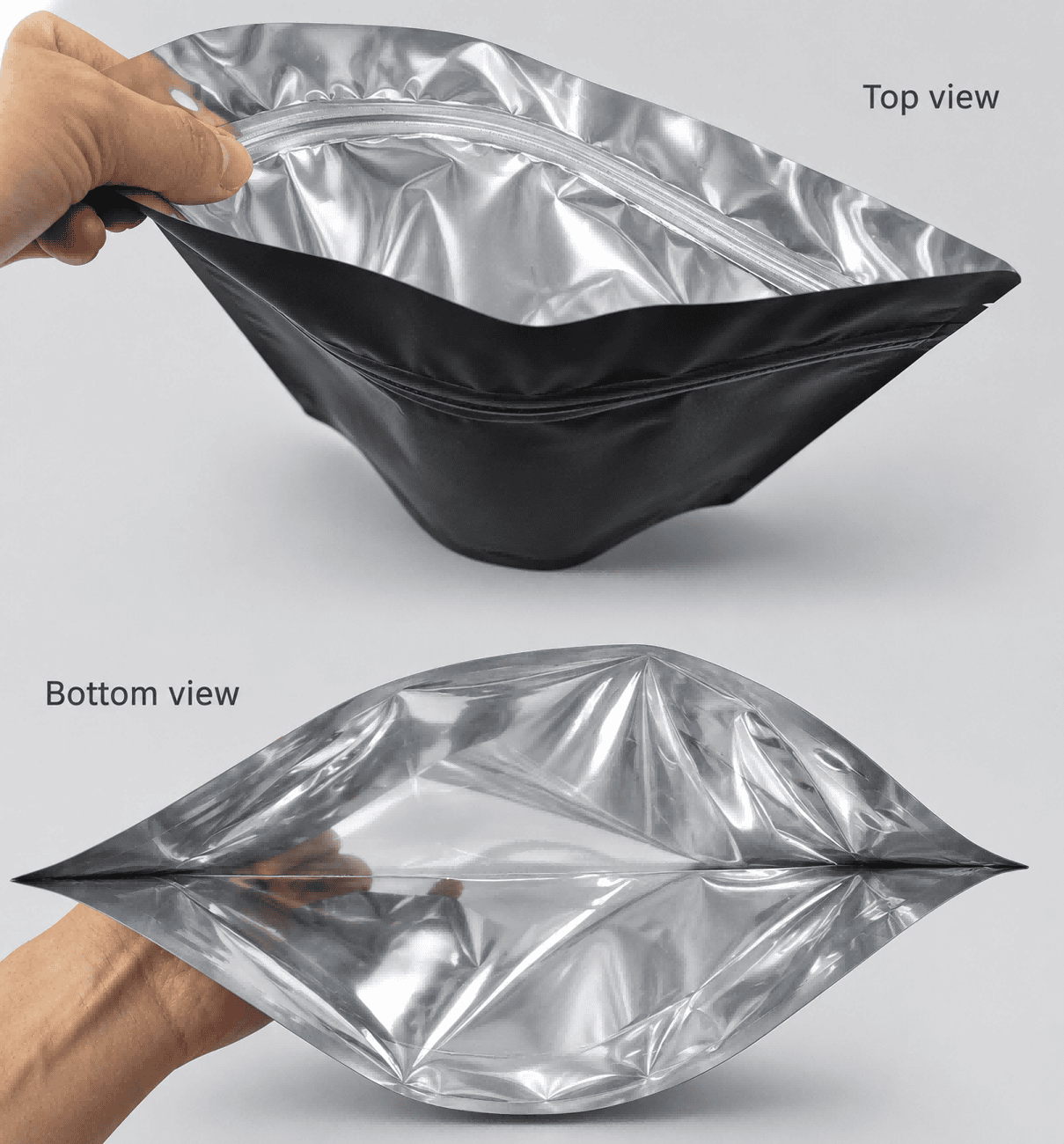
The folded bottom gusset of a stand-up pouch opens during filling to form its supporting base. If part of the gusset remains folded inward, or the contents settle unevenly, the filled pouch may lose stability even when its dimensions are suitable.
Before requesting a larger pouch, examine the filled base and check whether both sides have opened evenly. This can help identify whether the problem lies in the pouch construction or the filling process.
How the Bottom Gusset Supports the Pouch
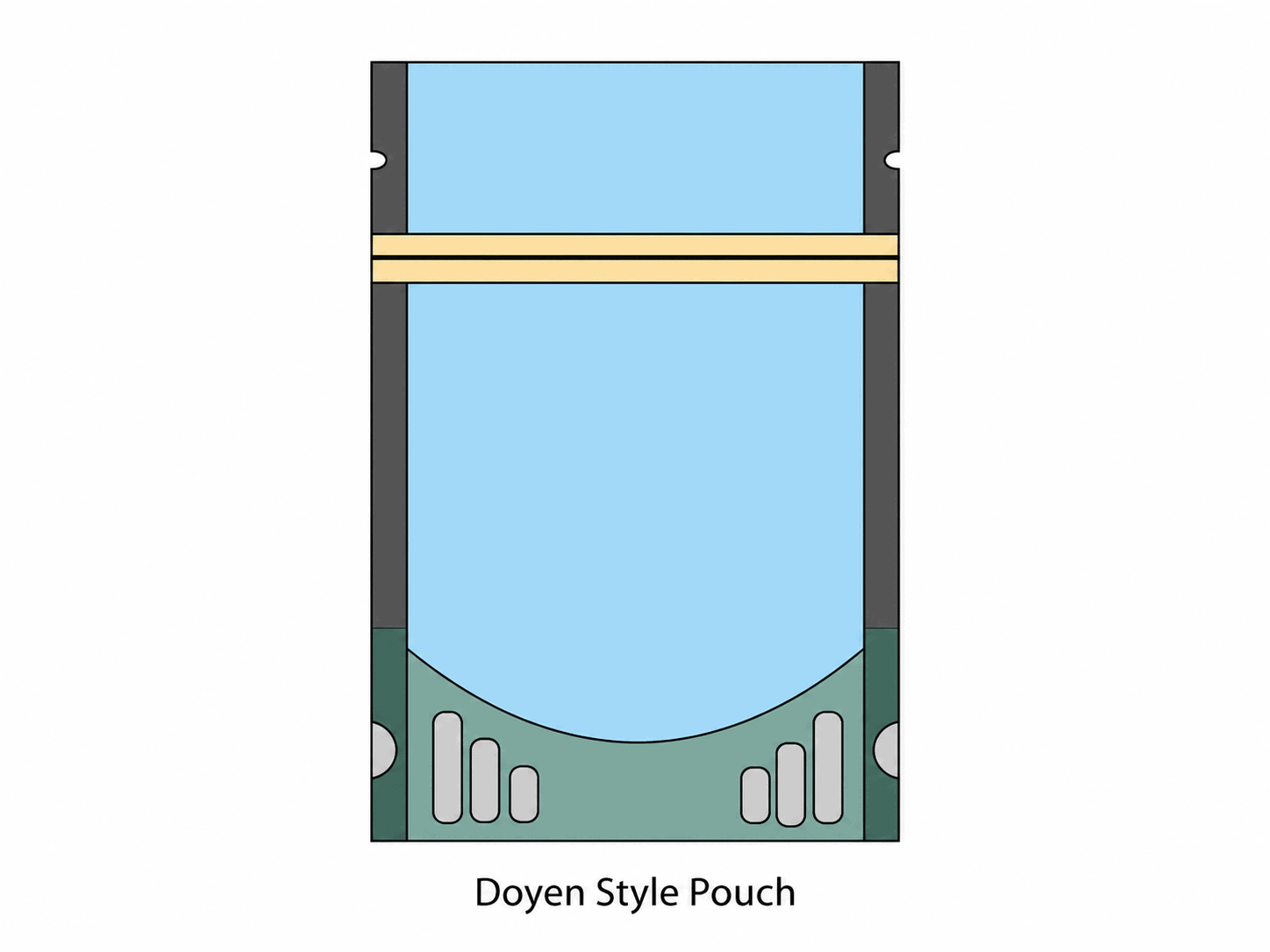
A Doyen-style pouch uses a curved bottom seal and an inward-folded gusset to create its standing base. As the pouch is filled, the fold opens and the footprint becomes wider.
Three Areas to Inspect
Bottom fold. Check whether the gusset has opened across its full width. A section that remains tucked inward can reduce contact with the shelf.
Gusset corners. Compare the two ends of the expanded base. If one corner sits higher than the other, the pouch may lean or rock after filling.
Curved seal. Look for differences in the seal position, fold alignment and shape across several samples. A repeated irregularity is worth reviewing with the pouch manufacturer.
FILLING AND PRODUCT DISTRIBUTION
How Product Distribution Affects Standing Stability
Coffee beans, nuts and larger snack pieces do not always settle evenly inside a pouch. Some pieces can bridge across the bottom fold, leaving part of the gusset less supported than the rest.
The filling method can also influence the result. If the product enters mainly on one side, the weight may be distributed unevenly across the base, causing the pouch to lean after closing.
Compare several pouches filled using the same method and target weight. If the direction of the lean varies between samples, examine how the product enters and settles during filling.
How to Check a Pouch That Leans After Filling
Use several samples from the same batch and fill them with the intended product at the same net weight. Refer to our stand-up pouch size guide if the original dimensions or gusset measurements need to be checked.
A Practical Sample Inspection
Check the original filled shape. Place each sealed pouch on a level surface before adjusting the base by hand. Photograph any leaning, rocking or tucked corners.
Compare after a gentle adjustment. Carefully open any remaining tucked fold. If the pouch now stands evenly, review how the gusset opens during normal filling.
Check whether the problem repeats. If several samples lean toward the same corner, review the fold and seal alignment. Record the pouch dimensions, material structure and filling method before discussing changes with the supplier.