
SINGLE-SERVE FLEXIBLE PACKAGING
Stick Pack vs Sachet: The Difference Goes Beyond Shape
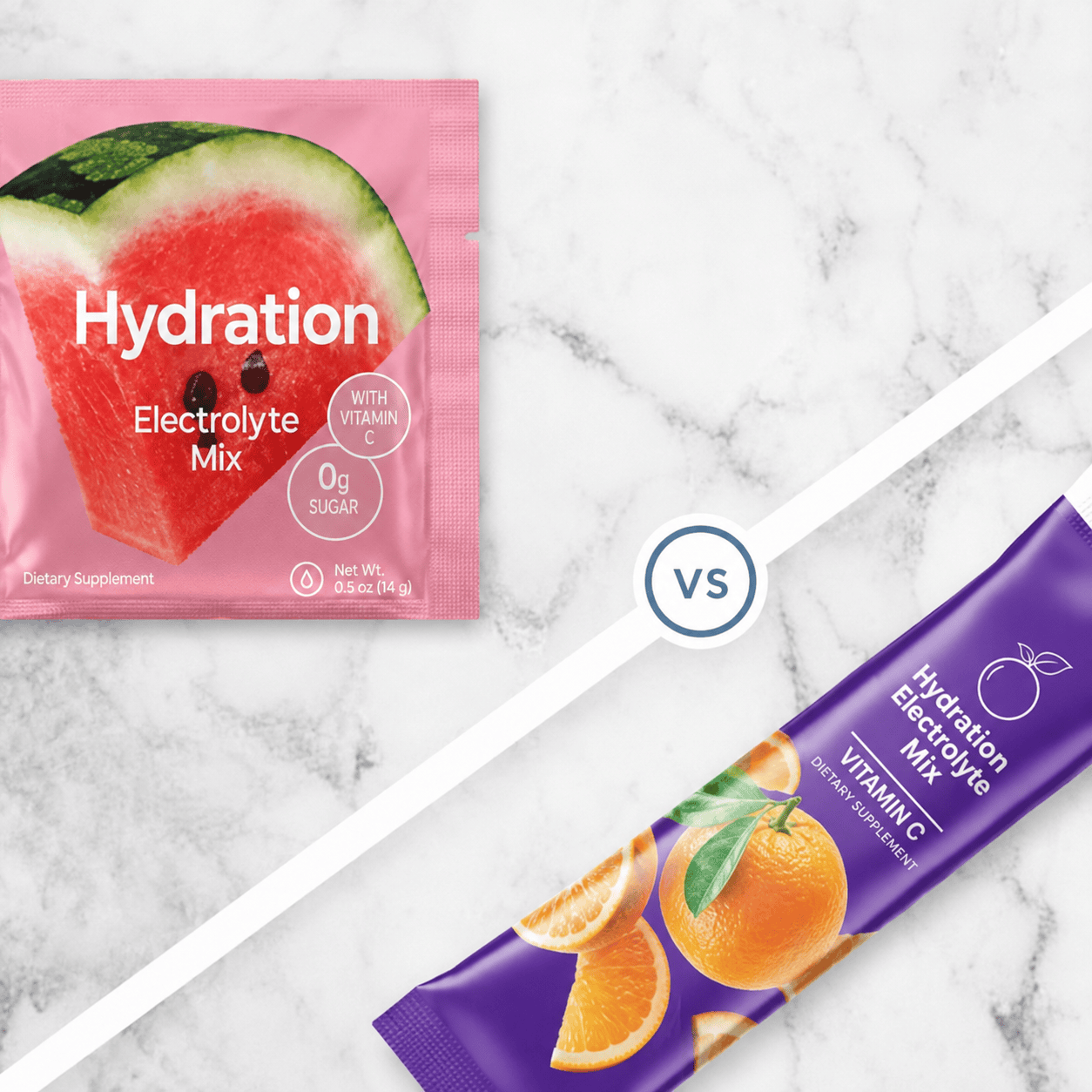
Stick packs and sachets are both compact flexible packaging formats commonly used for single-serve powders, granules, liquids and other portioned products. At first glance, the main difference appears to be shape: a stick pack is long and narrow, while a sachet is usually wider and more rectangular.
In practice, that shape affects much more than appearance. It can influence fill volume, product flow, seal area, opening width, available print space and the type of packaging equipment required for production. A format that works well for an electrolyte powder may not be the best choice for a sauce, seasoning blend or larger single-use portion.
For brands choosing between stick pack and sachet packaging, the most useful starting point is the actual product: its serving size, consistency, barrier requirements and filling process. Understanding these differences before finalizing the package dimensions can help avoid unnecessary material use, filling problems and costly changes later in production.
PACKAGING FORMAT BASICS
What Is the Difference Between a Stick Pack and a Sachet?
Stick packs and sachets are both single-serve flexible packaging formats, but their different proportions affect how the product is filled, opened, displayed, and used. A stick pack is typically long and narrow, while a sachet provides a wider square or rectangular format.
STICK PACK
What Is a Stick Pack?
A stick pack is a long, narrow flexible package designed for compact single-serve portions. Its slim shape is especially useful when the product is intended to be poured, mixed, dissolved, or consumed as one measured serving.
- Long and narrow package format.
- Well suited to powders, granules, and some liquid concentrates.
- Useful for controlled single-serve portions.
- A narrow opening can make pouring into cups or bottles easier.
- Provides less horizontal space for branding and instructions.
SACHET
What Is a Sachet?
A sachet is a small sealed flexible package with a wider square or rectangular shape. The additional width provides more flexibility for portion size, product consistency, opening width, and printed information.
- Wider square or rectangular package format.
- Suitable for powders, sauces, liquids, seasonings, and samples.
- Can accommodate a broader range of portion sizes.
- A wider opening can be practical for thicker or larger servings.
- Offers more printable space for branding and product information.
QUICK COMPARISON
Stick Pack vs Sachet: Key Differences at a Glance
Both formats can be produced from printed flexible packaging film, but their shape changes how much product they hold, how consumers open and use them, and how they run on filling equipment.
Neither format is automatically better. The right choice depends on the product, serving size, filling process, barrier requirement, and desired consumer experience.
PRODUCT FIT
Which Products Work Well in Stick Packs and Sachets?
Product type is often a better starting point than package appearance. Flow behavior, serving weight, viscosity, particle size, and how the product will be consumed all influence which format is more practical.
POWDERS & GRANULES
Stick Packs Often Work Well for Controlled Portions
Drink mixes, instant coffee, sweeteners, supplements, and seasoning powders can work well in stick packs when the serving is relatively compact and the product flows consistently during filling.
- Convenient for measured single servings.
- Narrow opening supports controlled pouring.
- Compact format can reduce unused package area.
LIQUIDS & SAUCES
Sachets Offer More Flexibility for Wider Openings
Sauces, gels, liquid samples, condiments, and thicker formulations often benefit from the wider proportions of a sachet, especially when the product needs a larger opening after tearing.
- Suitable for many liquid and semi-liquid applications.
- Wider package geometry can support larger portions.
- Provides more room for handling and opening instructions.
BRAND & SAMPLE PACKS
Sachets Can Provide More Front-Facing Print Space
When branding, preparation instructions, ingredients, or regulatory information need more room, the wider face of a sachet can make the artwork easier to organize without overcrowding the design.
- Useful for promotional and trial-size packs.
- More space for product communication.
- Can accommodate a wider range of package proportions.
MATERIAL & BARRIER
Package Format Is Only Part of the Material Decision
Stick packs and sachets can use many of the same flexible packaging structures. The material should therefore be selected around the product and shelf-life requirement rather than the package shape alone.
PACKING LINE COMPATIBILITY
Your Filling Machine Can Determine the Final Format
Before finalizing package dimensions or printed rollstock film, confirm how the material will run through the actual form-fill-seal equipment. Machine requirements can affect film width, print repeat, seal position, registration marks, roll dimensions, and unwind direction.
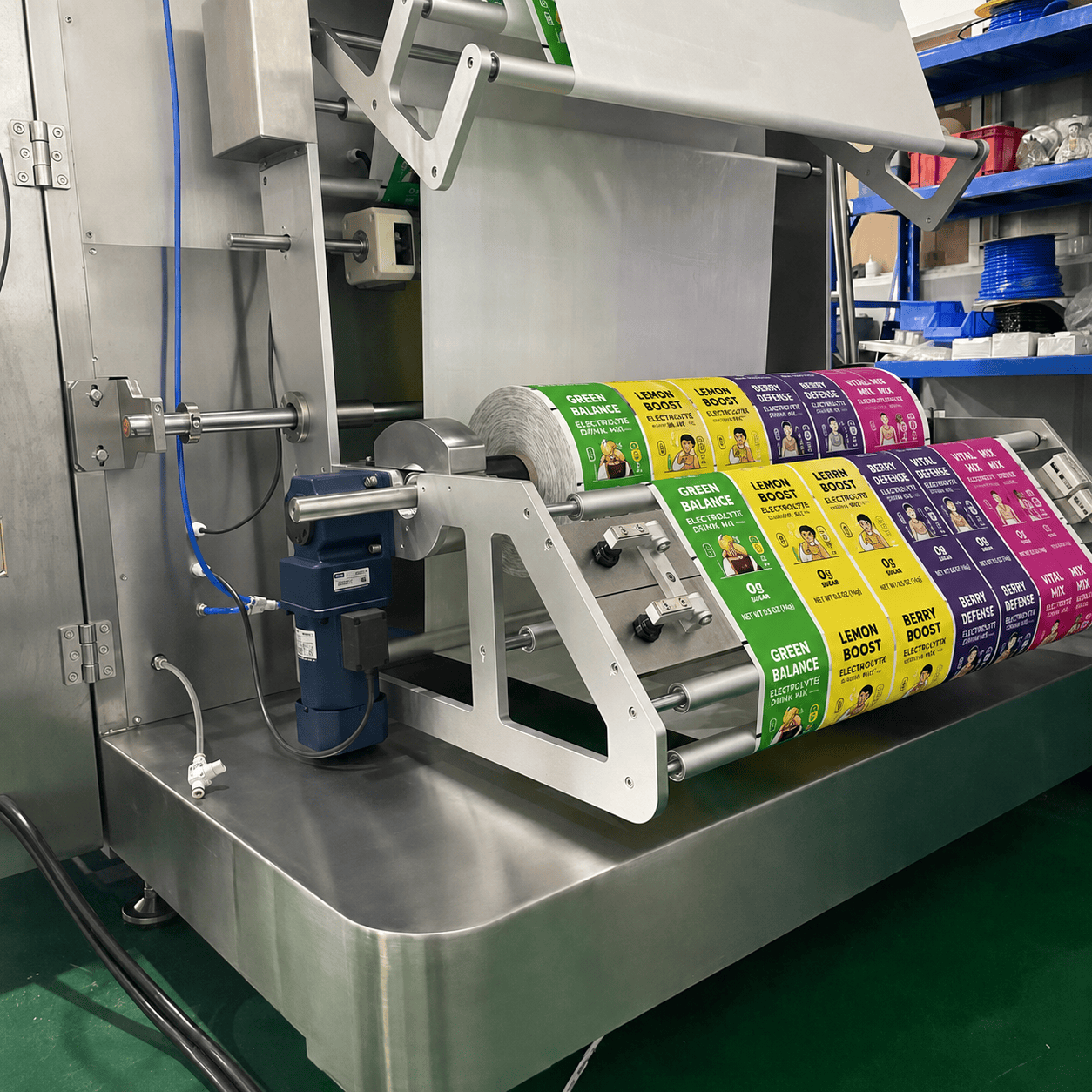
Match the Film Specification to the Actual Packing Line
Stick pack and sachet equipment can use different forming, sealing, filling, and cut-off configurations. The finished package should therefore be specified around the machine as well as the product being packed.
Confirming these parameters before artwork and production can help reduce registration problems, sealing issues, and unnecessary adjustments during packing.
BEFORE ORDERING
What to Confirm Before Ordering Stick Pack or Sachet Film
The most reliable way to specify printed flexible packaging is to work backward from the product and filling line. Final dimensions should be confirmed before artwork and production files are locked.
Confirm what will be packed, the target serving size, and whether the product is a powder, granule, liquid, paste, or mixed product.
Confirm the required width, length, seal area, tear position, and usable internal volume.
Match the packaging structure to shelf life, moisture, oxygen, aroma, light, and product-contact requirements.
Confirm film width, repeat length, core size, roll diameter, registration marks, and unwind direction with the filling line.
FINAL SELECTION TIP
Choose the Format Around the Product, Not the Shape Alone
Stick packs are often a strong option when the product is a compact single serving and controlled pouring is important. Sachets can be more flexible when the product needs a wider opening, more printed information, or a broader range of portion sizes.
The final decision should also consider material barrier, sealing performance, filling speed, artwork space, and the dimensions required by the packaging machine. Confirming these factors before film production is usually more important than choosing one format because it simply looks more familiar.
Frequently Asked Questions About Stick Packs and Sachets
These common questions cover the main differences between stick packs and sachets, including product fit, material use, film structure, and the information needed before ordering printed packaging film.
A stick pack is typically long and narrow, while a sachet is usually wider and more rectangular or square. The difference affects portion size, opening style, available print area, film dimensions, and the type of filling and sealing equipment used.
No. Stick packs are widely used for powders and granules, but they can also be designed for certain liquids, gels, and other single-serve products. The final format should be selected according to the product consistency, fill volume, barrier requirements, and packing equipment.
For some small single-serve products, the narrow shape of a stick pack can use less film than a wider sachet. However, actual material usage depends on the finished dimensions, seal width, film structure, filling volume, and machine configuration.
Sometimes, but not always. Both formats can use multilayer flexible packaging films, but the required structure depends more on the product than on the package shape. Moisture, oxygen, aroma, light, puncture resistance, seal performance, and storage conditions should all be considered.
Provide the product type, fill weight or volume, finished pack dimensions, required barrier performance, film structure if already specified, and artwork requirements. Machine details such as roll width, core size, maximum roll diameter, print repeat, registration-mark position, and unwind direction are also important.
STICK PACK & SACHET FILM
Need Printed Film for Stick Packs or Sachets?
PaperMyna supplies custom printed rollstock film for stick packs, sachets, and other single-serve packaging formats. Share your product, fill weight or volume, finished pack size, barrier requirements, film structure, and packing-machine specifications, and our team can help confirm a practical film and roll specification before production.