
SUPERMARKET PRICE LABELS
What Makes a Supermarket Price Label Work Reliably?
Supermarket price labels do more than display a product name and selling price. In produce, meat and other fresh-food departments, each label may need to combine a suitable face material, reliable adhesion, clear printing, barcode information and variable data such as weight, unit price and total value.
The right label construction helps retailers keep product information readable from weighing and printing to shelf display and checkout. This guide explains the main material, barcode and printing considerations for supermarket price labels, with a focus on clear retail information and dependable daily use.
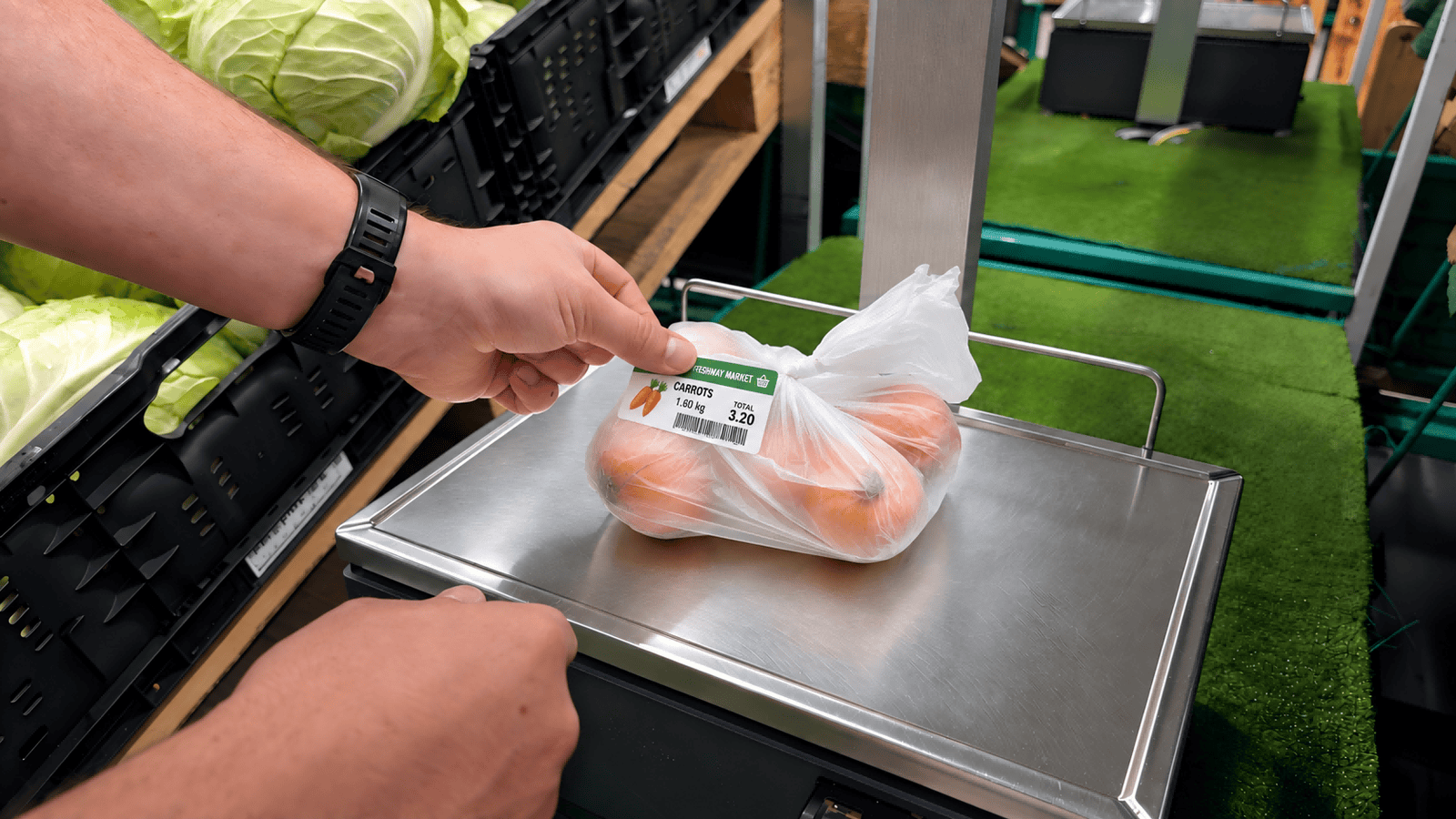
Match the Label Construction to the Supermarket Application
Supermarket price labels are used across different products and retail workflows. A produce bag, film-wrapped meat tray and weighed fresh-food package may require different levels of adhesion, moisture resistance and print durability. Matching the label construction to the application helps keep product information clear from weighing to checkout.
VARIABLE DATA AND BARCODES
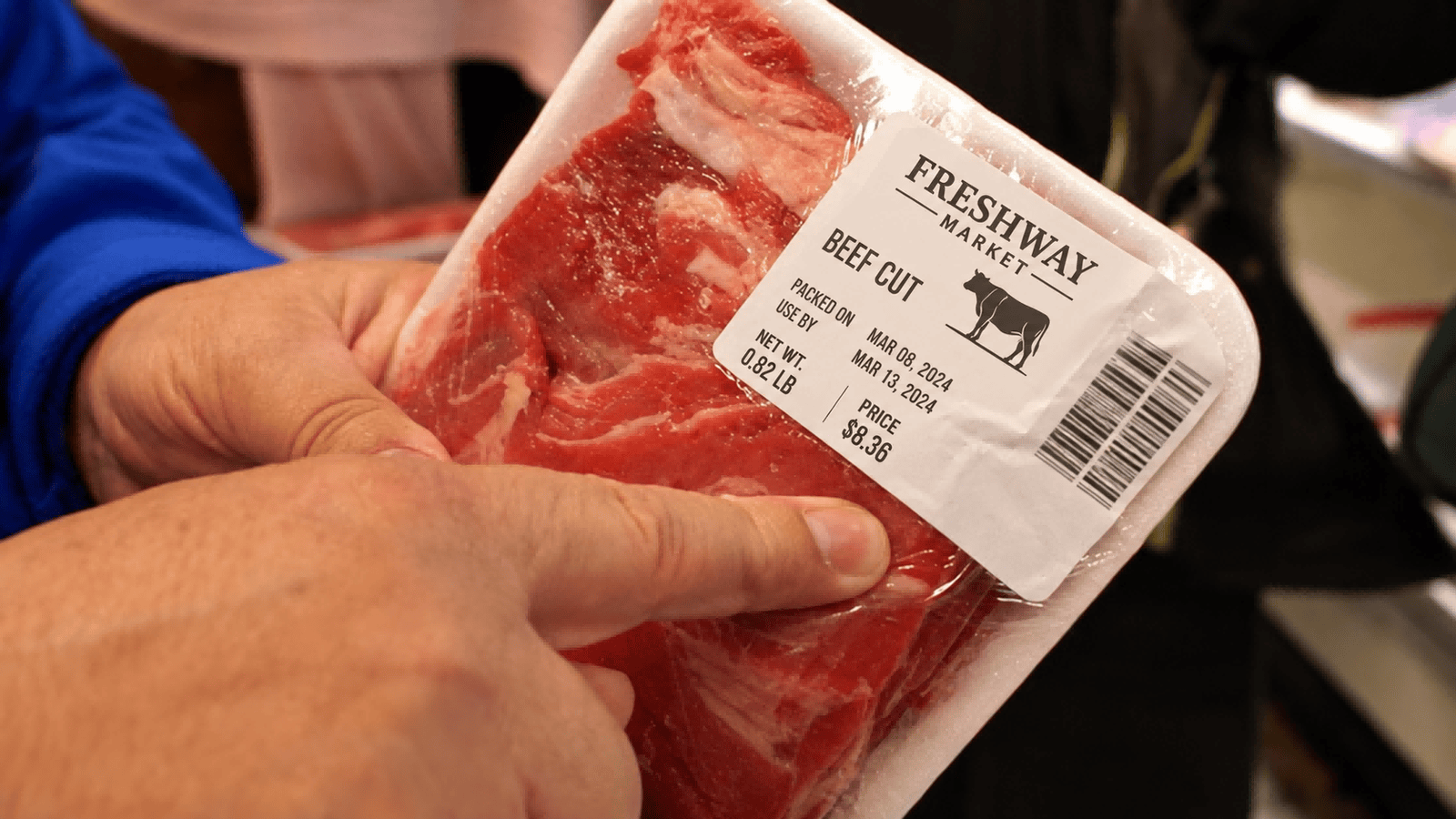
How Supermarket Price Labels Use Variable Data and Barcodes
Supermarket price labels combine a fixed printed layout with changing information generated during weighing and printing. Product names, weights, prices and barcodes need to remain clearly separated so the label can be understood by store staff, shoppers and checkout scanners.
WEIGHING INFORMATION
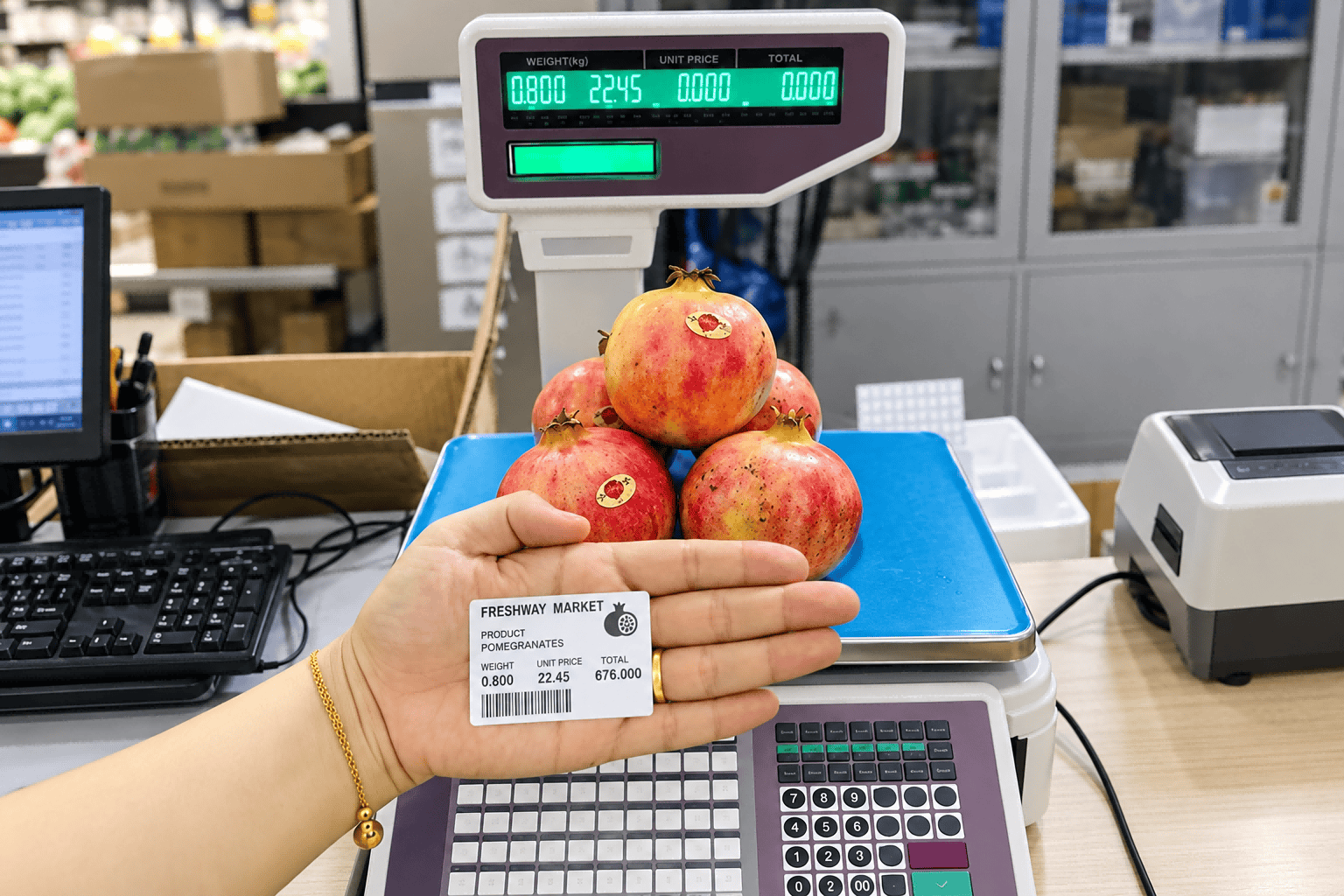
Product, Weight and Price Data
Weighing labels need enough space for the product name, weight, unit price and total value. A consistent layout helps the scale print changing information accurately while keeping the most important details easy to read at the produce or fresh-food counter.
- Product fields should remain clear and easy to identify.
- Weight, unit price and total value need consistent spacing.
- The label layout should suit the weighing system and roll format.
BARCODE READABILITY
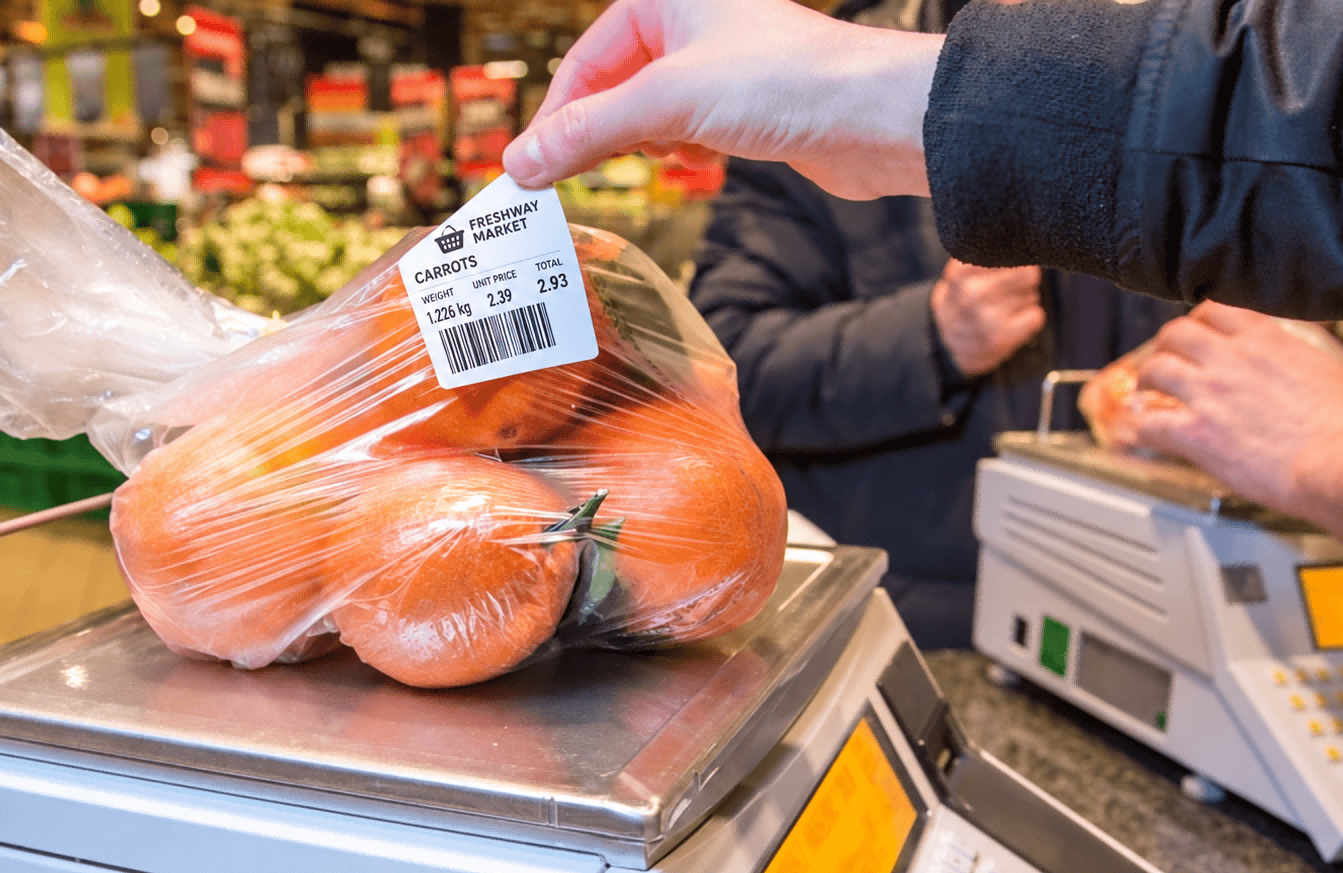
Clear Printing for Reliable Scanning
Barcode areas should have strong contrast, clean edges and enough surrounding space. Product information, price data and decorative elements should not crowd the barcode, helping scanners read the label consistently during retail handling and checkout.
- Use a clean print surface with strong black-and-white contrast.
- Keep the barcode away from folds, edges and crowded text.
- Check printed samples before large-scale label production.
Which Materials Work Best for Supermarket Price Labels?
The right material depends on the weighing scale, printer, product surface, expected usage time and exposure to moisture or cold. Supermarket price labels should remain easy to read, securely attached and suitable for reliable barcode scanning.
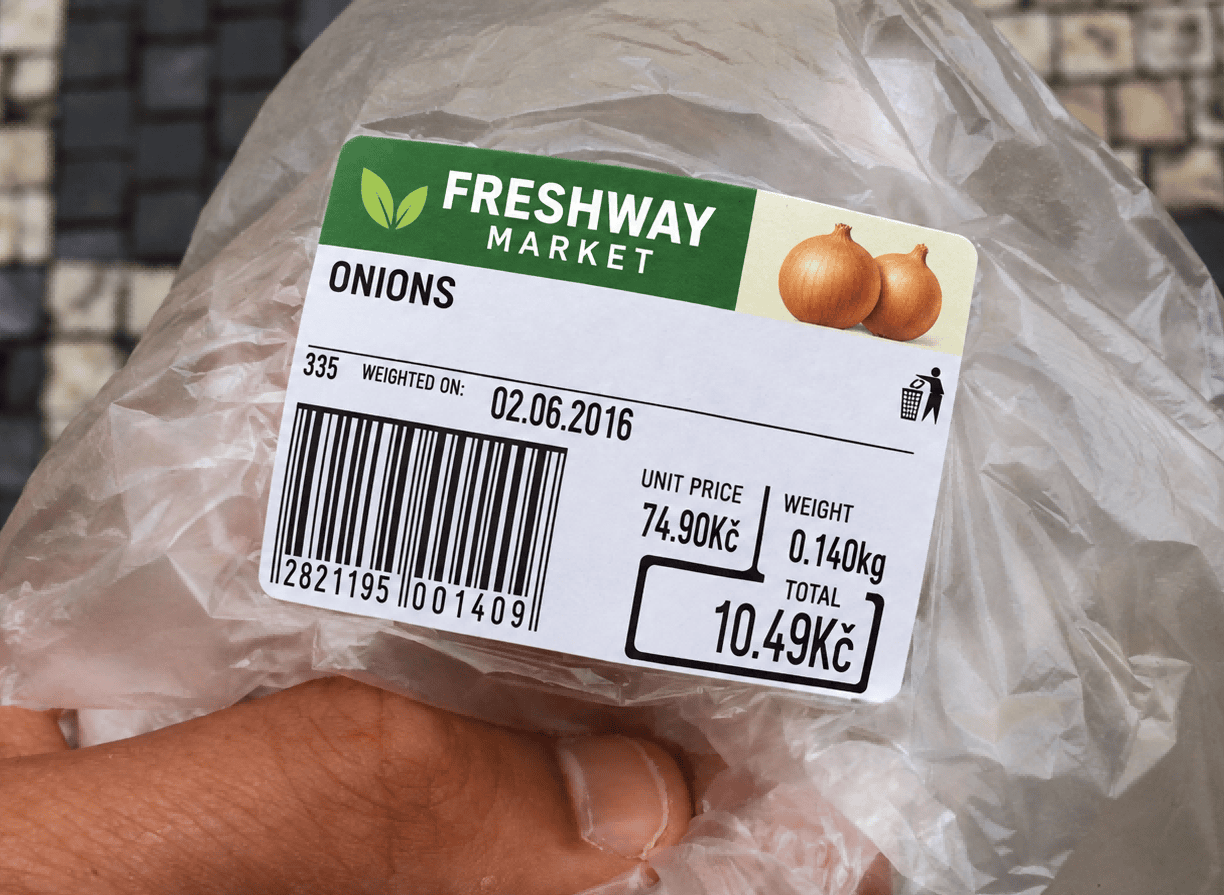
Supermarket Price Label Templates and Roll Formats
Supermarket price labels can be produced in different template styles, roll formats, colors, and variable-data layouts. The right option depends on the weighing scale, printer, product information, price fields, and retail application.
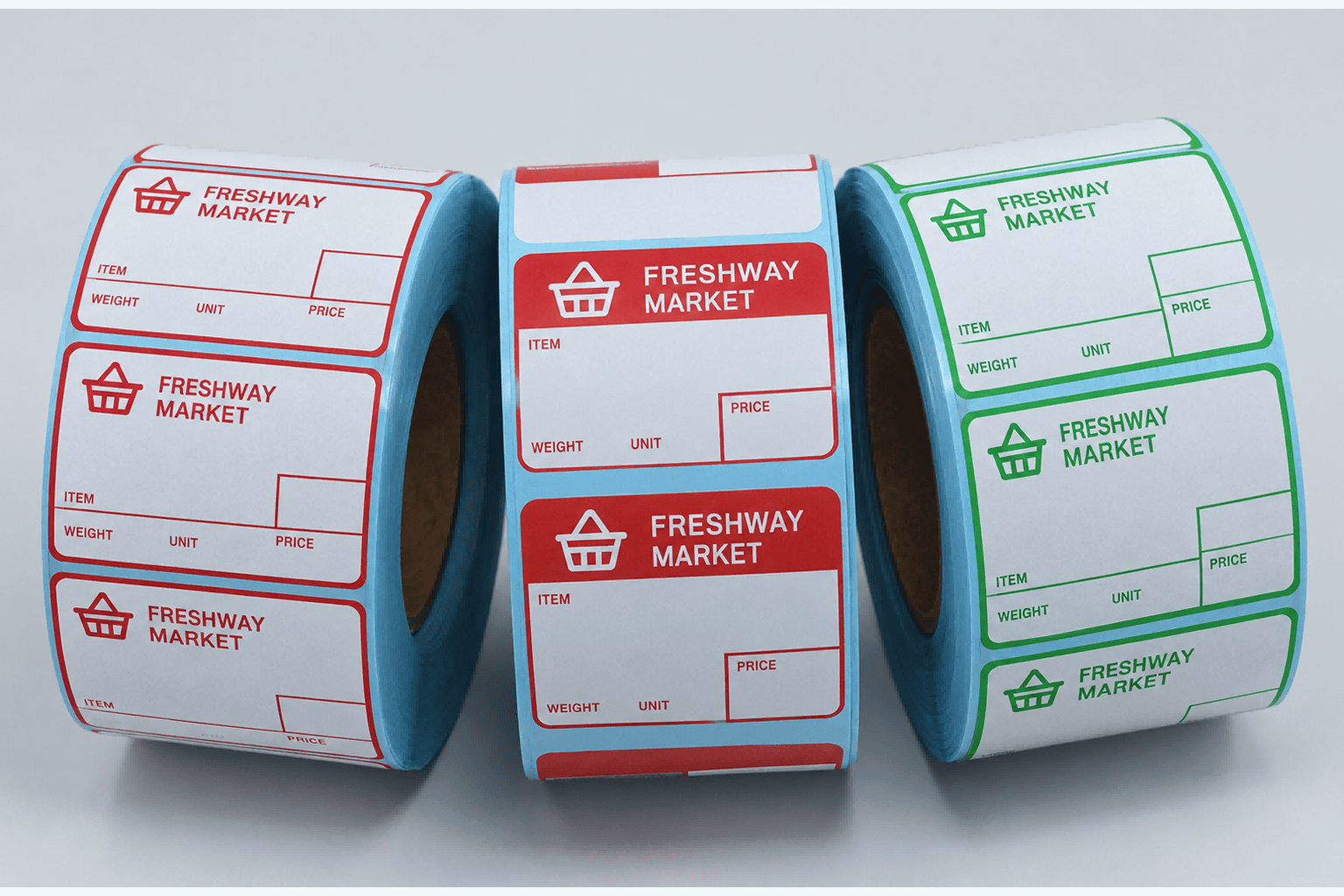
Variable-Data Label Rolls
These roll-format labels provide fields for item names, weight, units, and prices. They can be prepared for weighing scales and point-of-sale label printing.
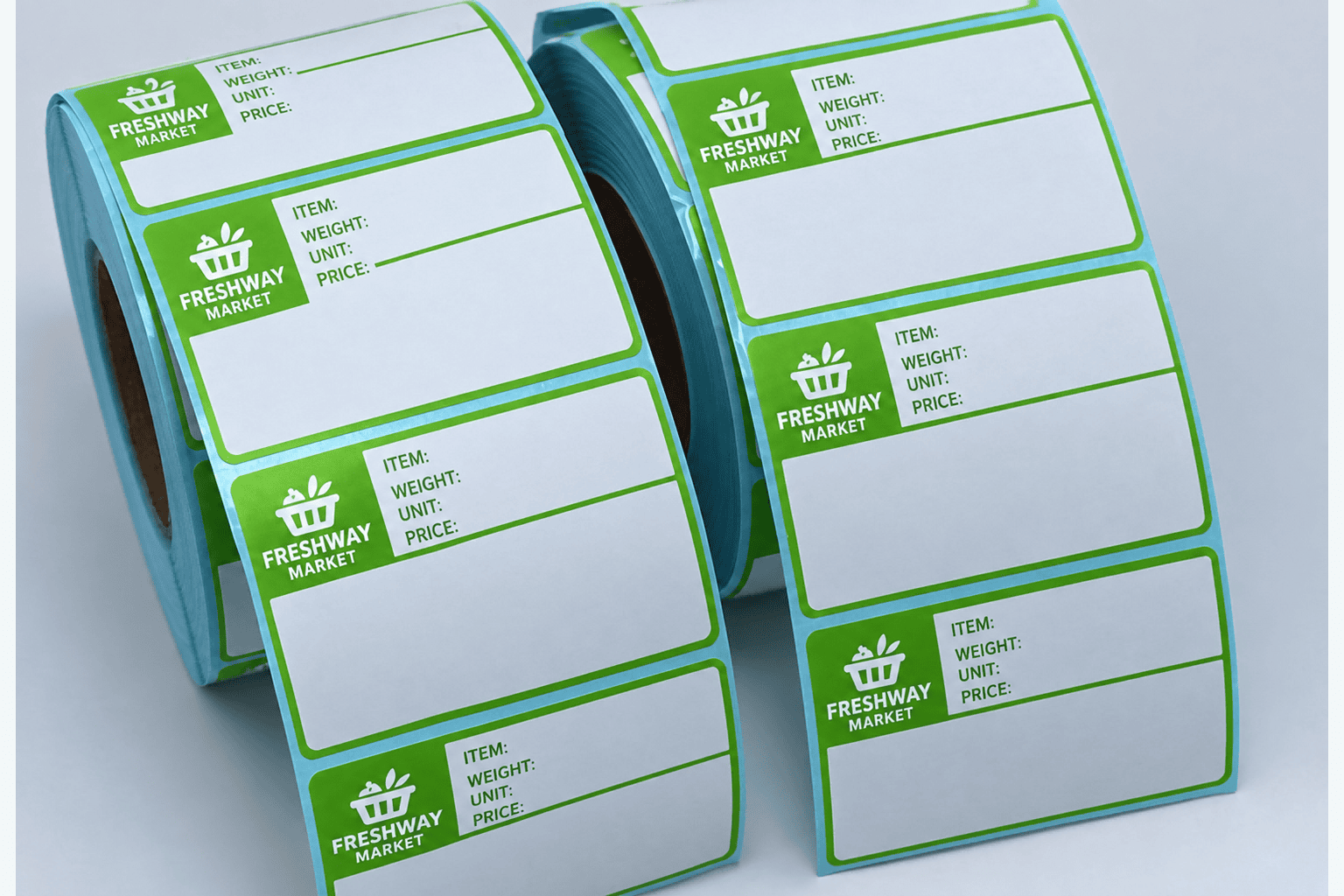
Department-Identified Label Rolls
Color-coded label rolls can help identify produce, deli, bakery, and other supermarket departments while leaving space for variable product data.
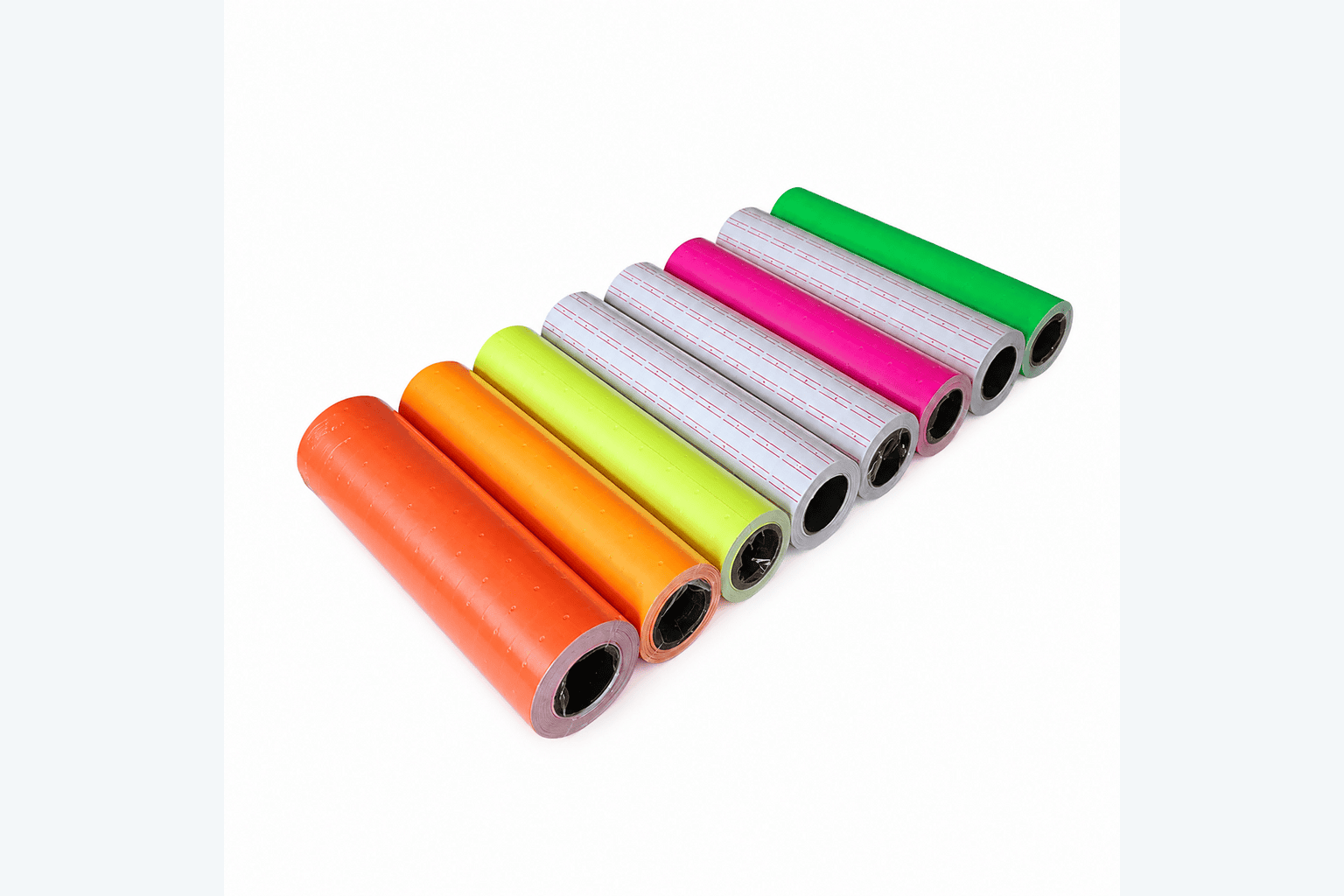
Colored Thermal Label Rolls
Colored thermal label rolls can support visual organization across product categories and retail labeling workflows, including produce, deli, bakery, and fresh-food counters.
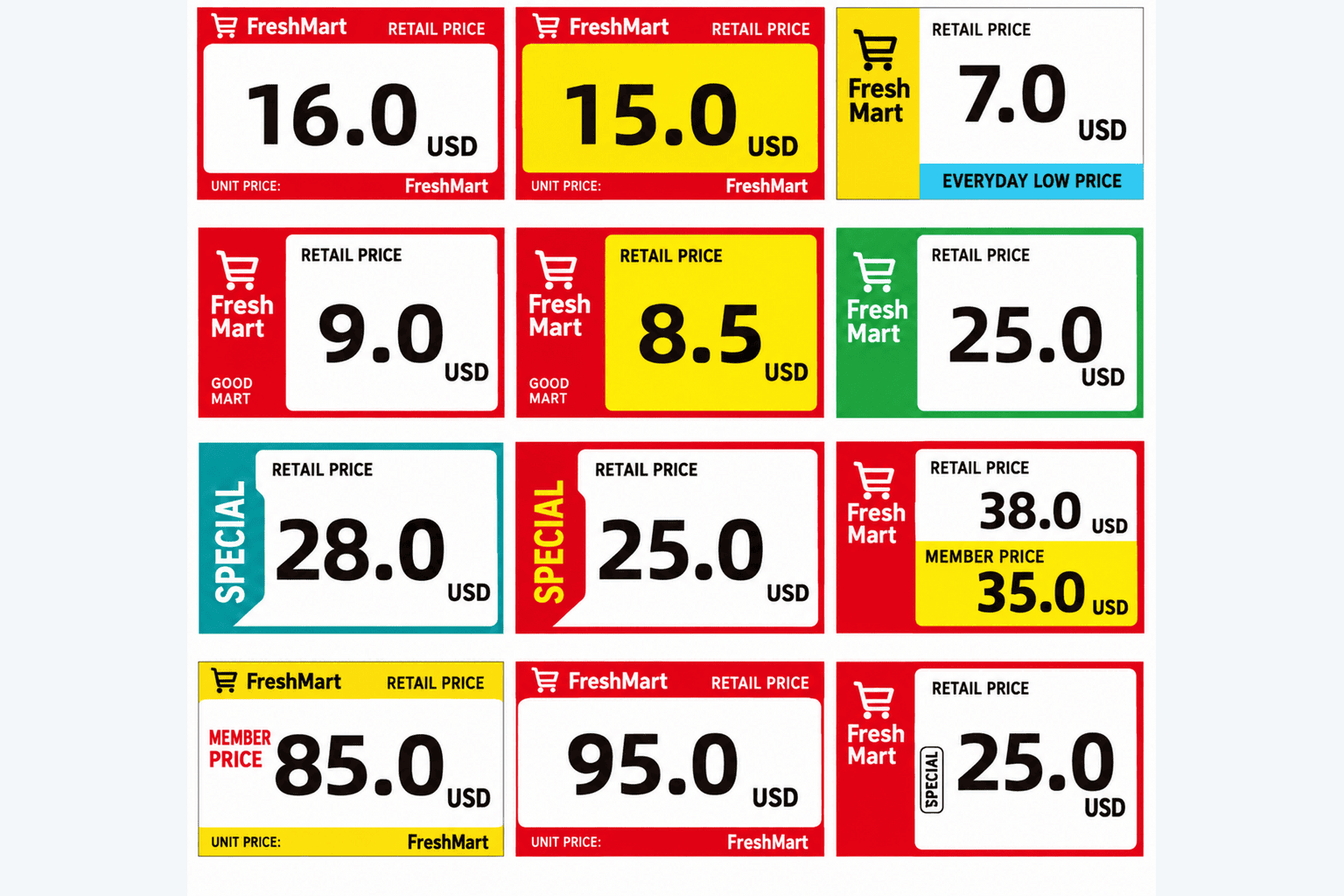
Retail Price Label Templates
Retail price label templates can include everyday prices, unit prices, promotional messages, and member pricing for different supermarket departments.