
Thermal Synthetic Paper Labels: When to Use Them for Packaging and Logistics

Durable Thermal Label Guide

When Thermal Synthetic Paper Labels Are Worth Using
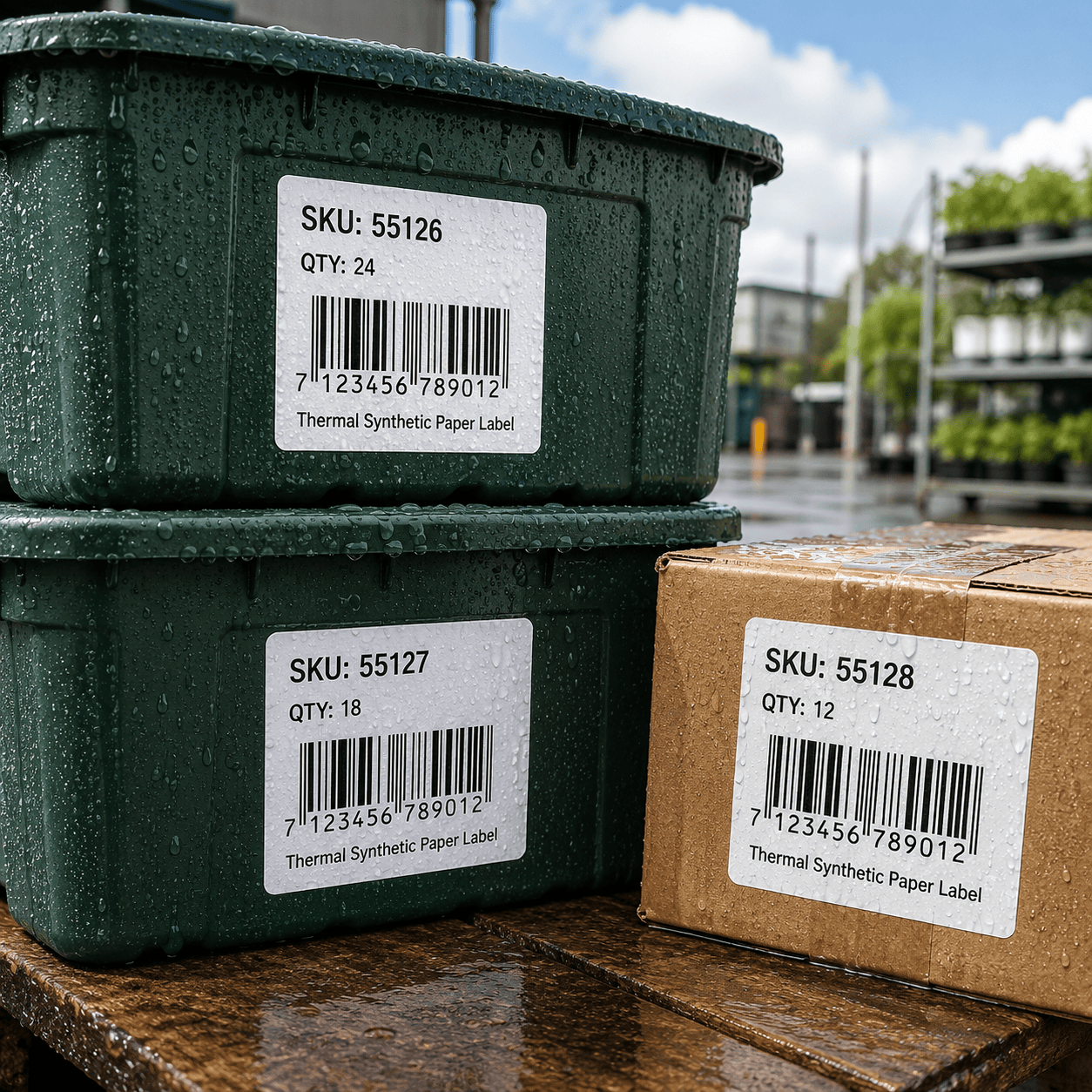
Thermal synthetic paper labels applied to outdoor boxes with water droplets for durable packaging use
Thermal synthetic paper labels help keep barcode information readable through moisture, handling, and outdoor exposure.

Standard thermal labels work well for many clean and dry packaging tasks. But when labels need to stay readable through moisture, handling friction, cold storage, or short-term outdoor exposure, a more durable label material can make a clear difference.

Thermal synthetic paper labels are designed for applications where ordinary paper labels may tear, soften, or become difficult to scan. They keep the convenience of direct thermal printing while offering better resistance for packaging, logistics, storage, and product identification.

For packaging teams, the goal is not simply to choose the toughest label. A better choice is a label that matches the real environment: the surface it sticks to, the printer being used, the handling process, and how long the barcode or product information needs to remain clear.

Where Thermal Synthetic Paper Labels Work Best

Thermal synthetic paper labels are useful when a label needs to stay readable beyond a clean indoor shelf. They are often chosen for packaging and logistics tasks where moisture, movement, and surface contact are part of daily handling.

Moisture-prone packaging

Labels for Damp or Wet Handling

When cartons, totes, or product packs may meet light moisture, synthetic paper helps the label stay flatter, stronger, and easier to scan than ordinary paper labels.

Warehouse movement

Better Resistance During Handling

Repeated picking, stacking, sorting, and transport can rub against labels. A synthetic label face can reduce tearing and surface wear during regular warehouse use.

Cold chain logistics

Useful for Chilled Storage

For refrigerated goods or temperature-changing environments, a more durable label material can help keep barcode and product information readable during short-term storage and delivery.

Outdoor exposure

Short-term Outdoor Labeling

For bins, parcels, or temporary outdoor packaging, thermal synthetic paper labels can be a practical choice when labels need to handle sunlight, moisture, and handling for a limited period.

Thermal Paper Labels vs Thermal Synthetic Paper Labels

Standard thermal paper labels and thermal synthetic paper labels can both support direct thermal printing. The difference is mainly about how much handling, moisture, and surface wear the label needs to tolerate.

Label Type
Best For
Main Advantage
Standard Thermal Paper Labels
Indoor shipping, retail labeling, short-term barcode use, and clean warehouse environments.
Cost-effective, easy to print, and suitable for many everyday labeling jobs.
Thermal Synthetic Paper Labels
Moisture-prone packaging, cold chain handling, outdoor bins, reusable totes, and rougher logistics workflows.
Better resistance to tearing, moisture, rubbing, and handling wear.

For many dry indoor applications, regular Thermal Labels are already enough. Synthetic paper becomes more useful when the label has to stay readable in tougher packaging or logistics conditions.

Key Benefits of Thermal Synthetic Paper Labels

Thermal synthetic paper labels are often chosen for applications that need better durability, stronger adhesion, and more reliable performance in moisture-prone or demanding environments.
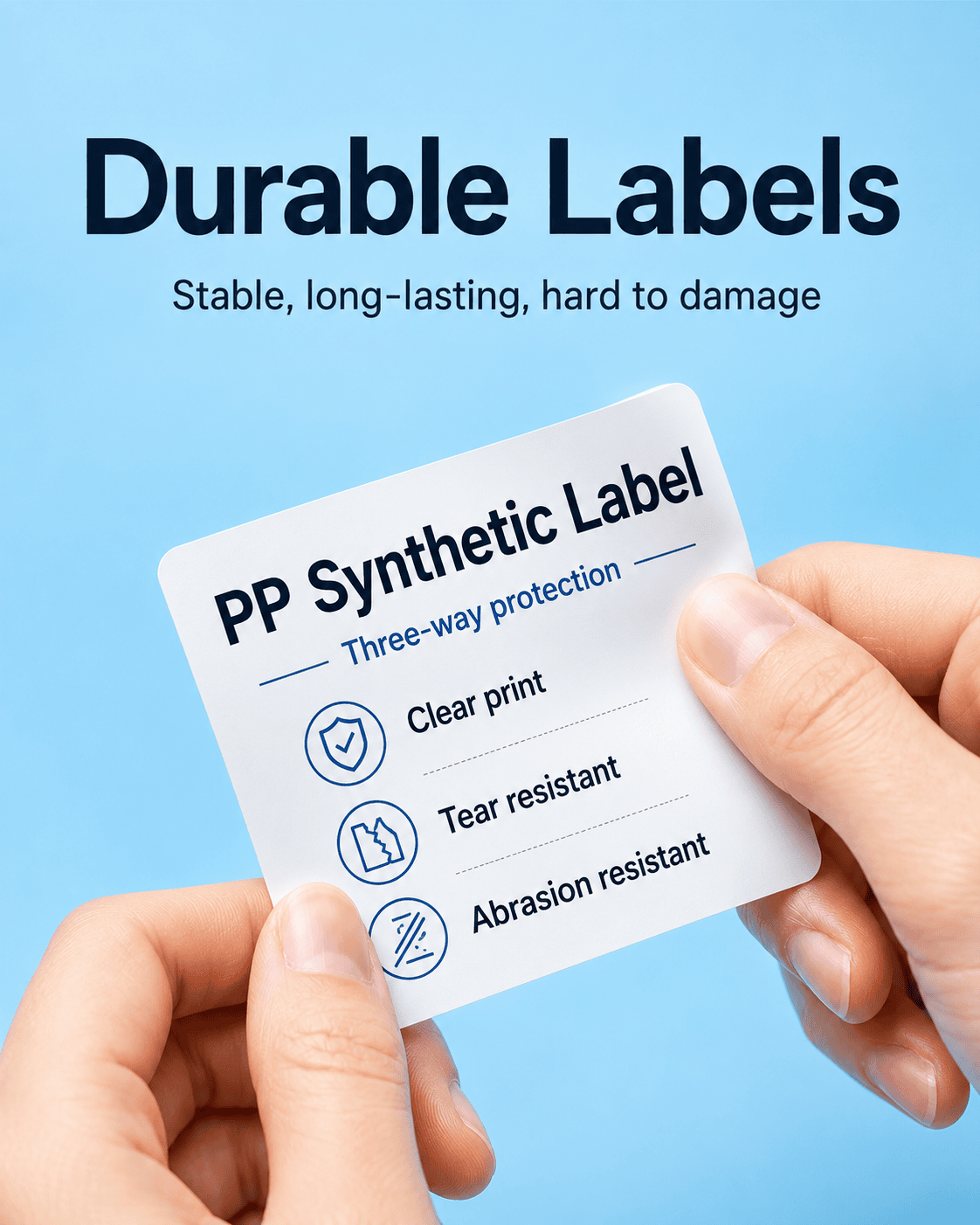
Durable PP synthetic label showing clear print tear resistance and abrasion resistance

Durable Label Performance

PP synthetic labels are more resistant to tearing, abrasion, and regular handling, making them a practical choice for packaging, logistics, and repeated use environments.
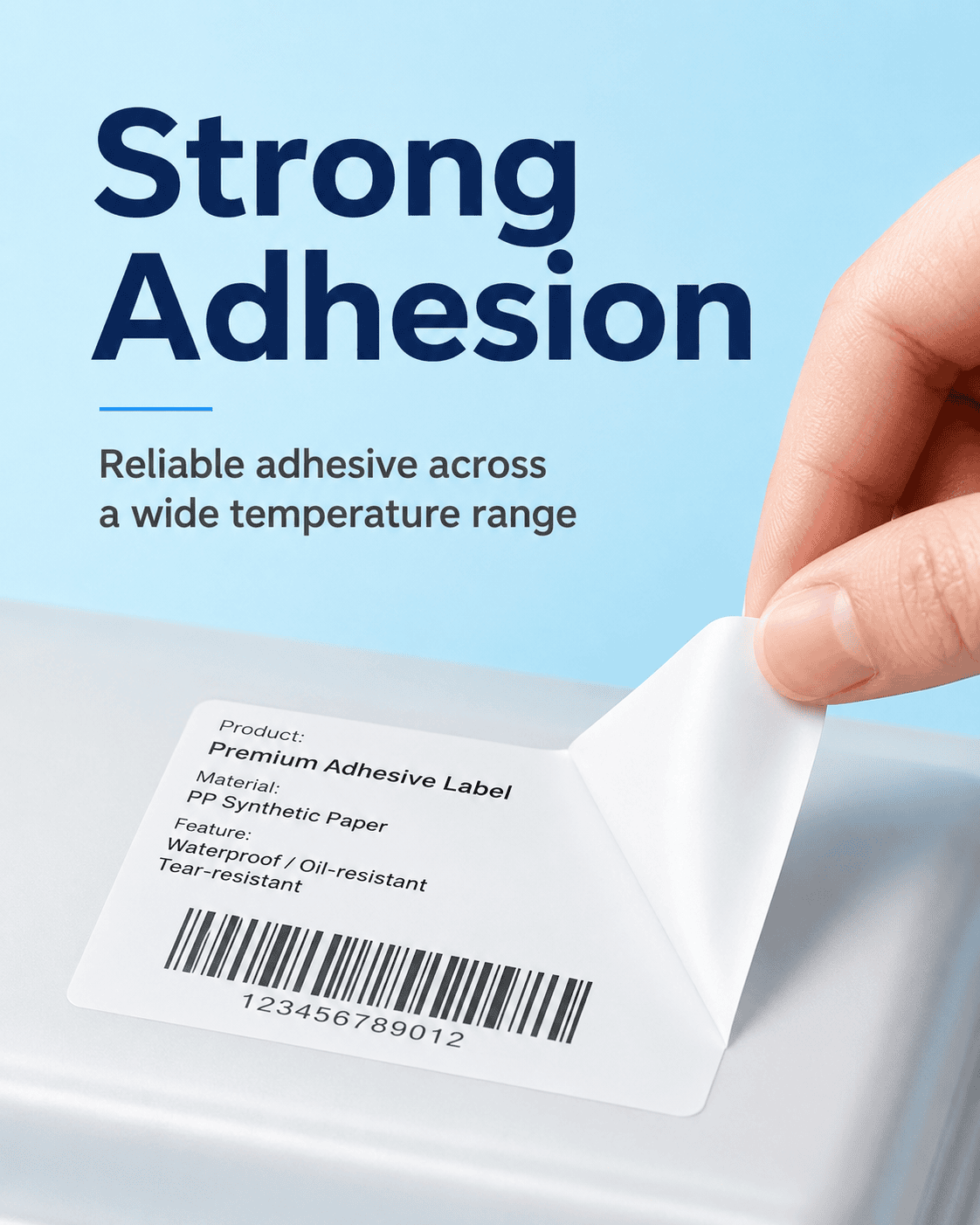
Strong adhesion PP synthetic label applied to a smooth packaging surface

Strong and Reliable Adhesion

With the right adhesive system, synthetic labels can bond well to cartons, plastic containers, and other packaging surfaces across a wide temperature range.
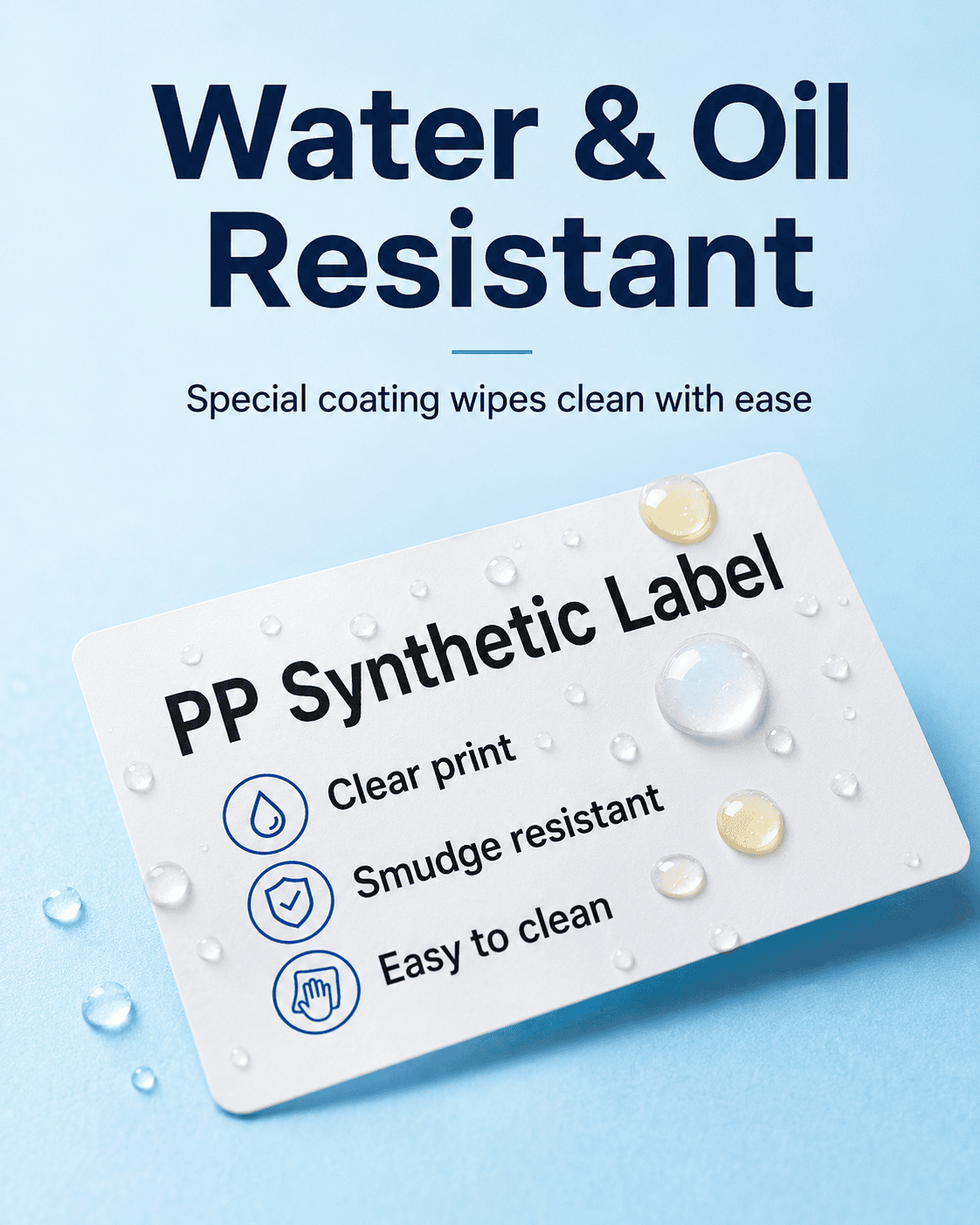
Water and oil resistant PP synthetic label with clear print and easy to clean surface

Water and Oil Resistance

A protective surface helps the label stay cleaner and more readable when exposed to light moisture, splashes, or oily contact during storage, transport, and handling.

Choosing the Right Thermal Synthetic Label for Your Application

Thermal synthetic paper labels are not always necessary for every packaging task. For clean, dry, short-term indoor labeling, standard thermal labels may already be enough. But when labels need to resist moisture, rubbing, tearing, or frequent handling, a synthetic face material can help keep barcode and product information readable for longer.

Before choosing a label, it is helpful to confirm the printing method, roll size, adhesive type, application surface, and expected storage or handling conditions. These details make the label easier to match with real packaging workflows instead of choosing only by material name.

For related label options, you can explore PaperMyna’s Thermal Labels or compare synthetic label materials based on your packaging, logistics, and product identification needs.