
FROZEN PACKAGING TROUBLESHOOTING
Cracking and Leaking Are Different Packaging Failures
When frozen food packaging bags crack or leak, the visible result may be similar—a package that can no longer protect the product—but the underlying cause is often different. Cracking usually involves damage to the film or laminated structure, while leaking is more commonly related to weak seals, pinholes, seal contamination, or handling damage.
Low temperatures can change the flexibility and impact resistance of packaging materials. At the same time, frozen food becomes harder and more rigid, increasing pressure on pouch corners, folds, seals, and areas that contact sharp product edges during stacking and transport.
This guide separates material-related cracking from seal-related leaking and explains how film structure, thickness, sealing conditions, product characteristics, package format, and cold-chain handling should be checked before full production.
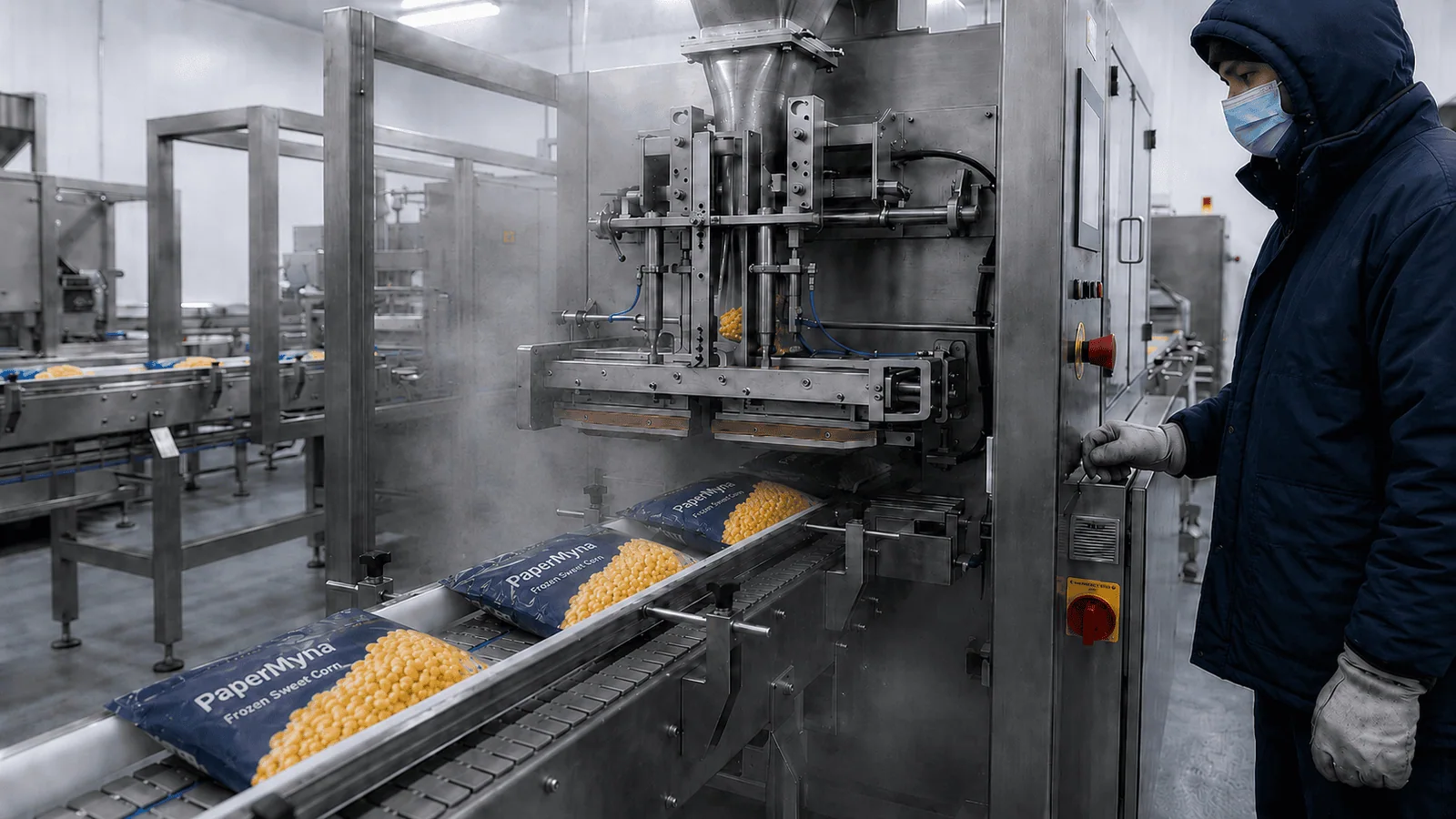
First Identify Whether the Failure Is in the Film or the Seal
Frozen food packaging cracks and leaks can look similar after storage or transportation, but they often begin at different weak points. Checking the exact failure location first helps determine whether the main problem comes from the film structure, the sealing process, or damage during filling and cold-chain handling.
Material-Related Cracking
Material-related cracking usually appears in the main pouch body, folded corners, gussets, or other areas exposed to repeated bending and impact. The film may perform normally at room temperature but become noticeably stiffer and less resistant to impact after the packed product is frozen.
Cracks are more likely when the film structure is too thin, the selected resin does not retain enough low-temperature flexibility, or the laminate cannot withstand pressure from heavy products, frozen corners, or sharp food pieces.
When damage appears away from the sealed edges, the material structure, total thickness, puncture resistance, fold endurance, and low-temperature impact performance should be checked first.
Seal-Related Leaking
Seal-related leaking usually occurs along the top seal, side seal, bottom seal, or zipper area. The package film may remain intact, while part of the sealed edge separates or develops a small channel that allows air, moisture, or product liquid to escape.
Common causes include insufficient sealing temperature, pressure, or dwell time, as well as food particles, moisture, oil, frost, or powder entering the seal area during filling. Excessive heat can also distort or weaken some sealing layers.
When the package opens directly along a sealed edge, the sealing window, seal width, seal cleanliness, seal strength, and filling machine settings should be reviewed before changing the complete film structure.
Why Low Temperatures Make Frozen Packaging More Vulnerable
Freezing does not automatically cause a properly designed package to fail, but it can reduce the available safety margin. Film flexibility, impact resistance, product hardness, pouch geometry, and existing weak points all become more important during frozen storage and cold-chain distribution.
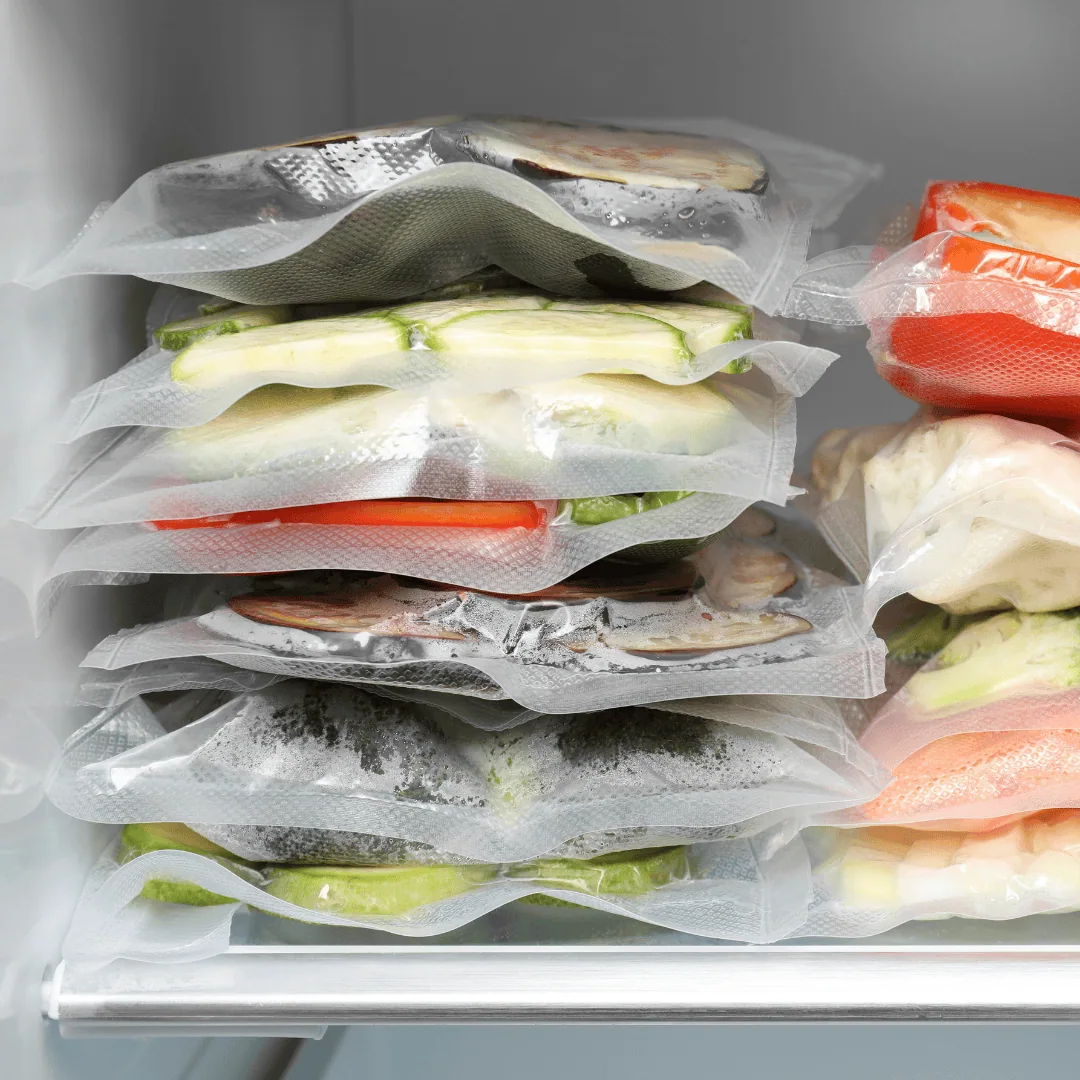
How Film Structure and Thickness Affect Cracking Risk
A frozen food package should not be evaluated by total thickness alone. Low-temperature flexibility, puncture resistance, layer bonding, sealing performance, product shape, and distribution conditions all affect whether the package can withstand freezing, stacking, and transport.
Outer Layer and Lamination
The outer layer supports printing, surface protection, and mechanical stability, while the laminated structure combines the functions of multiple materials. Poor layer bonding or damage near folds can create weak areas that become more noticeable after freezing and repeated handling.
Puncture and Impact Resistance
Products with bones, shells, sharp corners, ice crystals, or irregular frozen pieces may require greater puncture and impact resistance. Tougher structures, including nylon-containing laminates where suitable, can help the pouch tolerate concentrated pressure and transport impact.
Flexible Sealant Layer
The inner sealant layer must form dependable seals while retaining enough flexibility at low temperatures. A layer that becomes too stiff, seals inconsistently, or cannot tolerate repeated bending may contribute to cracks, channel leaks, or seal separation during the cold chain.
Application-Based Thickness
Increasing thickness may improve resistance to handling damage, but thicker film is not automatically the best solution. The specification should match the product weight, pack size, pouch format, filling method, stacking load, case packing, and expected distribution conditions.
Why Frozen Food Package Seals Leak
A frozen food package can use a suitable film structure and still leak if the seal is incomplete, contaminated, wrinkled, or exposed to more stress than it can withstand. Seal performance should be checked together with the filling process, machine settings, package design, and cold-chain handling conditions.
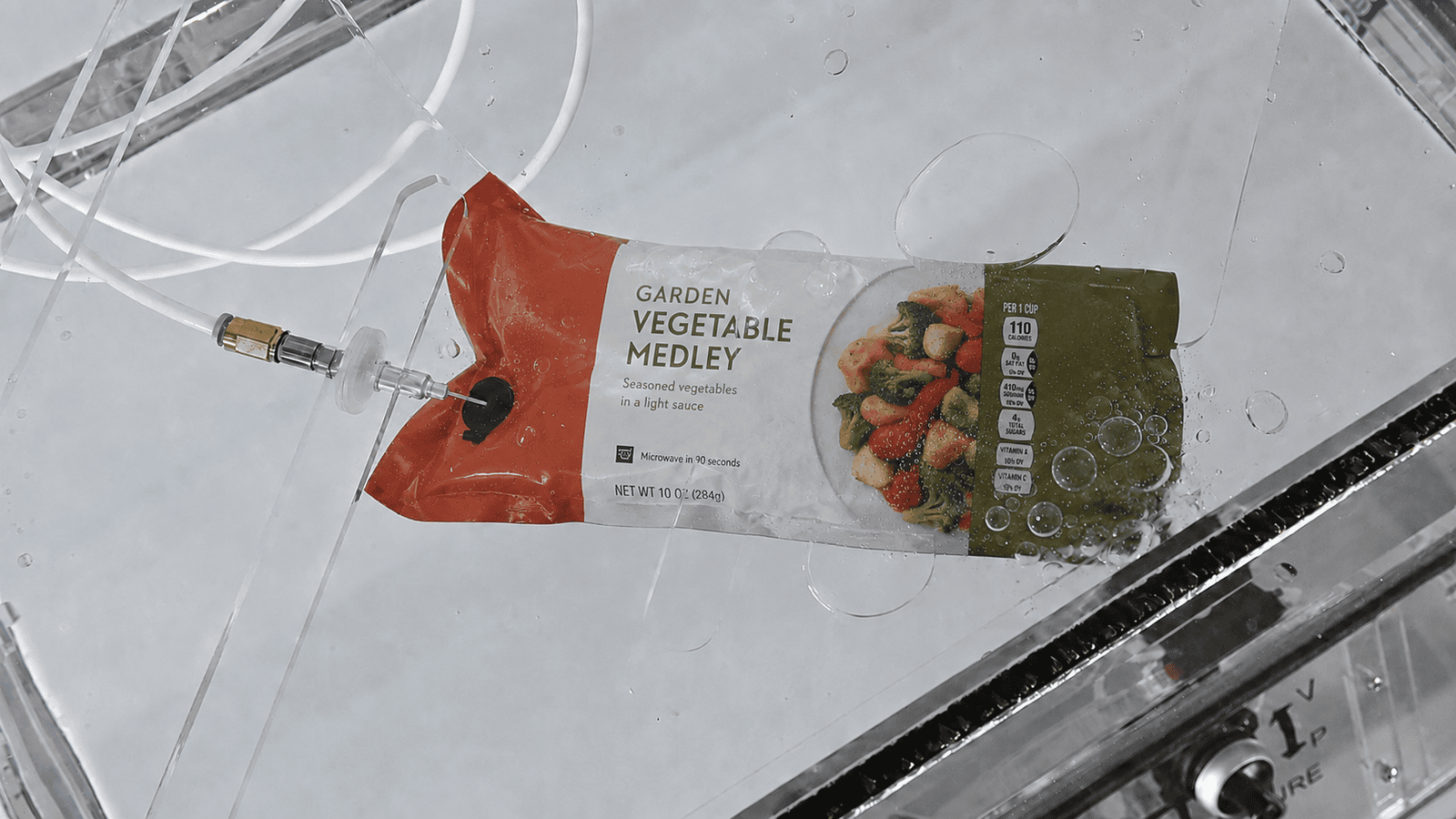
How Handling and Distribution Can Damage Frozen Food Bags
Some cracks and leaks do not begin on the packaging line. They develop later when frozen packs are dropped, compressed, packed incorrectly, or exposed to repeated vibration. Cold-chain checks should therefore cover the complete journey from filling and freezing to final delivery.
Drop and Conveyor Impact
Frozen products are harder and less able to absorb impact than products at room temperature. Drops between conveyors, bins, cartons, or pallets can concentrate force on pouch corners, folds, seals, and rigid food pieces.
Stacking and Compression
Excessive carton weight, high pallet stacks, and uneven loading can place continuous pressure on lower packages. This may weaken seals, deepen folds, or push hard frozen pieces against the film until damage develops.
Carton and Pack Fit
Packages packed too tightly may rub against carton walls, dividers, staples, or neighboring packs. Packages packed too loosely may move repeatedly during transport, increasing abrasion and impact damage.
Vibration and Temperature Changes
Repeated vibration can enlarge small pinholes, laminate damage, and weak seal channels. Temperature changes may also cause condensation, pressure variation, or product movement that adds further stress to the package.
What to Check First When Frozen Food Bags Crack or Leak
Troubleshooting should begin with the location and timing of the failure. Changing the complete material structure before identifying the actual weak point can increase cost without solving the underlying problem.
- Check the failure location: determine whether the damage is in the film body, fold, gusset, sealed edge, zipper area, or package corner.
- Review filling and sealing conditions: check for contamination, wrinkles, uneven seals, unstable temperature, insufficient pressure, or incorrect dwell time.
- Inspect the actual frozen product: consider product weight, rigid corners, bones, shells, ice crystals, and other areas that may create concentrated pressure.
- Reproduce cold-chain handling: evaluate freezing, stacking, carton fit, drops, vibration, and transport conditions using filled packages rather than empty samples alone.
The most reliable solution usually comes from matching the film structure, pouch format, seal settings, and handling conditions to the actual frozen food application.
Frequently Asked Questions About Frozen Food Packaging Cracks and Leaks
These common questions explain how film structure, sealing conditions, frozen product characteristics, and cold-chain handling can affect package integrity. They also provide practical guidance for reducing cracking and leakage before full production.
Some films become stiffer and less resistant to impact at low temperatures. Cracking may occur when the frozen product creates concentrated pressure against pouch corners, folds, gussets, or thin areas, especially during stacking, drops, and transportation.
Damage in the pouch body, folds, gussets, or corners usually points to a material, thickness, puncture-resistance, or handling issue. Leakage directly along the top, side, or bottom seal is more likely to involve sealing conditions, contamination, wrinkles, or insufficient seal strength.
No. Greater thickness may improve resistance to puncture and handling damage, but it cannot correct an unsuitable material structure, poor lamination, weak seals, or an inappropriate pouch design. The film should be matched to the actual product, pack weight, filling process, and distribution conditions.
Common causes include food particles, oil, moisture, frost, or powder in the seal area, as well as incorrect sealing temperature, pressure, or dwell time. Wrinkles, uneven pouch positioning, narrow seal widths, and stress during freezing or transportation may also create leakage channels.
Testing should use the actual product, target fill weight, pouch format, sealing equipment, and intended cold-chain conditions whenever possible. Filled samples should be checked after freezing and exposed to realistic stacking, compression, drop, vibration, carton-fit, seal-integrity, and leakage tests before the final specification is approved.
CUSTOM FROZEN FOOD PACKAGING
Need Frozen Food Packaging That Performs Through the Cold Chain?
PaperMyna develops custom frozen food packaging bags and rollstock for vegetables, seafood, meat, prepared foods, and other frozen products. Share your product type, fill weight, package format, storage temperature, sealing process, handling conditions, and order quantity, and our team can help evaluate a practical film structure and packaging specification.