
Start With the Seal That Opens
The rollstock seals cleanly during setup. Once the bagger reaches production speed, some bags start opening along the bottom seal. Before changing the machine settings, keep a sample from each speed and mark where the seal opened.
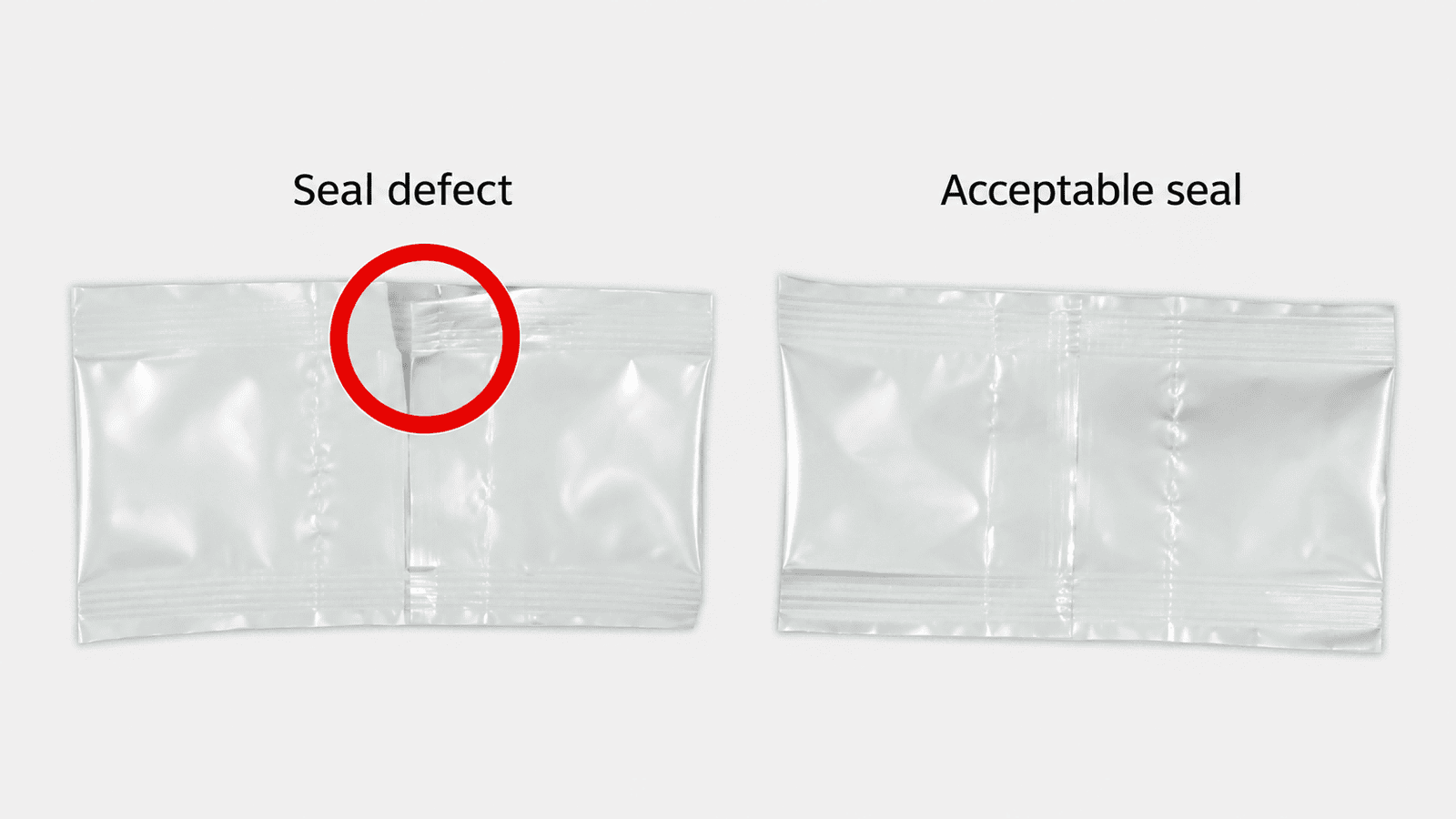
On a vertical form-fill-seal machine, the end seals run across the top and bottom of the bag. The long seam down the back is made separately. Check whether the opening starts where the two seams meet or elsewhere along the end seal.
Note when the opening first appears: as the product drops into the bag, at discharge, or after cooling. The form-fill-seal process guide shows where each seal is made.
Compare Empty and Filled Packs at the Same Speed
Use the same roll of film and collect samples at two speeds: a stable setup speed and the first speed where the fault repeats. At each speed, compare empty packs with packs filled to the target weight. Check whether switching off the filler changes the jaw cycle, and record any difference before comparing the samples.
What the Samples Tell You
Clean, empty packs open across much of the seal. Check dwell time, the time the jaws stay in contact with the film. On some machines, dwell time drops as speed increases. Review it alongside jaw temperature and pressure before changing the settings.
The opening appears in the same spot on several packs. Check for a film wrinkle, uneven jaw contact, or a weak point where the back seam adds layers to the end seal. On a multilane machine, record which lane produced the affected packs.
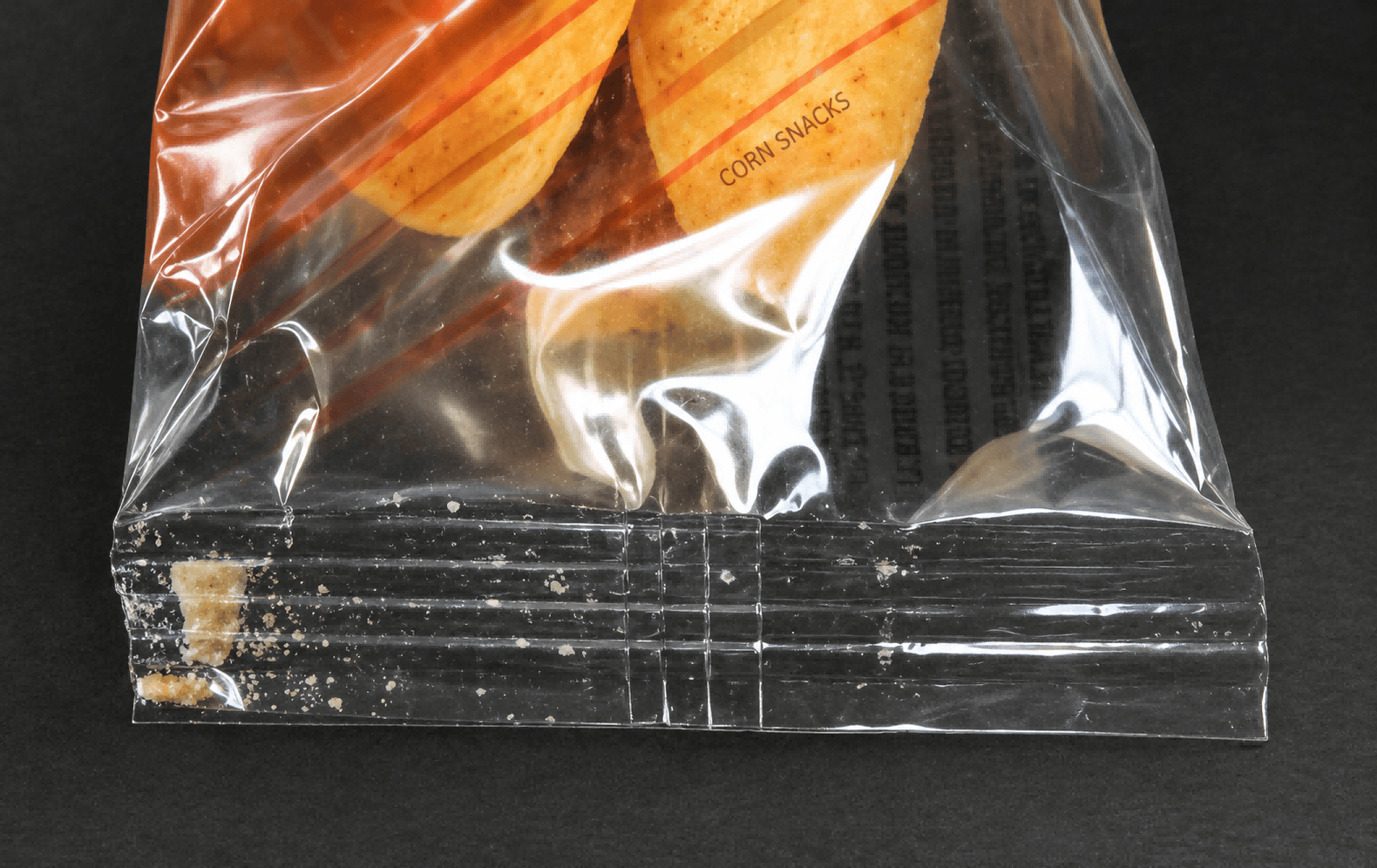
Empty packs hold, but filled packs have particles in the seal. Check whether crumbs or powder are still in the seal area when the jaws close. Review fill timing and how much time the product has to settle. The seasoning powder sachet guide covers additional checks for fine powders.
Check Whether the Seal Opens Before It Cools
If a clean bottom seal opens as the product drops into the bag, it may be taking the weight of the fill while it is still hot. Hot tack is the strength of a heat seal before it cools. A seal can feel firm when you peel it later and still have been too weak when the product first landed.
Ask the operator to check when the opening first appears. If it coincides with the product drop, record the time between the jaws opening and the product reaching the bottom seal, if that timing is available.
If you are comparing films, ask the supplier for hot tack data and the conditions used to obtain it. Compare those conditions with your line settings, then check the film on your own machine at the target speed.
Record the Conditions Before Approving the Roll
Agree on the target production speed and seal acceptance criteria with the packing team before the trial. If the line already runs well on another film, keep labeled samples from that run for comparison under similar conditions.
For final approval, use filled packs made at the target speed and check them against the agreed pack specification. Keep the setup samples as a reference for troubleshooting.
Record the roll or lot ID, film structure and thickness if known, pack size, product and target fill weight.
Record the machine model, set and actual speeds, and the unit shown on the panel. On a multilane line, note whether pack output is per lane or total. Include the jaw temperature setpoint and any available dwell time and pressure readings.
Keep empty and filled packs from setup and from the target speed. Label each sample with its speed and lane. On a failed pack, mark where the opening started and note when it first appeared.
Inspect the full seal band and record the results against the agreed acceptance criteria. If the pack specification calls for both seal-strength and leak testing, record both results.
ROLLSTOCK SEALING
Rollstock Heat-Seal FAQs
Find out what to check when seals open at production speed, when to review jaw temperature, and what to share with your film supplier.
On some machines, higher speed reduces the time the jaws stay in contact with the film. It can also change when product reaches the bottom seal or how long the seal cools before it takes the load. Compare empty and filled packs at the same speed to narrow down the cause.
First check where and when the seal opens. If clean, empty packs also fail at the higher speed, review dwell time, jaw contact and the film supplier’s sealing guidance with the operator. A higher setpoint can distort the film or mask a jaw contact or filling problem.
Yes. A cooled peel test measures the seal after it has set. The same seal can open earlier if it takes a load while still hot. If it fails during filling or transfer, check when the opening starts and ask your film supplier for hot tack data.
Share the machine model, setup and target speeds, seal settings, film lot and structure if known, and labeled samples from both films. Note whether the fault appears on empty packs, on filled packs, or on a particular lane.
CUSTOM ROLLSTOCK FILM
Need Rollstock Film for a Production-Speed Trial?
Tell us what you are packing, your machine model, finished pack size, fill weight and target speed. If your current film seals during setup but opens at production speed, share the film specification if available and photos of the failed seal. If you have samples from both speeds, label them with the actual line speed so we can review the difference and discuss a film sample for your next trial.