
THERMAL PAPER ROLL LENGTH
Why the Same Roll Size Can Mean a Different Paper Length
Thermal paper roll length can differ even when two receipt rolls are labelled 80 × 80 mm. Those two figures usually describe the paper width and finished roll outside diameter. They do not tell you how many metres of paper the roll contains.
With the same roll and core diameters, thicker paper gives a shorter roll length. A larger core outside diameter also reduces the space available for winding. This means two rolls that look similar can contain different amounts of paper, even though both fit the printer.
When comparing thermal receipt paper rolls, check the stated length, paper thickness and core dimensions alongside the width and outside diameter. These details help buyers compare quotations and identify what needs checking in a sample before placing an order.
UNDERSTANDING ROLL DIMENSIONS
Read Paper Width and Roll Diameter Separately
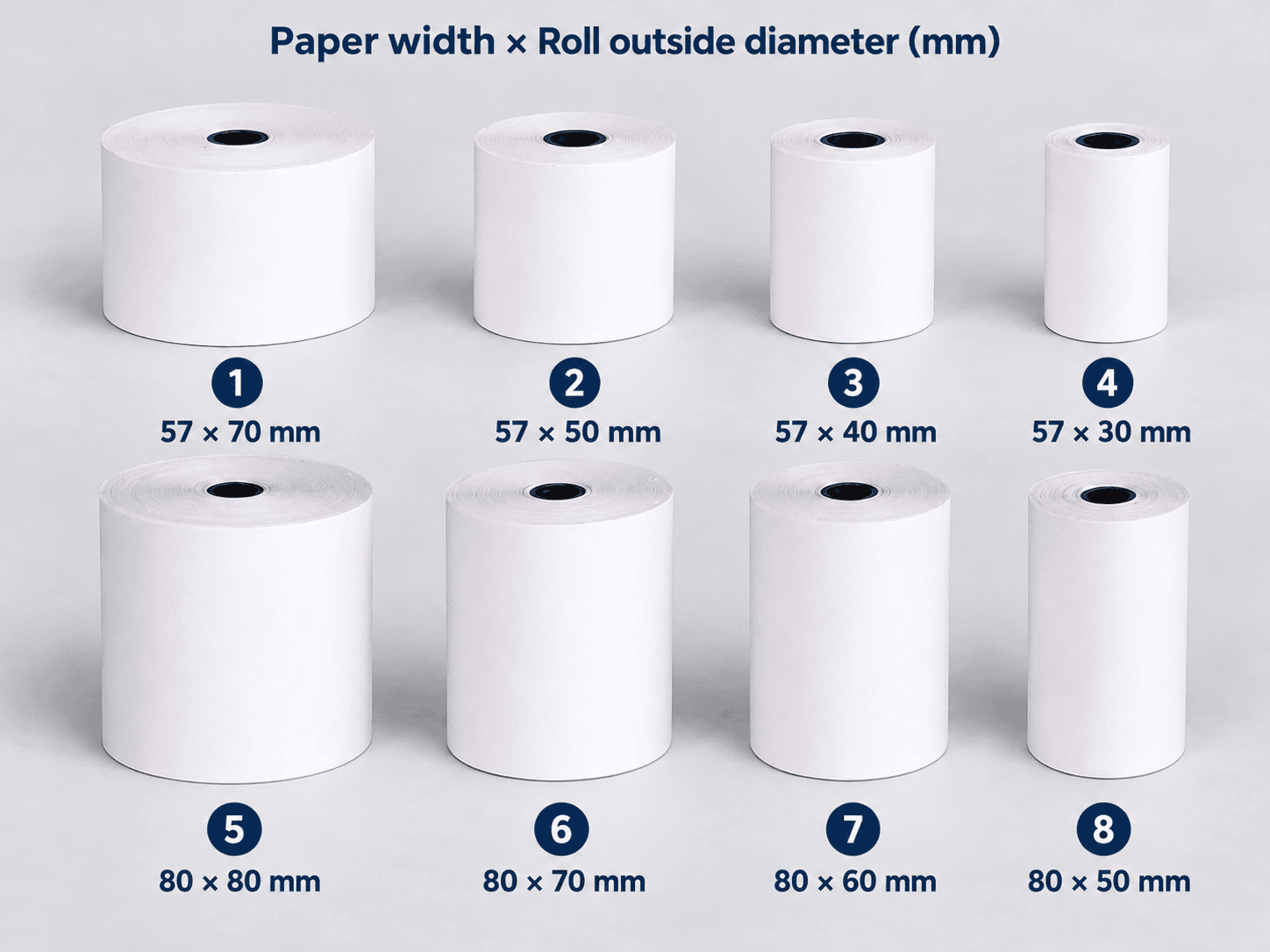
A two-number specification such as 80 × 80 mm usually means paper width × finished roll outside diameter. Confirm the supplier’s notation and units, then check both measurements against the printer’s requirements.
What the Two Numbers Tell You
Paper width is measured between the sheet’s two cut edges, along the roll axis. Outside diameter is measured across the circular end of the roll, passing through its centre.
The numbered examples show how rolls can share the same paper width while needing different amounts of space inside the printer. Check the manual for the accepted width tolerance and maximum roll outside diameter.
PAPER THICKNESS AND ROLL LENGTH
Paper Thickness Changes How Much Fits on a Roll
Every layer of paper adds to the roll diameter. With the same finished outside diameter, the same core outside diameter and comparable winding conditions, thinner paper allows more metres to fit on the roll. Thicker paper reaches that diameter with a shorter length.
This helps explain why two rolls labelled 80 × 80 mm can contain different lengths. Both may fit the same printer, but their matching dimensions do not tell you whether they contain the same amount of paper.
GSM Is Not a Thickness Measurement
GSM describes the mass of one square metre of paper. Thickness, also called caliper, is normally stated in microns (µm). A 55 GSM paper is not automatically 55 µm thick. Paper density and coating construction affect the relationship, so ask for both figures on the paper grade’s technical data sheet.
When comparing quotations, check the stated roll length alongside the paper grade and thickness. If a thinner grade is proposed to fit more metres into the same roll size, test a sample in the intended printer before approving the change. Check print clarity, feeding and cutting as well as the length supplied.
CORE DIMENSIONS
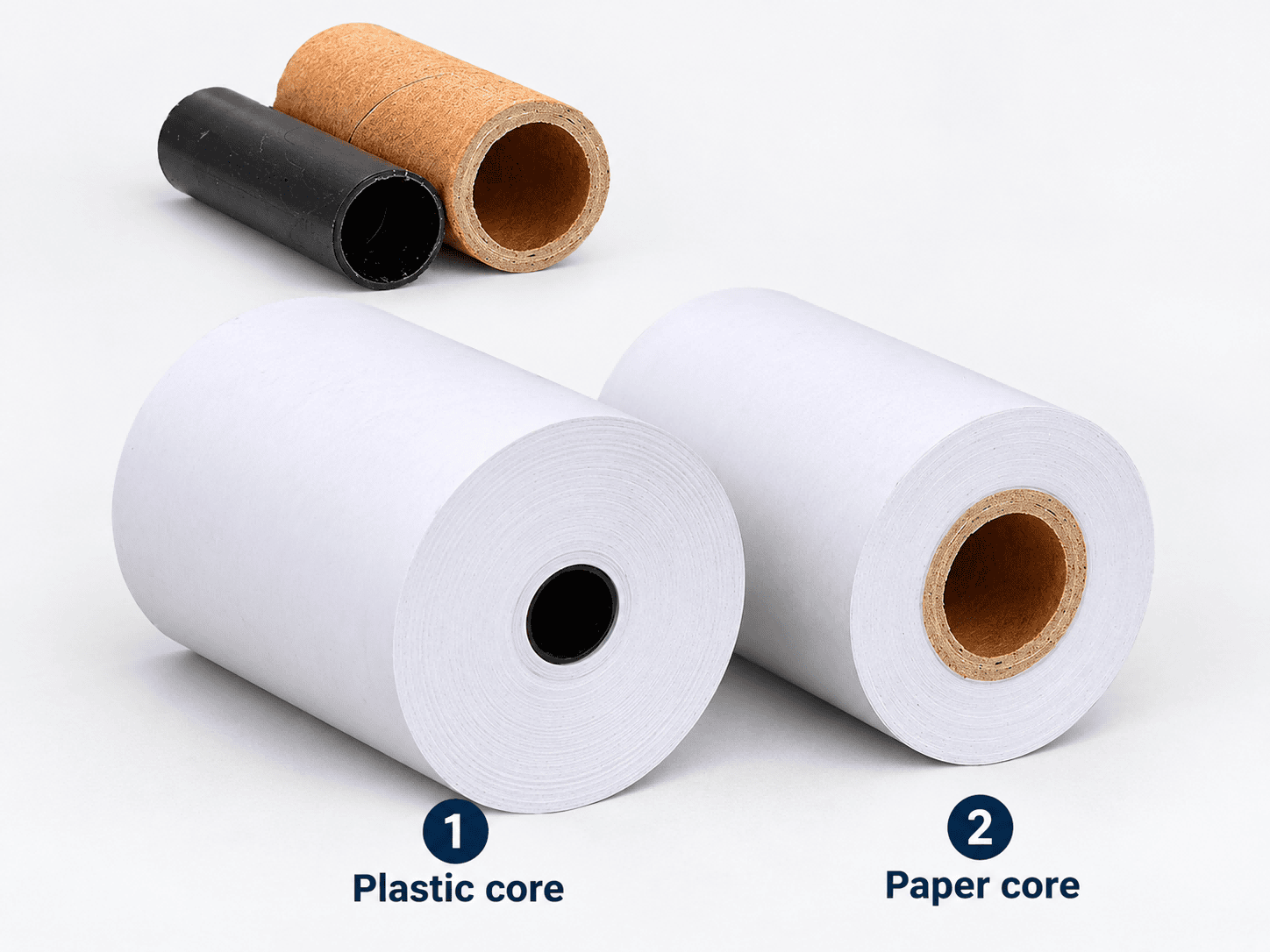
Core Size: Check Both the Inner and Outer Diameter
The opening through the core and the outside of the core are two different measurements. Ask the supplier to state both the inner diameter (ID) and outer diameter (OD), rather than listing a single figure under “core size”.
CORE INNER DIAMETER
Measure the Opening Through the Core
The inner diameter is the clear opening inside the tube. Where a printer uses a spindle or core holder, this opening needs to match that mechanism. Check the printer’s paper specifications before approving a different core.
- Measure between the inside walls, passing through the centre of the opening.
- Record the measurement in millimetres and identify it clearly as core ID.
- Confirm the core requirements for the actual printer model and holder arrangement.
CORE OUTER DIAMETER
Measure Where the Paper Starts Winding
The outer diameter includes the core wall. With the same finished roll diameter, paper thickness and comparable winding conditions, a larger core outside diameter leaves less space for paper and gives a shorter roll length.
- Measure across the outside of an empty core, passing through its centre.
- Two cores with the same inner diameter can have different wall thicknesses and outer diameters.
- Use core OD, rather than the inside opening, when estimating the space available for wound paper.
Paper and plastic describe the core material; they do not establish its dimensions or the length of paper on the roll. For a coreless option, confirm the required centre opening and test feeding through to the end of the roll before changing an existing specification.
QUOTATIONS AND SAMPLE CHECKS
Compare the Price Against the Paper Length
A lower price per roll can be misleading when the roll contains fewer metres. Once the paper grade, printer fit and print performance are comparable, calculate the cost for a common length of paper.
Cost per 100 metres = price per roll ÷ roll length in metres × 100.
An Illustrative Price Comparison
The following figures illustrate the calculation for two rolls with the same paper width and comparable paper quality.
| Example | Price per Roll | Length per Roll | Cost per 100 m |
|---|---|---|---|
| Roll A | USD 0.80 | 40 m | USD 2.00 |
| Roll B | USD 0.90 | 50 m | USD 1.80 |
In this example, Roll B costs more per roll but less per metre. Use confirmed lengths for the final comparison, and compare prices on the same packing and delivery basis.
What to Check Before Approving the Order
- Confirm how length is checked. Ask whether the quoted metres come from a measured winding length or an estimate based on roll dimensions. Agree the length tolerance and verification method before ordering.
- Record the sample specification. Check paper width, finished roll outside diameter, core ID and core OD. Keep the paper grade and thickness details with the sample record.
- Run a sample in the intended printer. Check loading, print clarity, feeding and cutting, including operation near the end of the roll. A roll fitting inside the compartment is only the first check.
- Agree what counts as usable paper. Clarify how any splices, end-warning sections and paper remaining at the core are treated when comparing supplied length with usable length.
For the wider printer and checkout requirements, see our guide to thermal receipt paper for retail POS .
COMMON QUESTIONS
Thermal Paper Roll Length: Frequently Asked Questions
The questions below explain what an 80 × 80 mm size tells you, how thickness and core dimensions affect length, and how to compare roll prices.
There is no single fixed length. The 80 × 80 mm label usually states paper width and roll outside diameter. Length also depends on paper thickness, core outside diameter and winding conditions, so ask the supplier to quote metres per roll separately.
No. GSM measures paper mass per square metre, while caliper measures sheet thickness, usually in microns (µm). Papers with the same GSM can have different thicknesses. Request the grade’s caliper specification when comparing roll lengths.
The core’s outside diameter determines where winding starts. With the same roll outside diameter, paper thickness and comparable winding conditions, a larger core outside diameter leaves less room for paper. Confirm the core’s inner diameter separately against the printer requirements.
A caliper checks paper width and roll or core diameters; it does not measure paper length. A length calculation using diameter and thickness is an estimate. If length is in doubt, agree a measured unwind check or another suitable verification method with the supplier.
Divide the price per roll by the confirmed length in metres, then multiply by 100. This gives the cost per 100 metres. Compare rolls with similar paper quality and printer performance, and use the same packing and delivery basis for both prices.
DISCUSS YOUR THERMAL PAPER REQUIREMENTS
Need Thermal Paper Rolls with the Length Clearly Specified?
Share your printer model and target roll specification, including the required length in metres. Include any paper grade or sample reference you currently use, along with the order quantity, packing requirements and delivery destination. PaperMyna can review the details and prepare a quotation with the roll dimensions and stated length clearly listed.